Automatic Rolling Mill
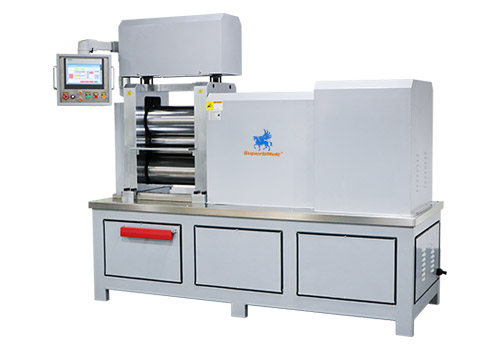
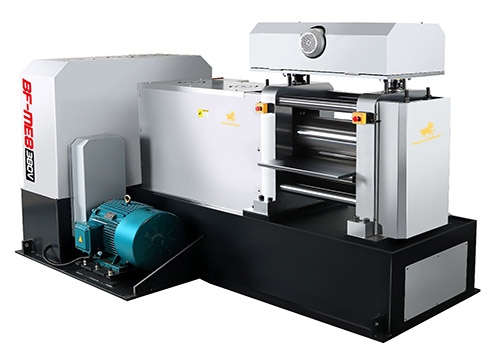
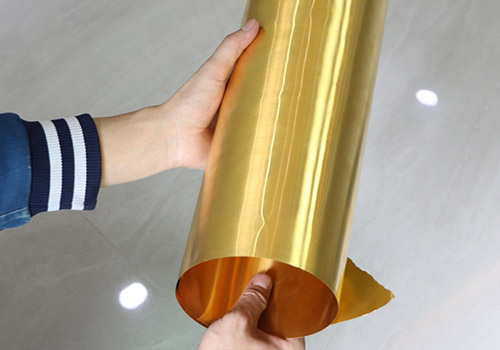
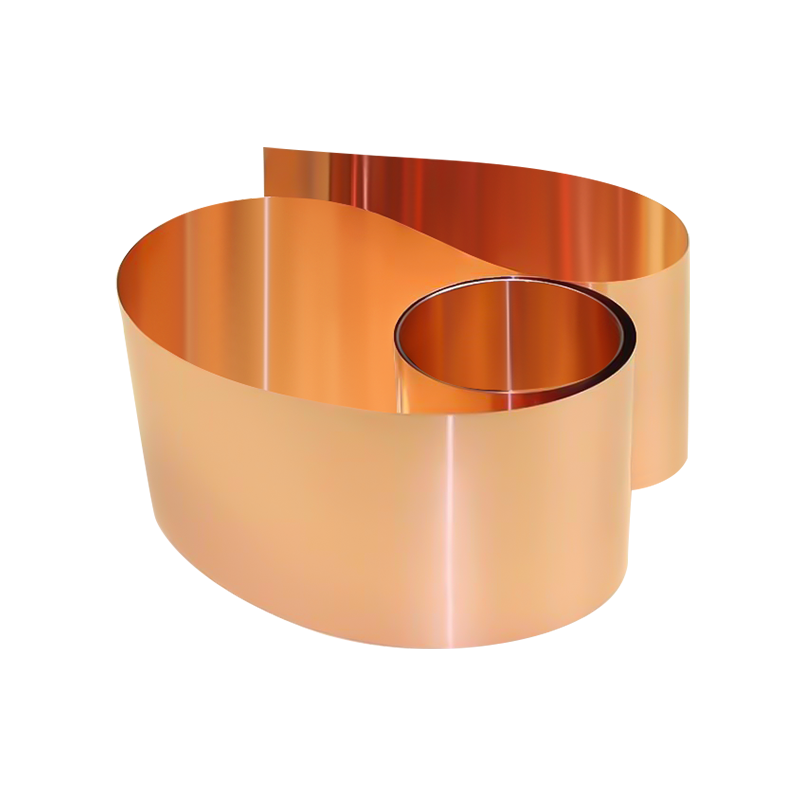
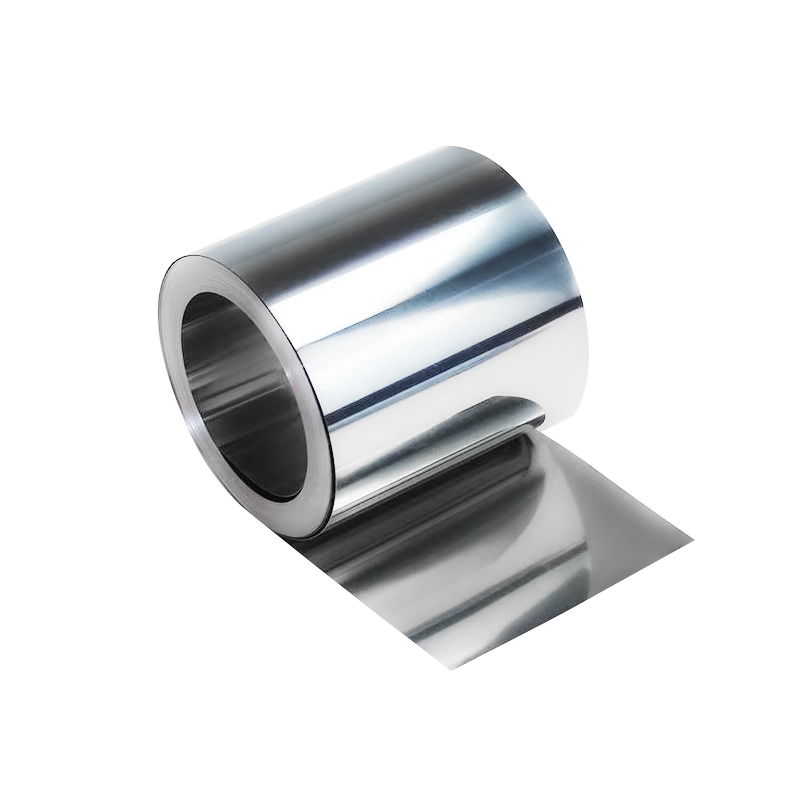
SuperbMelt Automatic Rolling Mill features a wide pressure shaft and high-power motor, rolling gold, silver and copper sheets from 5cm down to 0.2cm in a single pass — with automatic oil supply and zero-loss shaft design.
SuperbMelt Automatic Rolling Mill is a large-scale jewelry rolling mill that provides a wider pressure shaft and wider capacity for metal products.
Designed with high power, this Automatic Rolling Mill is suitable for manufacturers requiring wider sheet metal products, capable of rolling metal to thicknesses ranging from 5 to 0.2 centimeters in a single pass.
Featuring simplified operation, automatic oil supply, and high durability of the press shaft with zero loss, this equipment is a crucial asset for gold and silver jewelry manufacturers to enhance work efficiency and creative design.
| Model number | SPB-YP50P |
| Power source | 3 phase 380V, 50/60Hz |
| Power | 37.5 kw |
| Applicable metal | Gold, Silver, Platinum, Palladium, and their alloys |
| Sheet Thickness | 5-0.2cm |
| Pressing width | Within 40cm |
| Rolling mill dimensions | (D*L)250*500mm |
| Rotation Speed | 0-15 rpm adjustable speed |
| Dimension | 3200*1650*1900mm |
| Weight | 68000KG |
| Air switch | 63A or above |
- High Efficiency and Precision: This rolling mill’s powerful construction enables it to flatten metals to exact thicknesses of between 5 and 0.2 cm in a single pass, which makes it ideal for the production of high-precision jewelry.
- Automatic Lubrication System: This system ensures smooth and effective rolling operations while reducing wear and maintenance requirements. It also extends the equipment’s lifespan.
- High Hardness Pressure Shaft: This mill’s high-hardness pressure shaft ensures both the mill’s longevity and the quality of the metal processing by withstanding increased operating pressures.
- Zero Loss Technology: This rolling mill maximizes material utilization and lowers costs by achieving zero material loss during metal processing through optimized design and production processes.
- Versatility: It can process other metal materials in addition to precious metals including gold, silver, and platinum, meeting a range of jewelry-making requirements.
- Operational Simplicity: The machine’s straightforward control interface, which is easy for operators to learn and operate, contributes to its user-friendly design and increased productivity.
- High Safety: The design of the equipment places a high premium on safety, protecting users while they work and lowering the possibility of workplace accidents.
Making Jewelry:
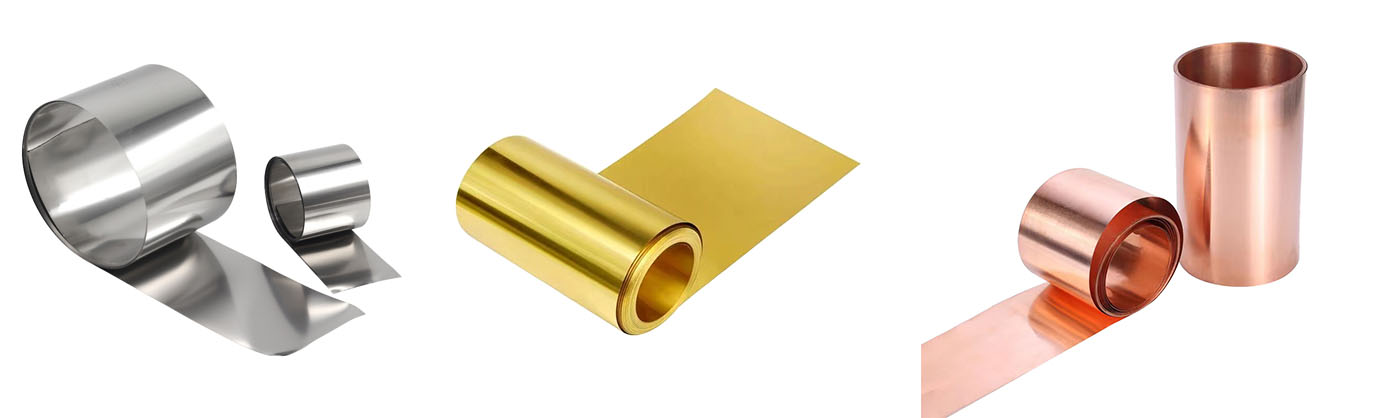
Metal Sheet Production: Produces thin sheets of platinum, silver, and other precious metals that are used as the base for jewelry such as necklaces, earrings, and rings.
Metal Wire Making: This process creates exquisite metal wires that can be used in jewelry designs, such as necklaces and bracelets, or for weaving.
Texture and Pattern Creation: Adds distinctive patterns and textures to metal surfaces to improve the jewelry’s appearance and individuality.
Crafts and the Arts:
Metal sheets and wires are used in the creation of decorative artworks, such as decorative panels and metal paintings.
Custom Metal Crafts: Tailors distinctively shaped metal crafts to the specifications of clients or designers.
Industrial Uses:
Metal Component Processing: This technique is used to create precise metal components in more general manufacturing industries like electronics and automobile parts.
Metal prototypes are created for new product development, enabling speedy design and functionality validation.
Instruction and Practice:
Teaching and Experiments: Used in educational settings to give students practical experience while teaching them the fundamentals of jewelry design and metalworking.
Repair and Replenishment:
Restoration of antique or traditional jewelry involves fixing and recreating it to return it to its original form and functionality.
Why SuperbMelt Automatic Rolling Mill


Any Question About SuperbMelt Goldsmith Rolling Mill
Comprehensive Guide to Using an Automatic Rolling Mill in Jewelry and Metalworking
Understanding the Automatic Rolling Mill
An Automatic Rolling Mill is an advanced metal-forming machine designed to reduce the thickness of metal sheets while ensuring exceptional surface quality and dimensional accuracy. Unlike manual rolling mills, which require constant operator control, automatic models feature motorized operation, automatic oil supply systems, and precision-adjustable rollers for consistent results.
The SuperbMelt Automatic Rolling Mill stands out with its wider pressure shaft and high-power drive, allowing it to roll gold, silver, copper, and other metals from 5 cm down to 0.2 cm in thickness in a single pass. This capability makes it ideal for large-scale jewelry manufacturing, medal and badge production, and high-end decorative metalwork.
By automating the rolling process, manufacturers can achieve:
Consistent Thickness & Surface Finish – Eliminates uneven rolling and reduces post-processing work.
High Efficiency – Continuous operation for higher output in less time.
Extended Equipment Life – Zero-loss shaft design and automatic lubrication minimize wear.
Whether in jewelry factories, custom metal workshops, or industrial medal production lines, an automatic rolling mill is a cornerstone piece of equipment that transforms raw metal into uniform, production-ready sheets for further processing.
Who Should Use It?
The Automatic Rolling Mill is designed for professionals and businesses that require high-volume, precision-controlled metal sheet production. Its versatility makes it an essential investment for:
Large-Scale Jewelry Manufacturers
Ideal for producing wide, uniform sheets of gold, silver, platinum, or copper for rings, bracelets, pendants, and other fine jewelry.
Supports mass production without sacrificing surface quality or dimensional accuracy.
- particularly suited for wide-format sheets thanks to the extended pressure shaft
Medal and Badge Manufacturers
Creates base metal sheets with consistent thickness, ensuring precision in stamping, engraving, or embossing dies for medals, badges, and commemorative coins.
Custom Metal Artisans & Workshops
Perfect for artists or small studios working with precious and non-ferrous metals who need repeatable results without manual labor intensity.
Industrial Metal Product Producers
Suitable for decorative panels, small mechanical components, and precision engineering materials, where sheet uniformity is critical.
Educational Institutions & Research Labs
Useful for material science research or metalworking training, providing hands-on experience with controlled rolling processes.
In short: If your workflow demands speed, precision, and repeatability in metal sheet preparation, the Automatic Rolling Mill is an indispensable part of your production line.
Key Industry Applications
- Jewelry Manufacturing – Producing uniform gold, silver, platinum, or copper sheets for crafting rings, bracelets, necklaces, and other fine jewelry pieces.
- Medals & Awards Production – Rolling metal sheets for stamping commemorative medals, corporate awards, and sports trophies.
- Coin & Badge Making – Creating perfectly flat and even sheets for minting coins, identity badges, and collectible pins.
- Luxury Watchmaking – Preparing thin, precision-rolled sheets for cases, bezels, and intricate watch components.
- Custom Metal Art & Crafts – Supporting artisans in producing decorative panels, sculptures, and bespoke metalwork.
- Industrial Metal Components – Providing rolled materials for precision parts, electrical connectors, and decorative trims.
Productivity and Cost Benefits
High Throughput – Its wide pressure shaft and powerful motor allow large sheets to be rolled in a single pass, reducing production time.
Consistent Quality – Automated pressure control ensures uniform thickness and surface finish, minimizing rework and material waste.
Labor Savings – Simplified operation and automatic oil supply reduce the need for manual intervention, lowering labor costs.
Material Efficiency – Precise rolling reduces scrap rates and maximizes usable material yield.
Long-Term Durability – Heavy-duty construction and wear-resistant components extend service life, reducing maintenance and replacement expenses.
Scalable Production – Ideal for both large-scale manufacturing and high-value small-batch production, supporting flexible output without sacrificing quality.
This Model vs Other SuperbMelt Rolling Mills
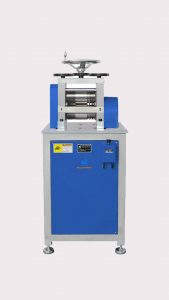
1. 7.5P model rolling mill
The 7.5P rolling mill is a machine designed for producing gold wire. It reduces the diameter of gold rods or wire through a series of rolling processes. The equipment utilizes a set of rollers to progressively decrease the wire’s diameter while simultaneously increasing its length.
In addition to gold, this rolling mill can also be used to produce wire from other precious metals, such as silver and platinum. The resulting wire has a wide range of applications, spanning fields from jewelry making to industrial manufacturing.
2. Double Head Rolling Machine
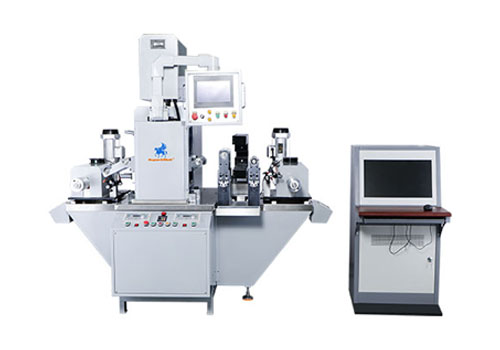
Double-head rolling mill is used for the production of gold, silver, copper, platinum, and other jewelry sheets or wires, allowing for simultaneous rolling of both sheets and wires.
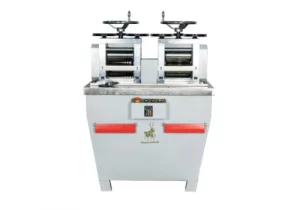
Currently, there are many manual rolling mills on the market that are inefficient and produce rough finished products. For larger jewelry manufacturers, choosing a high-efficiency rolling mill that can easily achieve mass production is crucial. The SuperbMelt double-head rolling mill is more suitable for medium-sized or personnel-scarce jewelry manufacturing factories, providing multiple functions in one machine, saving time and labor.

3. Tungsten carbide rolling mill
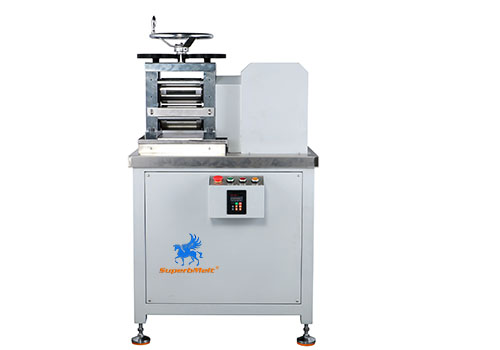
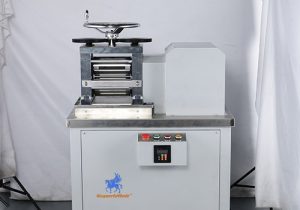
SuperbMelt Electric Rolling Mill Jewelry uses tungsten steel rollers to roll metal sheets, producing surfaces that are smoother and more uniform in thickness to achieve a mirror effect. It is suitable for high-quality jewelry manufacturing and metalworking industries.
Compared to traditional rolling mills, the SuperbMelt tungsten steel rolling mill has a longer lifespan, is less prone to damage, and effectively reduces the frequency of machine replacement and maintenance, thereby lowering production costs.
4. 30P Rolling Mill
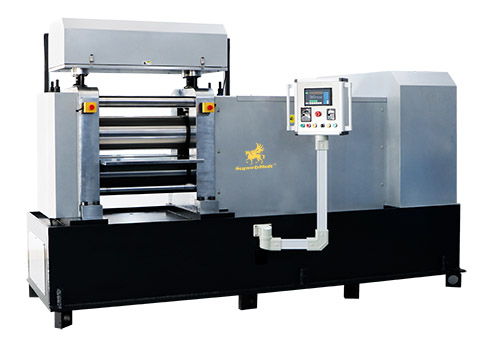
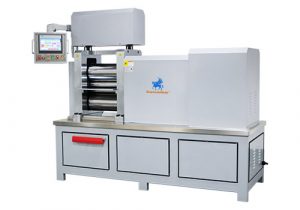
- Intelligent control with servo motor for guaranteed precision.
- High-hardness four-axis rollers, made from imported materials, with a hardness reaching 63-62 HRC.
- High precision with four-axis pressing, achieving thinner thicknesses with finished products as thin as 0.04mm.
- Even and straight finished products, with roller gap adjustments controlled by a servo motor to ensure uniformity.
- Automatic oil supply with an integrated oil system for extended equipment life.
- Simple operation, featuring a straightforward UI interface design for easy use.
FAQ Guide of Automatic Rolling Mill
- 1. How does a rolling mill work?
- 2. What makes the Automatic Rolling Mill different from SuperbMelt's Electric Rolling Mill?
- 3.What is the maximum sheet width the Automatic Rolling Mill can process?
- 4. Is the Automatic Rolling Mill suitable for small workshops, or only large-scale factories?
- 5. What are the differences between manual rolling mills and electric rolling mills?
1. How does a rolling mill work?
A rolling mill is a type of industrial machine used mostly for shaping and decreasing the thickness of metal stock. This is achieved by using revolving cylindrical rollers that are placed in different ways based on the particular needs of the task. The metal experiences elongation, compression, and occasionally texturing as it travels through these massive rolls. Rolling mills are essential in the manufacturing, automotive, and aerospace industries for producing everything from sheet metal to complex components with uniform properties and precise dimensions. This is because adjustments to the distance between the rolls allow for precise control over the final thickness and width of the metal.
2.What makes the Automatic Rolling Mill different from SuperbMelt's Electric Rolling Mill?
The Automatic Rolling Mill features a wider pressure shaft and higher-power motor, designed specifically for large-format sheet production — rolling metal from 5cm down to 0.2cm in a single pass. The Electric Rolling Mill Jewelry model, by comparison, is built for standard-width jewelry workshops with more compact space requirements. Choose the Automatic Rolling Mill if your production requires wider sheets or higher single-pass throughput; choose the Electric Rolling Mill for smaller-scale, space-constrained jewelry production.
3. What is the maximum sheet width the Automatic Rolling Mill can process?
The Automatic Rolling Mill’s extended pressure shaft is designed for wide-format rolling, making it suitable for producing broader gold, silver, and copper sheets in a single pass compared to standard rolling mills. This makes it especially suited for manufacturers producing wide bracelets, bangles, or large decorative panels that require fewer passes and less seam matching. Contact our team with your target sheet width for a specific shaft-size recommendation.
4.Is the Automatic Rolling Mill suitable for small workshops, or only large-scale factories?
While the Automatic Rolling Mill is optimized for high-volume, wide-sheet production, its automatic oil supply and simplified operation also make it accessible to mid-sized workshops looking to scale up without adding manual labor. For smaller studios or single-operator setups, SuperbMelt’s Goldsmith Rolling Mill or Silver Rolling Machine may offer a more space- and budget-efficient alternative — feel free to ask our team which model fits your production volume.
5. What are the differences between manual rolling mills and electric rolling mills?
1. Mode of Operation
Manual rolling mills: In order to move the rollers, the operator must physically turn a handle. This approach works well in situations where large-scale, continuous production is not required. Although it requires the operator to exert physical effort, it also gives them more control over the pressure and pace of the processing.
Electric Rolling Mills: These mills operate more quickly and easily by using an electric motor to drive the rollers. Electric mills greatly increase production efficiency and are ideal for processing thicker, tougher metals or for continuous manufacturing.
2. Efficiency of Production
Manual rolling mills: These mills are less efficient since they rely heavily on human labor, but they are more adaptable for small batches or customized projects. As a result, production pace is relatively slow.
Electric rolling mills: These are perfect for large-scale production settings since they can handle materials far more quickly than manual mills.
3. Utilization Cost
Manual rolling mills: These are typically less expensive, don’t need extra energy, and have fewer running and maintenance expenses.
Electric rolling mills: Due to their great productivity and efficiency, these machines may end up being more economical in the long run, even though their initial setup and purchase prices may be higher.
4. User Control Manual Rolling Mills: Provide extremely precise control, enabling users to assess the metal pressing procedure through their sense of touch and familiarity—a crucial skill in fine craftsmanship.
Electric rolling mills: Although simpler to operate, certain types could not have the same level of precision as manual mills. On the other hand, many contemporary electric mills are equipped with sophisticated control systems that enable accurate adjustments and pressing process monitoring.
5. Physical Labor Intensity: Manual rolling mills need more work and can wear you out over time.
Electric rolling mills: Lessen manual labor, which eases operation’s difficulty and physical strain.


© Copyright 2008-2026 Superb Electromachinery Co., Limited