
Bracelet Welding Machine
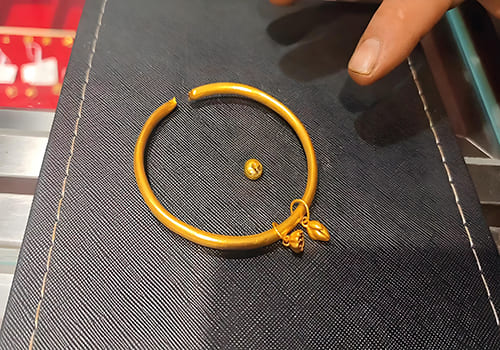
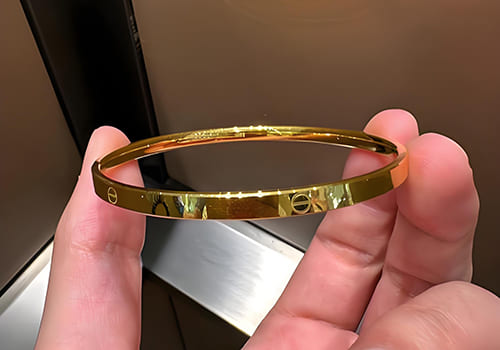
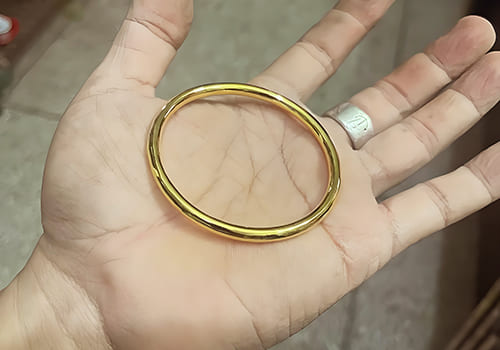
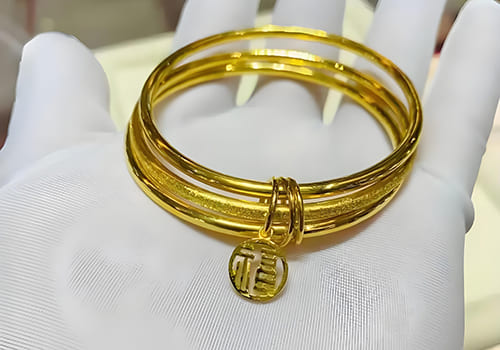
Equipment uses welding technology to connect metal materials (such as gold, silver, copper, etc.) through the application of heat and pressure, forming a perfect bracelet structure.
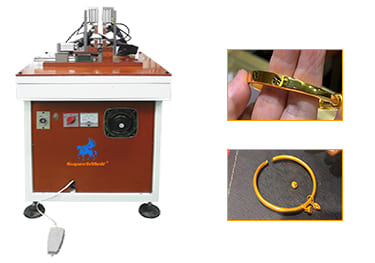
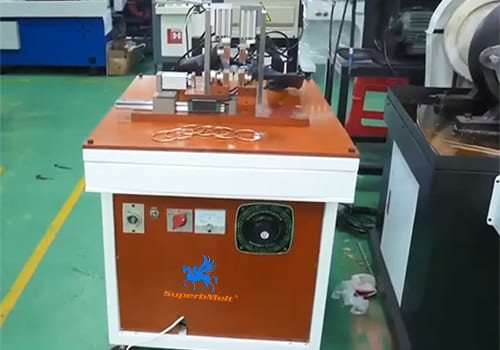
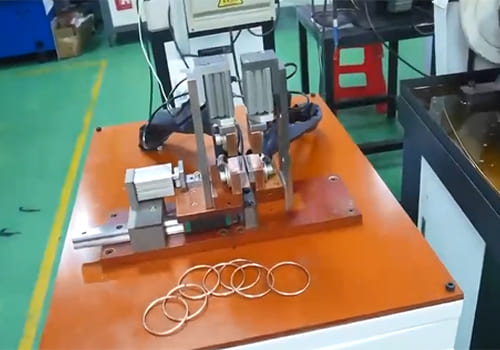
SuperbMelt Bracelet Welding Machine is specially designed for efficient and precise bracelet production. It ensures seamless and accurate welding, creating smooth, high-quality joints while minimizing material waste.
This welding machine can weld 6–10 hollow or solid bracelets per minute made from precious metals such as gold and silver, making it an ideal choice for mass production.
It supports processing solid metal wires with diameters ranging from 1.5 mm to 6.0 mm and hollow tubes with a thickness of 0.5 mm or more.
If you need more information about bracelet production, please feel free to contact us!
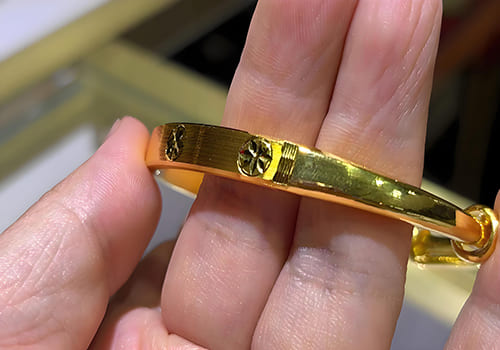
| Model number | SPB-HBW882 |
| Power source | 220V |
| Power | 8 kw |
| Applicable metal | Gold, Silver, Platinum, Palladium, and their alloys |
| Processing range | solid wire 1.5-6.0mm, hollow tube thickness above 0.5mm |
| Working efficiency | 6-10pcs/min |
| Machine weight | 50KG |
| Operation mode | switch control |
Features
- Efficient Welding: Capable of welding 6-10 bracelets per minute, making it ideal for mass production and improving work efficiency.
- Wide Applicability: Supports solid wires with diameters ranging from 1.5mm to 6.0mm and hollow tubes with thickness ≥0.5mm, accommodating various bracelet designs.
- Precise Seamless Welding: Ensures smooth and high-quality joints, minimizing the need for extensive post-processing and enhancing the final product’s appearance.
- Suitable for Various Precious Metals: Works with gold, silver, copper, and other precious metals, meeting diverse material needs in bracelet production.
- User-Friendly Operation: Features a switch control mode, making it simple to operate with minimal technical expertise required.
Advantages
- Minimized Material Waste: Precise welding reduces material loss, ensuring cost efficiency and high-quality output.
- Enhanced Productivity: High-speed welding functionality supports large-scale production, significantly reducing production time.
- Versatility: Accommodates different materials and designs, offering flexibility to meet unique customer requirements.
- Lower Labor Costs: Automated operation reduces manual intervention, cutting labor costs while ensuring consistent quality and accuracy.
SuperbMelt Bracelet Welder has a wide range of applications in the jewelry manufacturing industry. These include:
- Hollow and Solid Bracelet Welding: Designed specifically for welding hollow or solid bracelets made from precious metals such as gold, silver, and copper.
- Custom Jewelry Production: Ideal for creating customized bracelet designs in various shapes and sizes, catering to different customer needs.
- Mass Production: With its high efficiency of welding 6-10 bracelets per minute, it is well-suited for large-scale manufacturing in jewelry factories.
- Precious Metal Processing: Besides bracelets, it can be used to weld other jewelry components made of similar materials, making it versatile for various precious metal products.
- Repair and Maintenance: Useful for repairing damaged bracelets or restoring seamless connections on worn jewelry pieces.
- Artisanal and Industrial Jewelry Production: Perfect for both small-scale artisan workshops and large industrial jewelry manufacturers due to its precision and efficiency.
This machine supports the production of high-quality, aesthetically pleasing bracelets while ensuring cost efficiency and reduced material wastage, making it a valuable tool for modern jewelry-making processes.
Why SuperbMelt Bracelet Welder


Any Question About SuperbMelt Bracelet Welder
Bracelet Welding Machine: Guide to the SuperbMelt Bracelet Welder
Introduction to Bracelet Manufacturing
1.1 Why Welding Technology Matters in Jewelry
Welding plays a critical role in modern jewelry production, especially in bracelet manufacturing where durability, appearance, and precision are equally important. Unlike traditional soldering, which may leave visible seams or weaken under stress, welding technology creates seamless, high-strength joints that preserve both the beauty and integrity of the jewelry.
Key reasons welding technology is essential in jewelry:
-
Seamless Aesthetics – Advanced welders ensure smooth, invisible joints that enhance the overall elegance of the bracelet.
-
Structural Strength – Welding produces strong bonds that can withstand daily wear, preventing breakage or deformation.
-
Compatibility with Precious Metals – Modern welders are capable of handling gold, silver, platinum, and other metals without compromising their quality.
-
Efficiency in Mass Production – Machines like the SuperbMelt Bracelet Welder can weld multiple hollow or solid bracelets per minute, ideal for large-scale jewelry manufacturing.
-
Reduced Material Waste – High-precision welding minimizes excess use of costly metals, making production more economical.
-
Support for Complex Designs – Welding enables jewelers to bring intricate and delicate bracelet patterns to life without sacrificing strength.
In today’s jewelry industry, welding is not just a technical necessity—it is the backbone of precision manufacturing, allowing jewelers to merge artistry with durability while keeping up with modern production demands.
Types of Bracelet Manufacturing Methods
Bracelet production has evolved through centuries, moving from purely handcrafted techniques to advanced digital and machine-based processes. Each manufacturing method has its own advantages, depending on the design complexity, production scale, and material requirements.
2.1 Welding Hollow Tubes
Welding hollow tubes is a modern and efficient method for producing lightweight, durable bracelets, especially suitable for large-scale manufacturing. This method uses specialized welding equipment to seamlessly join metal tubes into finished bracelet forms, ensuring both strength and aesthetics.
Process Steps
-
Material Preparation – Hollow metal tubes, typically made of gold, silver, or other precious metals, are cut to the desired lengths.
-
Shaping – Tubes are bent or formed into circular or oval bracelet shapes using forming machines.
-
Welding – Specialized equipment, such as the SuperbMelt Bracelet Welder, is used to create precise, seamless welds.
-
Surface Finishing – Polishing and other finishing processes ensure a smooth, high-quality appearance.
Applications
-
Lightweight, everyday wear bracelets.
-
High-volume production where speed and consistency are required.
-
Designs that require strong yet delicate structures.
Benefits
-
Material Efficiency – Uses hollow tubes to reduce metal consumption while maintaining strength.
-
High Precision – Welding ensures seamless joints with no visible marks.
-
Rapid Production – Capable of producing multiple bracelets per minute.
-
Durable and Wear-Resistant – Welded bracelets maintain their shape and integrity over time.
Hollow tube welding combines efficiency, durability, and elegance, making it a preferred method for both mass production and high-quality bracelet designs.
2.2 Decorative Methods
Decorative methods enhance the aesthetic appeal and value of bracelets, transforming them from simple metal forms into beautiful, eye-catching jewelry. These techniques can be applied after the basic structure of the bracelet is complete, whether it is handmade, cast, machined, 3D-printed, or welded.
Common Decorative Techniques
-
Stone Setting – Embedding gemstones, diamonds, or semi-precious stones to add sparkle and elegance.
-
Engraving – Carving patterns, logos, or personalized messages onto the bracelet surface.
-
Electroplating & Coating – Applying gold, silver, or other metal coatings to achieve desired colors or finishes.
-
Texturing & Polishing – Creating unique surface effects, such as matte, brushed, or hammered finishes.
Applications
-
High-end and luxury jewelry.
-
Personalized gifts or commemorative pieces.
-
Market segments requiring visually striking and unique designs.
Benefits
-
Increased Market Value – Enhances the perceived and actual worth of the bracelet.
-
Customization – Enables bespoke designs for individual clients.
-
Versatility – Can be applied to a wide range of bracelet materials and styles.
-
Aesthetic Enhancement – Adds beauty, uniqueness, and sophistication to the final product.
Decorative methods allow jewelers to combine artistry with craftsmanship, providing a final touch that elevates a bracelet from a functional accessory to a treasured piece of jewelry.
Why Bracelet Welding Machines Are Essential
Bracelet welding machines, such as the SuperbMelt Bracelet Welder, are essential in modern bracelet manufacturing because they combine precision, efficiency, and durability. They create seamless and invisible joints, ensuring both the aesthetic appeal and structural strength of the bracelet, while reducing material waste—especially important for precious metals like gold, silver, or platinum. These machines enable high-speed production, welding multiple hollow or solid bracelets per minute, and guarantee consistent quality across all units. Additionally, they support intricate designs and hollow structures that are difficult to assemble manually, and are compatible with a wide range of metals. In short, bracelet welding machines bridge traditional craftsmanship with modern production demands, making them indispensable for producing durable, elegant, and high-quality bracelets efficiently.
3.1 Increasing Market Demand
The global bracelet market has experienced rapid growth in recent years, driven by rising consumer interest in fashion, personalization, and luxury jewelry. Consumers are seeking bracelets that are not only stylish but also high-quality, durable, and unique, creating opportunities for both small boutique jewelers and large-scale manufacturers.
Key Drivers of Demand
-
Personalization & Customization – Customized bracelets, including engraved, gemstone-set, or digitally designed pieces, are increasingly popular.
-
Fashion Trends – Bracelets have become versatile accessories, complementing outfits and expressing personal style.
-
Gift & Commemorative Market – Bracelets are a preferred choice for special occasions such as anniversaries, birthdays, and weddings.
-
Affordable Luxury – Advances in manufacturing technology, including 3D printing and automated welding, make high-quality bracelets accessible to a wider audience.
-
Global Reach – E-commerce and social media platforms allow jewelers to reach international customers, increasing demand for both unique and mass-produced designs.
Implications for Manufacturers
-
Higher demand emphasizes the need for efficient production methods and consistent quality.
-
Modern equipment, such as the SuperbMelt Bracelet Welder, 3D printers, and machining tools, allows manufacturers to meet market demand while maintaining precision and reducing costs.
-
The combination of innovation, automation, and craftsmanship positions manufacturers to capitalize on the growing market for bracelets.
In summary, the increasing market demand encourages the adoption of advanced manufacturing technologies, enabling jewelers to produce stylish, durable, and customizable bracelets that meet the expectations of modern consumers.
3.2 Efficient Processing
Efficiency is a critical factor in modern bracelet manufacturing, especially for businesses aiming to meet high market demand while maintaining quality. Advanced equipment, such as the SuperbMelt Bracelet Welder, 3D printers, and machining tools, allows manufacturers to streamline production, reduce manual labor, and optimize material usage.
Key Aspects of Efficient Processing
-
High-Speed Production – Machines can weld multiple bracelets per minute or produce consistent prototypes rapidly, significantly shortening production cycles.
-
Reduced Material Waste – Precise cutting, shaping, and welding minimize metal loss, which is particularly important for precious metals like gold and silver.
-
Consistency & Accuracy – Automated processes ensure each bracelet meets exact specifications, eliminating variations common in manual methods.
-
Integration of Multiple Steps – Equipment can combine forming, cutting, welding, and finishing, reducing the need for multiple handling stages.
-
Adaptability for Various Designs – Modern machines can handle solid wires, hollow tubes, and complex patterns, supporting both mass production and custom designs.
By focusing on efficient processing, jewelers can produce high-quality bracelets at scale, reduce production costs, and respond quickly to market trends without compromising on craftsmanship or durability.
3.3 Versatility of Materials
Modern bracelet manufacturing requires machines that can work with a wide range of metals and alloys, ensuring flexibility in design, production, and market offerings. Equipment like the SuperbMelt Bracelet Welder can process various materials, from precious metals such as gold, silver, and platinum to more affordable metals like copper and brass.
Key Advantages of Material Versatility
-
Supports Different Designs – Jewelers can create everything from delicate, lightweight bracelets to bold, solid pieces.
-
Accommodates Hollow and Solid Structures – Machines can handle both hollow tubes and solid wires, expanding design possibilities while optimizing material usage.
-
Enables Customization – Clients can request bracelets in different metals or mixed-metal designs, enhancing personalization options.
-
Cost Management – By using less expensive metals for prototypes or parts of a design, manufacturers can control costs without compromising quality.
-
Market Adaptability – The ability to process multiple materials allows jewelers to cater to different price points and consumer preferences.
The versatility of materials ensures that manufacturers are not limited by metal type or structure, making it possible to produce a broad range of bracelets that meet diverse design and market demands.
3.4 Waste Reduction
Waste reduction is a crucial consideration in modern bracelet manufacturing, particularly when working with precious metals such as gold, silver, or platinum. Advanced equipment, like the SuperbMelt Bracelet Welder, 3D printers, and precision machining tools, helps minimize material loss while maintaining high-quality production.
Key Strategies for Waste Reduction
-
Precise Cutting & Shaping – Automated cutting and forming reduce excess metal compared to manual methods.
-
Efficient Welding – Seamless and accurate welding avoids material loss from errors or rework.
-
Hollow Structures – Using hollow tubes instead of solid metals reduces the amount of material required without compromising durability.
-
Optimized Prototyping – 3D printing allows designers to create prototypes or small batches efficiently, avoiding waste from trial-and-error in metal casting.
-
Recycling Scraps – Excess metal from cutting, trimming, or polishing can be melted and reused in production, further reducing waste.
By implementing these strategies, manufacturers can maximize material utilization, reduce costs, and maintain environmental responsibility, all while producing high-quality, durable bracelets suitable for both mass production and custom designs.
How the SuperbMelt Bracelet Welder Works
The SuperbMelt Bracelet Welder is a high-precision, efficient, and versatile machine designed for seamless bracelet production. It works by preparing solid wires or hollow tubes of metals like gold, silver, or copper, shaping them into circular forms, and then fusing the ends using controlled heat and pressure. This process ensures strong, durable joints without compromising the metal’s quality. Capable of welding 6–10 bracelets per minute, the welder handles solid wires from 1.5mm to 6.0mm and hollow tubes ≥0.5mm thick. Its precise operation minimizes material waste, maintains consistent quality, and supports both mass production and intricate custom designs, effectively bridging traditional craftsmanship with modern automated efficiency.
4.1 Supported Materials
The SuperbMelt Bracelet Welder is designed to work with a wide range of metals, making it highly versatile for modern bracelet manufacturing. It can process precious metals, including gold, silver, and platinum, as well as base metals like copper and brass.
Key Advantages of Supported Materials
-
Flexibility in Design – Jewelers can create bracelets in different metals or even combine multiple metals for mixed designs.
-
Adaptable to Hollow and Solid Structures – The welder accommodates both solid wires and hollow tubes, expanding the possibilities for lightweight or heavy-duty designs.
-
Preserves Material Quality – The welding process is precise and controlled, ensuring that the metal’s properties, color, and strength remain intact.
-
Supports Customization – Enables bespoke designs with various metals, allowing personalized creations for clients.
-
Cost Optimization – Less expensive metals can be used for prototypes or mixed-metal pieces, reducing overall material costs.
By supporting a broad spectrum of metals and structures, the SuperbMelt Bracelet Welder allows manufacturers to produce a wide variety of bracelets, from high-end luxury pieces to everyday wear, without compromising quality or durability.
4.2 Welding Process
The welding process is the core function of the SuperbMelt Bracelet Welder, designed to produce strong, seamless, and precise joints in bracelets. By combining controlled heat and pressure, the machine fuses metal components without altering their structural integrity or aesthetic appearance.
Key Steps in the Welding Process
-
Preparation – Cut and shape solid wires or hollow tubes into the desired bracelet form.
-
Positioning – Place the bracelet ends or rings in the welding fixture for accurate alignment.
-
Controlled Welding – The machine applies precise heat and pressure to join the metals, ensuring a smooth and durable bond.
-
Inspection & Adjustment – After welding, each joint is inspected for strength and uniformity; minor adjustments or polishing are applied if needed.
-
Finishing – Polishing and surface treatment are performed to remove any marks and achieve a flawless appearance.
Advantages of the Welding Process
-
Seamless Joints – Creates invisible, high-quality welds that enhance the bracelet’s aesthetic.
-
Material Safety – Prevents discoloration or weakening of precious metals.
-
High Efficiency – Can weld multiple bracelets per minute, ideal for large-scale production.
-
Consistency – Ensures uniform quality across all units.
-
Supports Complex Designs – Capable of welding hollow tubes, intricate shapes, and delicate structures.
The SuperbMelt welding process allows manufacturers to combine precision, durability, and efficiency, making it an essential step in both custom and mass-produced bracelet manufacturing.
4.3 Advantages Over Traditional Methods
The SuperbMelt Bracelet Welder offers several advantages compared to traditional soldering or manual welding techniques, transforming bracelet manufacturing with greater efficiency, precision, and reliability.
Key Advantages
-
Seamless and Strong Joints – Unlike manual soldering, the machine creates smooth, invisible welds that are highly durable.
-
Reduced Material Waste – Precise welding minimizes metal loss, which is especially important when working with precious metals.
-
Faster Production – The automated process can weld multiple bracelets per minute, greatly increasing output.
-
Consistent Quality – Each bracelet meets exact specifications, eliminating inconsistencies common in manual methods.
-
Supports Complex and Hollow Designs – Capable of handling delicate, intricate, or hollow structures that are difficult to weld manually.
-
Lower Risk of Metal Damage – Controlled heat and pressure protect the metal from discoloration, deformation, or weakening.
By combining precision, efficiency, and material safety, the SuperbMelt Bracelet Welder outperforms traditional techniques, enabling jewelers to produce high-quality, durable, and visually flawless bracelets for both custom and mass production.
Conclusion
The SuperbMelt Bracelet Welder provides a comprehensive, efficient, and precise solution for modern bracelet manufacturing. By integrating advanced machinery for casting, rolling, tube forming, drawing, ring shaping, cutting, and welding, it ensures consistent quality, strong structural integrity, and seamless joints across both hollow and solid bracelets. This technology supports a wide range of metals, including gold, silver, copper, and alloys, while minimizing material waste and production time.
With its combination of high precision, versatility, and efficiency, the SuperbMelt Bracelet Welder enables jewelers to meet increasing market demand, produce large quantities with consistent quality, and create intricate custom designs. Whether for small-scale artisanal production or large-scale industrial manufacturing, SuperbMelt delivers a reliable, cost-effective, and high-quality solution, bridging traditional craftsmanship with modern automation.FAQ Guide of Bracelet Welder
- 1. how long do welded bracelets last?
- 2. What materials can be welded with a bracelet welder?
- 3. What is the welding accuracy of the bracelet welding machine?
- 4. What are the main benefits of using a bracelet welder?
- 5. What is the power requirement for a bracelet welding machine?
- 6. What is the processing range of a bracelet welder?
- 7. Does bracelet welding damage the metal or affect its quality?
1. how long do welded bracelets last?
The durability of welded bracelets depends on several factors, including the materials used (e.g., gold, silver, platinum), the quality of the welding process, and how the bracelet is worn and maintained.
- Key Factors Influencing Longevity:
Material Quality:
High-quality metals like gold, silver, and platinum are less prone to corrosion or wear, ensuring a longer lifespan. - Welding Precision:
A properly welded bracelet with seamless joints, such as those made using machines like the SuperbMelt bracelet welder, creates strong bonds that are durable under normal wear conditions. - Usage and Maintenance:
Regular cleaning and proper handling (e.g., avoiding harsh chemicals, physical impacts, or over-stretching) significantly extend a bracelet’s life. - Type of Bracelet:
Hollow bracelets may require extra care compared to solid ones because they are more prone to deformation under pressure.
With proper welding and care, welded bracelets can last for decades, maintaining their structural integrity and appearance. Fine jewelry, particularly bracelets made from durable materials and using advanced welding technology, is often designed to last a lifetime if treated well. For bracelets worn daily or exposed to rough conditions, periodic inspection by a jeweler can ensure long-term durability.
2. What materials can be welded with a bracelet welder?
Bracelet welding machines use heat and pressure to fuse two metal pieces, creating a durable bond without compromising the bracelet’s design or structure.
3. What is the welding accuracy of the bracelet welding machine?
High-precision machines ensure a seamless weld, leaving no visible marks or defects on the bracelet’s surface.
4. What are the main benefits of using a bracelet welder?
Key benefits include faster production, higher welding precision, minimal material waste, and consistent quality for large-scale manufacturing.
5. What is the power requirement for a bracelet welding machine?
Most bracelet welders operate on a standard voltage of 220V with power consumption around 8KW, but specifications may vary by model.
6. What is the processing range of a bracelet welder?
Many machines can handle solid wire with diameters from 1.5mm to 6.0mm and hollow tube thicknesses above 0.5mm.
7. Does bracelet welding damage the metal or affect its quality?
No, modern welding machines are designed to protect the integrity of the metal while creating a strong and smooth bond.
 © Copyright 2008-2026 Superb Electromachinery Co., Limited