
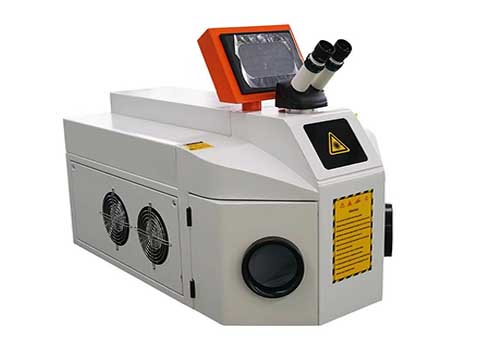
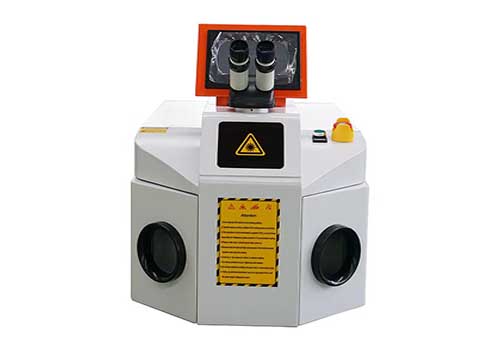
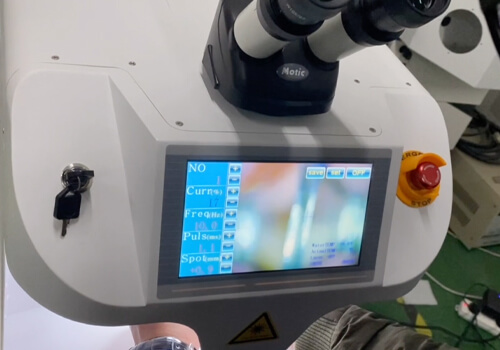


Introduction – The Core Value of Laser Bracelet Welding Machines
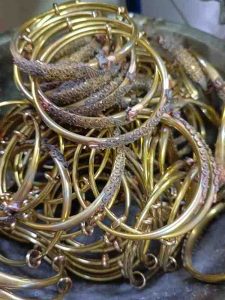
Technical Core Analysis of Laser Bracelet Welding
2.1, Fundamentals of Laser Welding
Generation and Energy Focusing Mechanism of the Laser Beam
The generation of a laser beam relies on the energy conversion process within the laser generator. In bracelet welding, fiber laser generators are commonly used. They employ semiconductor diodes as pump sources to convert electrical energy into laser light of a specific wavelength (typically 1064 nm). This wavelength has a high absorption rate for metals (approximately 65% for gold and 55% for stainless steel), resulting in minimal energy loss.
Energy focusing is achieved through an optical system. After being emitted from the generator, the laser travels through a transmission fiber to the welding head, where a focusing lens (with a focal length typically between 50–100 mm) concentrates the beam into a fine spot. The material and precision of the focusing lens directly affect the beam quality. High-quality quartz lenses can achieve a transmittance above 99.5% and accurately control the spot diameter within 0.1–2 mm. For example, with a 50 mm focal length lens, the spot diameter can be reduced to 0.1 mm, achieving an energy density of up to 10⁶ W/cm²—sufficient to instantly melt high-melting-point metals like platinum (melting point: 1768 °C). In comparison, a 100 mm focal length lens produces a spot of about 0.2 mm, making it better suited for welding medium-thickness metals.
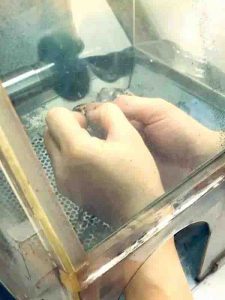
Core Process of Metal Melting and Solid-State Bonding
The essence of laser welding is “localized energy concentration leading to solid-state metal bonding,” which occurs in three stages:
Energy Absorption: The focused laser beam acts on the bracelet’s welding area. Within microseconds, the metal surface absorbs the energy, rapidly heating to above its melting point.
Melt Pool Formation: The metal surface quickly melts to form a molten pool—the size of which depends on laser power and exposure time. For example, a 200 W laser acting for 0.1 seconds on 18K gold can form a melt pool approximately 1 mm in diameter and 0.5 mm deep. During this stage, inert gas (typically argon, ≥ 99.99% purity) continuously shields the molten pool, preventing oxidation.
Solid-State Bonding: After the laser stops, the molten pool rapidly cools and solidifies under the protection of the inert gas, forming a metallurgical bond with the surrounding base material. The weld’s tensile strength can reach 90–95% of the parent metal (for instance, an 18K gold weld has a tensile strength of about 700 MPa, nearly identical to the base material), ensuring a durable joint.
A key advantage of this process lies in its non-contact heating — the laser beam does not physically touch the metal, thus avoiding issues like electrode wear or contamination found in traditional welding. Moreover, the energy is concentrated only in a small area, leaving the rest of the bracelet virtually unaffected, making this technique especially suitable for welding thin-walled or precision-structured bracelets.
2.2, Common Laser Types and Their Characteristics in Bracelet Welding
Different types of lasers vary significantly in operating modes and energy characteristics, and the appropriate type should be selected based on the specific bracelet welding requirements—such as welding position, metal thickness, and precision needs.
Pulsed Laser: Suitable for High-Precision Spot Welding (Pore Repair, Claw Welding)
Pulsed lasers operate in an intermittent output mode, where each laser pulse’s energy and width can be independently adjusted (pulse energy 1–100 J, pulse width 0.1–10 ms), with peak power reaching 1–10 kW. Their main advantage lies in concentrated energy and short action time, allowing precise micro-area welding with an extremely small heat-affected zone (≤0.5 mm), ideal for high-precision bracelet welding.
For pore repair, when dealing with tiny pores of 0.1–0.3 mm, settings of 5–8 J pulse energy and 0.3–0.5 ms pulse width allow a thin metal wire (same material, 0.1 mm diameter) to be precisely melted into the defect in a single pass without affecting the surrounding surface. For bracelet claw welding, using 3–5 J pulse energy and 0.2–0.3 ms pulse width on 0.15–0.2 mm claws ensures a firm connection between the claw base and bracelet body while avoiding deformation that could loosen gemstones.
Additionally, pulsed lasers can perform dissimilar metal spot welding (e.g., gold-silver bracelets). By precisely controlling pulse energy, the difference in melting points (gold 1064°C, silver 961.8°C) is balanced to prevent over-melting.
Continuous Laser: Suitable for Long Seam Welding (Bracelet Joint Welding)
Continuous lasers output steadily within a 50–500 W power range, featuring stable beam quality (M² ≤ 1.2) and uniform energy density—ideal for long seam welding applications such as bracelet joint welding (typically 5–15 mm). Compared with pulsed lasers, continuous lasers offer higher welding efficiency. The weld depth and width can be controlled by adjusting the welding speed (1–10 mm/s), making them suitable for standardized mass production.
For example, in 18K gold bangle joint welding, using a 200 W continuous laser at a welding speed of 5 mm/s produces a 0.8 mm wide and 0.6 mm deep weld in just 30 seconds per bracelet. The weld is smooth and flat, requiring no post-grinding. For 3 mm thick stainless steel sports bracelets, increasing power to 300 W and reducing speed to 3 mm/s ensures full penetration, with tensile strength exceeding 92% of the base material—ideal for durability in daily wear. Continuous lasers can also be paired with automated workbenches for batch welding, greatly improving productivity and meeting the needs of large jewelry factories with daily outputs exceeding 500 pieces.
Fiber Laser: Superior Energy Density and Metal Compatibility
Fiber lasers are currently the mainstream type for bracelet welding. Based on fiber transmission technology, they can be paired with handheld welding heads or automated systems—combining the precision of pulsed lasers and the efficiency of continuous lasers. Their exceptional metal compatibility allows them to weld nearly all bracelet metals, from low-melting silver (961.8°C) to high-melting platinum (1768°C).
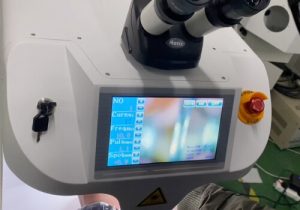
The high energy density of fiber lasers (up to 10⁶ W/cm²) easily handles high-melting metals. For example, when welding platinum bracelets, a 250 W fiber laser can raise the weld temperature to 1800°C within 0.5 seconds, ensuring complete melting and tight metallurgical bonding without pores or cracks. In complex structured bracelets, handheld fiber heads can rotate 360° to reach inner hollow areas for precise 0.3 mm joint welding, while automated platforms enable standardized mass production—balancing flexibility and efficiency.
Moreover, fiber lasers offer excellent stability, with a mean time between failures (MTBF) exceeding 10,000 hours and low maintenance costs, making them ideal for long-term, continuous industrial operation.
2.3, Key Technical Parameters Affecting Welding Quality
Power Adjustment: Matching Different Metal Thicknesses (0.1–5 mm Bracelet Materials)
Power is the key factor determining the degree of metal melting. If too low, it leads to weak welds with insufficient tensile strength; if too high, it causes burn-through or excessive loss. For bracelets with different thicknesses (0.1–5 mm), precise power adjustment is essential:
0.1–0.5 mm Thin-Walled Materials (e.g., 0.3 mm silver bracelet, 0.5 mm 18K gold bracelet): use 50–100 W. For instance, when welding a 0.3 mm silver bracelet, 80 W ensures complete surface melting without burn-through.
0.5–2 mm Medium Thickness Materials (e.g., 1 mm platinum bracelet, 1.5 mm stainless steel bracelet): use 100–200 W. For a 1.5 mm stainless steel bracelet, 150 W produces a 0.7 mm deep weld, ensuring strong bonding.
2–5 mm Thick-Walled Materials (e.g., 3 mm brass bracelet, 5 mm titanium bracelet): use 200–500 W. For a 5 mm titanium bracelet, 400 W guarantees full penetration, with weld tensile strength reaching 90% of the base material.
Power adjustment must also consider metal melting points. For example, when welding high-melting platinum (1768°C), the power should be 30–50% higher than that for gold (1064°C) of the same thickness. Thus, a 1 mm platinum bracelet requires 180 W, while a 1 mm gold bracelet needs only 120 W.
Spot Diameter: Precision Control (0.1–2 mm) and Its Relation to Accuracy
The spot diameter directly affects welding precision and energy density — smaller spots provide higher precision and energy density for fine structures, while larger spots are suited for broader welds:
0.1–0.5 mm Small Spot: for fine structures (0.1–0.3 mm), such as gemstone claws (0.15 mm) and pore repair (0.2 mm). High energy density (up to 10⁶ W/cm²) allows precise targeting without damaging nearby areas.
0.5–1 mm Medium Spot: for general welding of 0.5–2 mm bracelets, such as 1 mm 18K gold joints or silver bracelet texture repairs — balancing precision and efficiency.
1–2 mm Large Spot: for 2–5 mm thick bracelets, such as 3 mm brass bracelet edge joining — reducing the number of passes and improving efficiency.
For example, when welding a 0.2 mm gemstone claw, a 0.3 mm spot focuses energy precisely at the claw base, preventing gemstone overheating. In 3 mm brass bracelet joint welding, a 2 mm spot covers the weld area in one pass, increasing welding speed to 8 mm/s, completing a weld in just 2 seconds.
Pulse Frequency: Optimization to Prevent Thermal Deformation
Pulse frequency (applicable to pulsed lasers only) refers to the number of laser pulses per second (1–100 Hz). It controls heat accumulation, preventing deformation caused by continuous heating. Low frequencies lower efficiency, while high frequencies can cause overheating and distortion.
For different materials and thicknesses, pulse frequency must be optimized:
Low Frequency (1–10 Hz): for high thermal conductivity, thin-walled materials (e.g., 0.3 mm silver bracelet, 429 W/(m·K)). Low frequency reduces heat buildup — at 5 Hz, each pulse is spaced 0.2 s apart, allowing full heat dissipation.
Medium Frequency (10–50 Hz): for medium-thickness, moderate-conductivity materials (e.g., 1 mm 18K gold bracelet, 120 W/(m·K)). At 20 Hz, efficiency is maintained while limiting the heat-affected zone to ≤0.3 mm.
High Frequency (50–100 Hz): for thick, low-conductivity materials (e.g., 3 mm platinum bracelet, 71.6 W/(m·K)). High frequency improves efficiency without deformation — at 80 Hz, continuous welding can be achieved with stable temperature control.
For instance, when welding a 0.3 mm silver bracelet pore, a 5 Hz pulse frequency with 0.2-second intervals between welds ensures surrounding metal cools before the next pulse, completely preventing deformation. In contrast, welding a 3 mm platinum bracelet joint at 80 Hz enables 80 pulses per second, forming a continuous weld quickly without noticeable heat distortion.
Metals and Their Characteristics Suitable for Laser Bracelet Welding
The physical properties of different metals — such as melting point, thermal conductivity, and reflectivity — vary significantly, directly affecting laser welding parameter settings and operational techniques. Only by formulating tailored solutions based on these metal characteristics can high-quality welding be achieved.
3.1, Precious Metals and Alloys
Precious Metals (Gold, Silver, Platinum, Palladium): Tailored Laser Welding Strategies for High-End Bracelets
Precious metals are the core materials of high-end bracelets. Due to their high value and strict processing precision requirements, laser welding processes must be specifically optimized.
Pure Gold (Au): Low-Spatter Welding under High Conductivity
Pure gold (24K) has a melting point of 1064°C and extremely high electrical and thermal conductivity (thermal conductivity 316 W/(m·K)). During laser welding, heat rapidly spreads, causing an unstable molten pool, while high-purity gold has strong fluidity, leading to spattering.
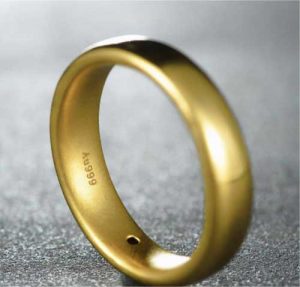
To achieve low-spatter welding, both parameters and operation must be optimized:
Parameters: Use pulsed laser mode with power at 80–120 W (for 0.5–1 mm thickness), shorten pulse width to 0.2–0.3 ms to reduce molten pool formation time, and lower pulse frequency to 5–10 Hz to prevent heat accumulation.
Operation: Adopt a “low-energy, multiple-pass” strategy. For example, weld a pure gold bracelet joint in 3–5 passes, pausing 0.1–0.2 s between each pass for heat dissipation. Increase argon flow to 8–10 L/min to protect the molten pool and prevent spattering. Clean the gold surface with alcohol before welding to remove fingerprints and oils. Using this method, spatter can be controlled below 0.5%, and weld surface smoothness reaches Ra 0.8 μm, meeting high-end jewelry appearance standards.
Pure Silver (Ag): Oxidation Protection and Temperature Matching
Pure silver melts at 961.8°C, with thermal conductivity (429 W/(m·K)) second only to gold, but its chemical reactivity is high. During welding, it easily oxidizes to black silver oxide (Ag₂O), affecting appearance and strength. Its high fluidity can also cause “sagging” along the bracelet surface.
Solutions:
Pre-weld cleaning with 5% dilute nitric acid removes existing oxides.
Use high-purity argon (≥99.999%) with the nozzle ≤3 mm from the weld to create a local oxygen-free environment, flow 6–8 L/min to protect without disturbing the molten pool.
Welding power should be 10–15% lower than for the same thickness gold (e.g., 0.5 mm silver: 70–80 W; 0.5 mm gold: 80–90 W). Pulse width 0.3–0.5 ms to minimize exposure time and oxidation.
Post-weld, cool immediately with water and gently polish the weld with toothpaste to restore shine.
K Gold (18K, 14K): Parameter Adaptation for Different Alloy Ratios
K gold alloys combine gold with other metals (copper, silver, zinc). 18K gold contains 75% gold; 14K gold contains 58.3%. Differences in gold content affect melting point, hardness, and thermal conductivity, requiring tailored welding parameters.
18K Gold: Melting point ~1000–1050°C, thermal conductivity ~120 W/(m·K). For 0.5–1 mm thickness, use 100–130 W power, 15–20 Hz pulse frequency, argon flow 5–7 L/min. Copper content oxidizes easily; strengthen argon protection. For rose gold, post-weld cleaning with weak acid (e.g., citric acid) removes oxides.
14K Gold: Melting point 900–950°C, higher hardness (~HV200 vs HV150 for 18K), slightly lower thermal conductivity. Reduce power 15–20% (e.g., 1 mm thickness: 80–100 W, 10–15 Hz) to prevent over-melting. Post-weld polishing requires fine sandpaper (≥1000 grit) to avoid surface scratches.
Platinum (Pt) and Palladium (Pd): Laser Energy Adjustment for High-Melting Metals
Platinum melts at 1768°C, palladium at 1554°C, both with low thermal conductivity (Pt 71.6 W/(m·K), Pd 72.1 W/(m·K)). Welding requires sufficient energy while controlling heat accumulation to avoid deformation.
Platinum: 1–2 mm thickness, power 250–300 W, pulse frequency 20–25 Hz, pulse width 0.5–0.8 ms. Preheat the material with 50–80 W low-power laser scanning 3–5 times to 200–300°C to reduce thermal stress. Argon flow 8–10 L/min prevents nitride formation. Weld strength ~1200 MPa, suitable for durable high-end bracelets.
Palladium: Similar to platinum but prone to oxidation with poor molten fluidity. 1 mm thickness: 200–250 W, 15–20 Hz, pulse width 0.6–1.0 ms to ensure full fusion. Use wider argon coverage (nozzle 8–10 mm) to prevent oxidation. Minor color differences can be corrected with low-temperature annealing (300–400°C, 10 min) to restore silver-white luster.
3.2, Common Non-Ferrous Metals and Alloys
Non-Ferrous Metals and Alloys (Copper, Aluminum, Stainless Steel): Laser Welding Strategies for Mid- to Low-End and Functional Bracelets
Non-ferrous metals and alloys such as copper, aluminum, and stainless steel are commonly used in mid- to low-end or functional bracelets. Welding these materials focuses on addressing high thermal conductivity, thick oxide layers, and high corrosion resistance requirements.
Copper and Copper Alloys: Optimizing Parameters for High Thermal Conductivity
Pure Copper: Melting point 1085°C, very high thermal conductivity (401 W/(m·K)). During welding, heat spreads rapidly, causing the molten pool to cool too quickly, leading to incomplete penetration or porosity.
Brass (Copper-Zinc Alloy, 30–40% Zn): Melting point 880–950°C; zinc can evaporate (boiling point 907°C), further complicating welding.
Solutions for high thermal conductivity:
Use high-frequency, short-pulse parameters. For 1–2 mm pure copper bracelets: 150–200 W power, 30–40 Hz pulse frequency, 0.2–0.3 ms pulse width. Frequent pulses replenish heat quickly, preventing rapid cooling.
Prepare the surface by sanding to expose the metal shine, removing oxide layers (CuO melts at 1326°C, which impedes laser absorption). Apply a small amount of borax (flux) to reduce melting point and improve molten pool fluidity.
Brass: Reduce power 10–15% compared to pure copper (e.g., 1 mm brass bracelet: 130–150 W), increase pulse frequency to 40–50 Hz, shorten pulse duration to reduce zinc evaporation. Argon flow 7–9 L/min protects the molten pool and prevents white zinc oxide formation. Post-weld porosity can be filled using low power (80–100 W) and small spot size (0.3 mm) for precise repair.
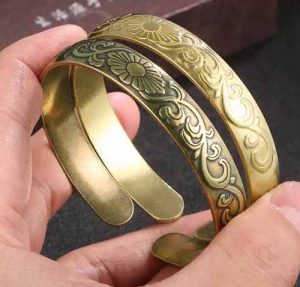
Aluminum and Aluminum Alloys: Oxide Layer Removal and Weld Stability
Pure Aluminum: Melting point 660°C, but forms a dense oxide layer (Al₂O₃, melting point 2050°C) that prevents laser penetration, causing “false welds.”
Aluminum Alloys (e.g., 6061): Lightweight, high-strength, commonly used for sport bracelets, prone to thermal cracking due to high thermal expansion.
Key strategies:
Remove oxide layer mechanically with a wire brush or by low-power laser pre-scanning (50–60 W, 10 mm/s), or apply specialized aluminum flux to lower oxide melting point.
Set welding parameters to balance stability and prevent cracks. For 1–2 mm aluminum alloy bracelets: 120–180 W, 20–30 Hz, 0.4–0.6 ms pulse width. Use pulse stacking: each main pulse (120–180 W) followed by 1–2 small auxiliary pulses (50–80 W) to slow cooling rate (from 10³°C/s to 5×10²°C/s), relieving internal stress.
Post-weld, immediately immerse the bracelet in water to prevent thermal cracks and maintain dimensional accuracy (≤0.05 mm deviation).
Stainless Steel: Ensuring Weld Corrosion Resistance
Stainless steel (304, 316L): Melting point 1450–1480°C, high strength and corrosion resistance, used in sport or industrial-style bracelets. Core welding goal: maintain weld corrosion resistance equal to or above the base material, avoiding intergranular corrosion or pitting.
304 Stainless Steel: Control carbide precipitation. For 1–3 mm thickness: 200–250 W, 15–25 Hz, welding speed 5–8 mm/s to minimize time in the 450–850°C sensitization range (prevents Cr carbide precipitation). Argon flow 7–8 L/min ensures full protection, including the backside (use back argon shielding). Post-weld, clean with stainless steel-specific solutions (e.g., nitric acid) to remove oxides and impurities.
316L Stainless Steel: Contains molybdenum, higher corrosion resistance, often used for medical-grade bracelets. Use ultra-high purity argon (99.999%) to maintain weld purity. Power 5–10% lower than 304 (1 mm 316L: 190–240 W) to minimize heat-affected zone (1–1.5 mm). Post-weld, perform passivation (5% nitric acid, 20 min) to form a dense oxide layer, enhancing corrosion resistance to meet medical-grade standards.
3.3, Core Principles of Metal Compatibility
Core Principles for Laser Bracelet Welding
Regardless of the metal type, laser welding of bracelets must follow three core principles to balance welding quality and efficiency.
1. Matching Melting Point with Laser Energy
Laser energy must meet the “melting threshold” (minimum energy to melt the metal surface) without exceeding the “over-melting threshold” (energy that causes burn-through or spatter). This balance can be initially estimated using the formula:
Laser Energy Density (J/mm²)=Laser Power (W)×Pulse Width (ms)Spot Area (mm²)\text{Laser Energy Density (J/mm²)} = \frac{\text{Laser Power (W)} \times \text{Pulse Width (ms)}}{\text{Spot Area (mm²)}}
Different metals have different melting energy density thresholds:
Pure gold: ~5–8 J/mm²
Pure silver: ~4–7 J/mm²
Platinum: ~8–12 J/mm²
Stainless steel: ~7–10 J/mm²
Example: Welding a 1 mm thick pure gold bracelet with 100 W power, 0.5 ms pulse width, and 0.8 mm spot diameter (area ≈0.5024 mm²) gives:
Energy Density=100×0.50.5024≈99.5 J/mm²\text{Energy Density} = \frac{100 \times 0.5}{0.5024} \approx 99.5 \text{ J/mm²}
This far exceeds gold’s melting threshold, so parameters must be adjusted (e.g., reduce pulse width to 0.1 ms → 19.9 J/mm²) to ensure sufficient melting while avoiding excessive energy input.
2. Effects of Thermal Conductivity and Reflectivity
High thermal conductivity metals (gold, silver, copper, >300 W/(m·K)) require increased pulse frequency and shorter pulse width to reduce heat dissipation. Example: 30–40 Hz high-frequency pulses for pure silver to prevent rapid molten pool cooling. Power can be raised 10–20% above low-conductivity metals to compensate for heat loss.
Low thermal conductivity metals (platinum, stainless steel, <100 W/(m·K)) need lower pulse frequency and longer pulse intervals to avoid thermal accumulation and deformation. Example: platinum welding with 20–25 Hz medium-frequency pulses, pausing 1–2 s every 2 mm; power can be slightly reduced to avoid local overheating.
High reflectivity metals (silver 95%, gold 90%) reflect a large portion of laser energy. To improve absorption: clean the surface (remove oxides and oils), use shorter wavelength lasers (e.g., 1064 nm fiber laser, 30–50% higher absorption than 10.6 μm CO₂ laser), or apply black absorbents (e.g., graphite powder) to reduce reflection and ensure effective energy input.
3. Key Techniques for Dissimilar Metal Welding
Dissimilar metals (gold-silver, gold-copper, stainless steel-titanium alloys) pose challenges due to differences in melting point and thermal conductivity, increasing risks of incomplete fusion or brittle phase formation. Critical points include:
Set parameters based on the higher melting point metal: For gold-silver welding (gold 1064°C, silver 961.8°C), set power according to gold (100–120 W) while reducing pulse width (0.2–0.3 ms) to prevent silver over-melting.
Use transition layers: Add a thin layer of intermediate metal (nickel, copper) between dissimilar metals to reduce melting point difference. Example: gold-titanium welding can first plate copper (melting point 1085°C) on titanium, then weld gold for better fusion.
Enhance inert gas protection: Dissimilar metal welds are more prone to oxidation; use high-purity argon (≥99.999%) with extended coverage to prevent brittle oxide formation (e.g., copper oxide in gold-copper welding reduces weld strength).
Control weld interface thickness: Intermetallic compounds (e.g., AuAl₂ in gold-aluminum welding) are brittle; keep weld thickness ≤0.5 mm to minimize brittle phase formation and avoid over-welding that leads to excessive diffusion at the interface.
Core Industry Applications of Laser Bracelet Welding
4.1, Jewelry Manufacturing Industry
4.2,Jewelry Repair and Refurbishment Industry
4.3, Gift and Craft Industry
Gift and craft bracelets emphasize cultural meaning and craftsmanship details. Laser welding can integrate with traditional techniques to achieve complex shapes and customized designs, mainly applied in two scenarios: personalized commemorative bracelets and heritage craft integration.
Post-engraving welding for custom commemorative bracelets
Commemorative bracelets (e.g., wedding or graduation) often require engraving and welding decorative elements (such as small pendants or commemorative badges). Laser welding ensures decorations are firmly attached without damaging the engraving:
Pendant welding after engraving (example: titanium steel commemorative bracelet):
Engraving: Use a fiber laser engraver to mark the bracelet surface, depth 0.1–0.2mm, ensuring clear characters.
Positioning: Mark pendant welding position next to the engraving with a pen.
Welding: Use continuous laser, 150–180W, spot 0.5mm, welding speed 5mm/s to attach the pendant; argon flow 7–8L/min to prevent titanium oxidation.
Cleaning: Wipe welds with alcohol, remove residues, and check pendant stability and engraving integrity.
Multi-component welding (e.g., bracelets composed of multiple metal pieces):
Assembly: Arrange metal pieces according to design drawings, fix with clamps to ensure precision.
Welding: Use a “spot weld + continuous weld” method: first spot weld components (100–120W, 10Hz), then continuous weld seams (180–200W, 6–8mm/s) to ensure structural stability while preserving 3D effect and design details.
Integration of heritage metal craftsmanship with laser technology
Heritage metal techniques (e.g., filigree inlay, “ban copper” patina) are complex, with traditional welding being inefficient and challenging. Laser welding improves efficiency and yield while preserving craftsmanship essence:
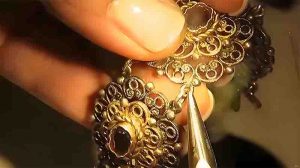
Filigree hollow bracelet welding (heritage filigree):
Wire making: Create 0.1–0.2mm fine gold wires per traditional methods and weave into hollow patterns.
Welding: Use pulsed laser to weld wire intersections, 30–50W, spot 0.1mm, pulse energy 2–3J, welding each intersection once to avoid melting or breaking wires while fixing the pattern.
Assembly: Weld the filigree to the bracelet base, 60–80W, pulse frequency 8–10Hz, with argon protection to prevent oxidation and darkening.
“Ban copper” bracelet repair and reinforcement (heritage patina):
Repair: Fill minor surface cracks with low-power laser (40–50W) and ban copper powder to restore unique texture.
Reinforcement: Weld critical points such as bracelet joints with 80–100W, spot 0.3mm, ensuring structural strength without damaging the natural patina.
After introducing laser welding, a heritage workshop increased filigree bracelet yield from 60% to 92%, reduced production time from 72 to 48 hours per piece, preserving cultural value while enhancing market competitiveness.
4.4 Other Extended Application Fields
Laser bracelet welding machines can also be extended to specialized fields such as medical and electronics, meeting differentiated requirements.
Sterile welding for medical jewelry (titanium alloy bracelets)
Medical-grade titanium alloy bracelets (e.g., for people with allergies or post-surgery recovery) must meet sterilization, corrosion resistance, and non-toxicity standards. Laser welding is the only method that complies:
Sterile welding process:
Pre-treatment: Titanium parts are cleaned in a Class 100 cleanroom using ultrasonic medical alcohol for 30 minutes to remove oil and impurities, then sterilized at 121°C for 20 minutes.
Welding: On a clean workstation, use fiber laser welding, 200–250W, spot 0.5mm, welding speed 5–6mm/s, argon purity 99.999%, flow 10–12L/min, ensuring welds are oxide-free and pore-free.
Post-treatment: Immerse welded parts in medical citric acid solution for 20 minutes to remove surface oxide, rinse with sterile water, dry, and package in sterile conditions.
Quality inspection: Must pass biocompatibility tests (cytotoxicity, sensitization), corrosion resistance tests (immersed in simulated body fluid for 30 days with no corrosion), and sterility tests (meeting GB/T 14233.2 standard), ensuring suitability for medical use.
Welding of electronic function bracelets (metal frames of smart bands)
Metal frames of smart bands (stainless steel or aluminum alloy) require precise connections to electronic components (sensors, battery modules). Laser welding enables damage-free welding without affecting electronic functionality:
Frame-to-case welding (example: aluminum alloy smart band):
Positioning: Use high-precision fixtures to secure frame and case, maintaining a gap ≤0.05mm to preserve waterproof performance.
Welding: Continuous laser, 120–150W, spot 0.4mm, speed 8–10mm/s along frame seams; argon flow 6–7L/min to prevent oxidation.
Inspection: Perform waterproof testing (IP68), visual inspection (no visible seams), and functional testing (sensor signals normal).
Electrode connection welding (when the frame acts as a conductive electrode):
Cleaning: Use isopropanol to clean electrode contact points, removing oxides to ensure conductivity.
Micro-welding: Pulse laser welding, 50–60W, spot 0.2mm, pulse energy 3–4J, connecting electrodes to wires without damaging insulation.
Insulation treatment: Apply medical-grade insulating adhesive on welded joints to prevent short circuits.
Practical Application – Welding Process and Quality Control
A standardized operating procedure and strict quality control are key to ensuring stable and consistent laser bracelet welding results, covering the entire process from pre-welding preparation to post-welding inspection.
5.1, Standard Welding Operation Procedures
Pre-Welding Preparation: Metal Surface Cleaning and Positioning
Surface Cleaning: Select the cleaning method based on the metal type to ensure the surface is free of grease, oxide layers, and impurities, which can affect weld quality:
Precious Metals (Gold, Silver, Platinum): Clean with an ultrasonic cleaner (40 kHz) using a neutral jewelry cleaning solution for 10–15 minutes at 40–50 °C to remove fingerprints and grease. For oxide layers: pure silver can be wiped with 5% dilute nitric acid, and platinum can be soaked in a specialized metal cleaner for 5 minutes.
Non-Ferrous Metals (Copper, Aluminum, Stainless Steel): Copper alloys: sand with 400–600 grit sandpaper to remove oxide layers. Aluminum alloys: mechanically remove the oxide layer with a wire brush. Stainless steel: wipe with acetone to remove grease, and if needed, use low-power laser scanning (50 W) to penetrate stubborn oxide layers.
Positioning and Fixation: Choose clamps according to bracelet structure and welding area to ensure no movement during welding, as positioning accuracy directly affects weld placement:
Ring Bracelet Joint Welding: Use adjustable ring clamps made of high-temperature resistant resin to avoid scratching. Apply moderate clamping force so the bracelet does not move or deform. Align joint deviation ≤ 0.05 mm.
Gem Prong Welding: Use miniature universal clamps capable of 360° rotation to orient prongs upward. Protect gemstones with soft pads (e.g., silicone) to avoid scratches.
Small Component Welding (Pendants, Tiny Gems): Use vacuum suction or magnetic clamps to fix components precisely, with relative position deviation ≤ 0.01 mm.
Parameter Adjustment: Pre-set according to metal type (e.g., 18K gold: 200–300 W).
Parameter adjustment should follow the principle of “material priority, thickness adaptation, scenario adjustment.” First perform test welding with pre-set parameters, then optimize based on results:
| Metal Type | Thickness (mm) | Laser Type | Power (W) | Spot Size (mm) | Pulse Frequency (Hz) | Argon Flow (L/min) |
|---|---|---|---|---|---|---|
| 18K Gold | 0.5–1 | Pulsed Fiber | 100–130 | 0.3–0.5 | 15–20 | 5–7 |
| Pure Silver | 0.3–0.8 | Pulsed Fiber | 70–90 | 0.2–0.4 | 20–25 | 6–8 |
| Platinum | 1–2 | Pulsed Fiber | 250–300 | 0.5–0.8 | 20–25 | 8–10 |
| 304 SS | 1–3 | Continuous Fiber | 200–250 | 0.5–1 | – (continuous) | 7–8 |
| Aluminum Alloy | 1–2 | Pulsed Fiber | 120–180 | 0.4–0.6 | 20–30 | 6–7 |
Test Welding and Optimization: Use scrap metal of the same material and thickness for test welding. Observe weld appearance (smoothness, porosity, oxidation) and strength (bending or tensile test):
If porosity occurs: Check surface cleanliness. Reduce power by 5–10 W or extend pulse width by 0.1–0.2 ms to ensure full molten pool fusion.
If oxidation/blackening occurs: Increase argon purity (≥99.999%) or reduce nozzle-to-weld distance (≤3 mm) for better protection.
If weld strength is insufficient: Increase power by 10–15 W or increase pulse frequency by 5–10 Hz to deepen the weld.
Welding Execution and Immediate Cooling:
Welding Execution: Follow optimized parameters from test welding. Key points:
Handheld Welding: Keep the wrist stable, align the spot center with the weld point (deviation ≤0.02 mm). Maintain uniform welding speed (variation ≤1 mm/s for continuous welds) to avoid uneven weld width.
Automated Welding: Ensure clamps are secure and visual positioning accurate. Monitor laser power and argon pressure in real time; stop immediately if deviations exceed ±5 W.
Immediate Cooling: Choose cooling method based on metal to prevent cracks from rapid cooling or oxidation from slow cooling:
Precious Metals & Stainless Steel: Air cool naturally to room temperature to avoid internal stress from rapid cooling.
Aluminum & Copper Alloys: Forced cooling using compressed air (0.2–0.3 MPa) or immersion in room temperature water (25 °C) to reduce thermal cracks.
Titanium Alloys: Cool under inert gas protection (continue argon flow 5–10 s until temperature drops below 200 °C) to prevent high-temperature oxidation.
5.2, Common Welding Defects and Solutions
During laser bracelet welding, defects such as porosity, thermal deformation, and weld discoloration may occur. These issues must be addressed according to their root causes to ensure consistent weld quality.
Porosity / Gas Pores: Metal Cleaning and Laser Energy Optimization
Cause Analysis:
Surface contamination (oil, debris) vaporizes during welding, forming gas pockets.
Insufficient laser energy prevents full molten pool fusion, leaving microvoids.
Inadequate argon shielding allows oxygen or nitrogen to enter the molten pool, forming bubbles.
Solutions:
Pre-treatment Optimization: Enhance surface cleaning (e.g., extend ultrasonic cleaning to 20 minutes or perform a secondary alcohol wipe). For metal powder welding (e.g., filling porosity), ensure powder is dry (moisture ≤0.1%) to prevent steam formation.
Parameter Adjustment: Increase laser power by 5–15 W (e.g., 18K gold from 120 W to 130 W) or extend pulse width by 0.1–0.3 ms for full fusion and bubble escape. For continuous welding, reduce speed by 1–2 mm/s to allow bubbles to escape.
Protection Enhancement: Increase argon flow by 2–3 L/min (e.g., from 6 L/min to 8 L/min) or use a larger-diameter nozzle (e.g., 5 mm → 8 mm) to expand the protective zone. For enclosed areas (e.g., hollow sections), pre-blow inert gas for 10–15 s to purge trapped air.
Case Reference: When welding an 18K gold hollow bracelet, initial porosity reached 8% due to trapped air. Using pre-blown argon and increasing power to 130 W reduced porosity to below 0.5%.
Thermal Deformation: Pulse Frequency Adjustment and Heat Dissipation
Cause Analysis:
Excessive pulse frequency causes high energy input in a short time, leading to heat accumulation.
Poor welding path design (continuous welding on the same area) prevents heat dissipation.
Thin, low-conductivity materials (e.g., 0.3 mm stainless steel) concentrate heat.
Solutions:
Parameter Optimization: Reduce pulse frequency by 5–15 Hz (e.g., stainless steel from 25 Hz → 15 Hz) or insert 0.5–1 s pauses every 3 pulses to reduce heat accumulation. For thin materials, lower power (e.g., 0.3 mm stainless steel from 150 W → 120 W) to control heat input.
Path Adjustment: Use a “segment hopping” method. For a ring bracelet, weld 1/4 of the circumference, then skip to the opposite 1/4, alternating to allow cooling.
Auxiliary Cooling: Attach heat sinks to non-weld areas (e.g., copper heat sinks) or use compressed air (0.1–0.2 MPa) to accelerate heat dispersion. For high-precision bracelets (gem-set), circulate cold water through the fixture (15–20 °C) to keep overall temperature below 40 °C.
Case Reference: A repair shop welding a 0.3 mm silver hollow bracelet initially had a 12% deformation rate. Using “segment hopping + heat sink assistance,” deformation dropped to 1%, fully preserving the pattern.
Weld Discoloration: Power and Welding Speed Matching
Cause Analysis:
Excessive power overheats the metal, increasing oxidation and darkening color.
Uneven welding speed causes localized overheat and color differences.
Uneven argon coverage causes differential oxidation.
Solutions:
Parameter Matching: For easily oxidized metals (silver, copper), reduce power by 5–10 W (e.g., silver 90 W → 80 W) and increase speed by 1–2 mm/s (5 mm/s → 7 mm/s) to minimize high-temperature dwell time.
Protection Optimization: Adjust argon nozzle angle to 45° relative to weld direction to fully cover the weld and heat-affected zone. For curved surfaces, use adjustable multi-angle nozzles following the welding path to avoid blind spots.
Post-treatment: For minor discoloration, treat according to metal type — silver: polish lightly with toothpaste to remove surface oxide; K gold: use specialized metal polish (e.g., agate burnishing); stainless steel: use stainless steel cleaner to restore uniform color.
Case Reference: For a factory producing 925 silver plain bracelets, initial weld color differences led to a 15% customer complaint rate. Using “reduce power to 80 W + increase speed to 7 mm/s + multi-angle nozzle protection,” complaints dropped to 0.5% and color was uniform.
Conclusion
Selecting a suitable laser bracelet welding machine requires consideration of three core factors: industry scenario, metal type, and production capacity. This ensures maximum cost-effectiveness while avoiding issues such as “blindly pursuing high specs” or “insufficient functionality.”
6.1 Core Selection Criteria
Industry Scenario Adaptation: Mass Production vs. Repair/Customization
Different industry scenarios demand varying requirements in functionality, precision, and efficiency, which must guide equipment selection.
Mass Production (Jewelry factories, smart wristband manufacturers):
Core Requirements: High output, automation, and stability for batch standardized welding.
Equipment Characteristics: Prefer continuous fiber laser welding machines (150–500 W) with automated workstations (multi-station rotary fixtures, CCD visual positioning systems), supporting integrated loading, welding, and inspection. For multiple metal types, the machine should support parameter storage (50–100 sets) for quick material switching.
Example: A jewelry factory producing 1,000 18K gold bracelets daily uses a 300 W continuous fiber laser with a 6-station automated workstation. Single-shift (8 h) output reaches 1,200 pieces, utilization >90%, with defect rate stable below 0.8%.
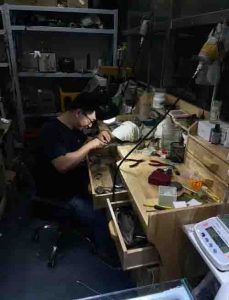
Repair / Customization (Jewelry repair shops, heritage craft workshops):
Core Requirements: High flexibility, precision, portability for complex repair and small-batch customization.
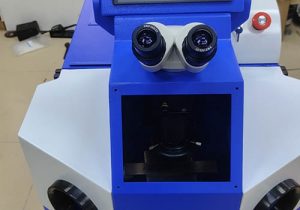
Equipment Characteristics: Prefer pulse fiber laser machines (50–150 W) with handheld welding heads (360° operation) and microscope observation (50–100× magnification), supporting micro-welding (0.1–0.3 mm spot). For heritage crafts or personalized welding, equipment should allow fine pulse energy adjustment (min. 1 J).
Example: A repair shop handling various bracelet repairs uses a 100 W pulse fiber laser with handheld head and microscope, covering tasks from 0.1 mm porosity repair to 2 mm joint reinforcement. Footprint only 0.5 m², fully suitable for small spaces.
Metal Type Matching: Precious-Metal-Specific vs. Multi-Metal Compatible
Precious-Metal-Specific (high-end jewelry factories, mainly gold, platinum, palladium):
Laser Type: Pulse fiber laser (concentrated energy, small heat-affected zone, minimal precious metal loss), 100–200 W for 1–2 mm thick metals.
Special Configuration: High-purity argon protection (≥99.999%), preheating function for high-melting-point metals to prevent cracking.
Advantage: Optimized parameters reduce metal loss to ≤0.05%, achieving high-end jewelry weld aesthetics.
Multi-Metal Compatible (general processing factories, repair shops, handling gold, silver, steel, aluminum):
Laser Type: Fiber laser (strong metal compatibility, 1064 nm wavelength suitable for most metals), 50–300 W to cover thin silver and thick steel/titanium.
Special Configuration: Adjustable spot size (0.1–2 mm), multiple nozzles (straight, multi-angle) for different metal oxidation characteristics.
Advantage: One machine can handle multiple metals, reducing initial investment and equipment redundancy.
Production Capacity: Single-Station vs. Multi-Station
Production requirements determine station count and automation. Capacity should guide configuration.
Low Capacity (<100 units/day, small repair/custom workshops): Single-station manual or semi-automatic machines (3–8 k USD), simple operation.
Example: Workshop producing 20–30 heritage bracelets/day uses 100 W single-station pulse laser; efficiency moderate, precise control meets customization needs.Medium-High Capacity (100–1,000 units/day, medium jewelry factory): Dual or multi-station (2–6 stations) with semi-automatic fixtures, supporting “one station welding, one station loading/unloading.” Add automatic feeding if daily output >500 units.
Example: Medium factory producing 500 925 silver bracelets/day uses dual-station 200 W continuous laser, output 600/day, 80% efficiency improvement over single-station.High Capacity (>1,000 units/day, large smart wristband factory): Fully automated lines (multi-station welding, automatic inspection, sorting) with MES integration for real-time monitoring. Laser power 300–500 W for stable high-speed welding.
Example: Smart wristband factory producing 2,000 metal frames/day adopts a 4-station automatic laser line, single-shift output 2,400, defect rate <0.3%, with only 2 workers for material feed and monitoring.
6.2 Main Equipment Parameters and Performance Comparison
Power Range: 100–500 W Application Scenarios
Power determines weldable metal thickness and efficiency.
| Power | Core Features | Weldable Thickness (mm) | Typical Applications | Price (k USD) |
|---|---|---|---|---|
| 100–150 W | Moderate energy, high precision, micro-welding | 0.1–1.5 (precious), 0.1–1 (non-precious) | Repair (porosity, prongs), small-batch custom, thin metals | 3–8 |
| 150–300 W | Balanced energy/efficiency, strong compatibility | 0.5–2.5 (precious), 0.5–3 (non-precious) | Medium factory mass production, smart wristband frames, multi-metal welding | 8–15 |
| 300–500 W | High energy, thick/high-melting metals | 2–5 (precious), 2–6 (non-precious) | Large factory thick metals, medical titanium bracelets, high-melting-point mass production | 15–30 |
Selection Advice: Precious metals ≤1.5 mm → 100–150 W most cost-effective; multi-metal/mid-thick → 150–300 W; thick/high-melting metals (titanium, platinum) → 300–500 W.
Precision: Spot Size and CCD Visual Positioning
| Precision Level | Spot Size (mm) | Positioning System | Accuracy | Applications | Typical Configuration |
|---|---|---|---|---|---|
| Standard | 0.5–2 | Manual (ruler + magnifier) | ±0.1 mm | Thick bracelet joints, low-precision batch | No visual system, manual table |
| High | 0.1–0.5 | Basic CCD | ±0.01 mm | Prong welding, fine crack repair, micro-welding | 1 MP CCD + basic vision software |
| Ultra-High | 0.05–0.3 | HD CCD w/ autofocus | ±0.005 mm | Heritage hollow-wire welding, sterile titanium, precision electrodes | 2 MP HD CCD + autofocus + professional vision software |
CCD Advantage: Reduces positioning time from 3–5 min/unit → 10–20 s/unit, improves accuracy 10–20×, reduces defect rate (5% → <0.5%). Example: diamond prong welding on 18K gold reduced deviation ±0.05 mm → ±0.008 mm; gem loss 3% → 0.1%.
Portability: Benchtop vs. Handheld
| Type | Dimensions (mm) | Weight (kg) | Operation | Core Advantages | Applications |
|---|---|---|---|---|---|
| Benchtop | 800×600×1200 (w/ table) | 50–100 | Fixed table, move welding head | Stable, supports automation, excellent cooling | Factory mass production, high-precision, long shifts |
| Handheld | 300×200×400 + <1 kg head | 15–30 | Move head, flexible bracelet placement | Highly flexible, small footprint, mobile | Repair, large/irregular bracelets, on-site customization |
Selection Advice: Fixed-station mass production → benchtop; repair/custom/large bracelets → handheld. Some manufacturers offer dual-use “bench + handheld” machines for complex workflows, ~20–30% higher cost.
Laser bracelet welding machines have evolved from “high-end equipment” to a standard tool in jewelry manufacturing, repair, and craft customization. Their advantages include precision, efficiency, and integration of traditional crafts with modern technology (e.g., heritage hollow-wire + laser welding).
Choosing the right machine, mastering scientific welding processes, and strict quality control are essential to fully leverage laser welding value.
With future advancements (e.g., higher-precision UV lasers, AI-assisted parameter matching), laser bracelet welding will become more precise, intelligent, and eco-friendly, lowering operational thresholds and expanding applications (e.g., micro smart bracelets with chip-to-metal frame welding). This guide aims to provide practical technical reference for industry practitioners and promote the deeper application of laser welding in bracelet production.
 © Copyright 2008-2026 Superb Electromachinery Co., Limited