Jewelry laser marking machine
Jewelry Laser Marking Machine — Fiber Laser Engraving for Gold, Silver & Precious Metals
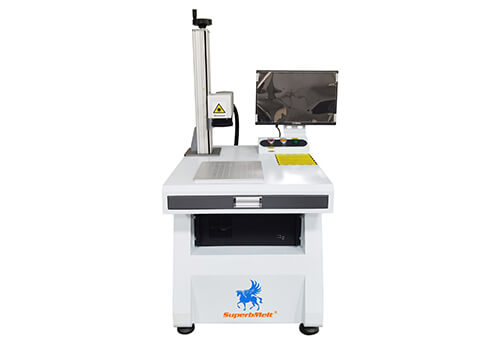
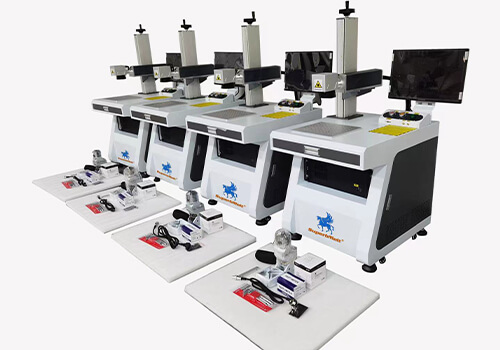
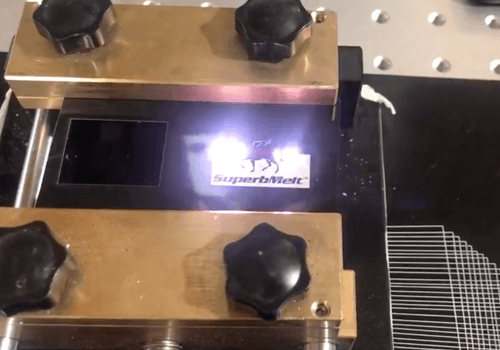
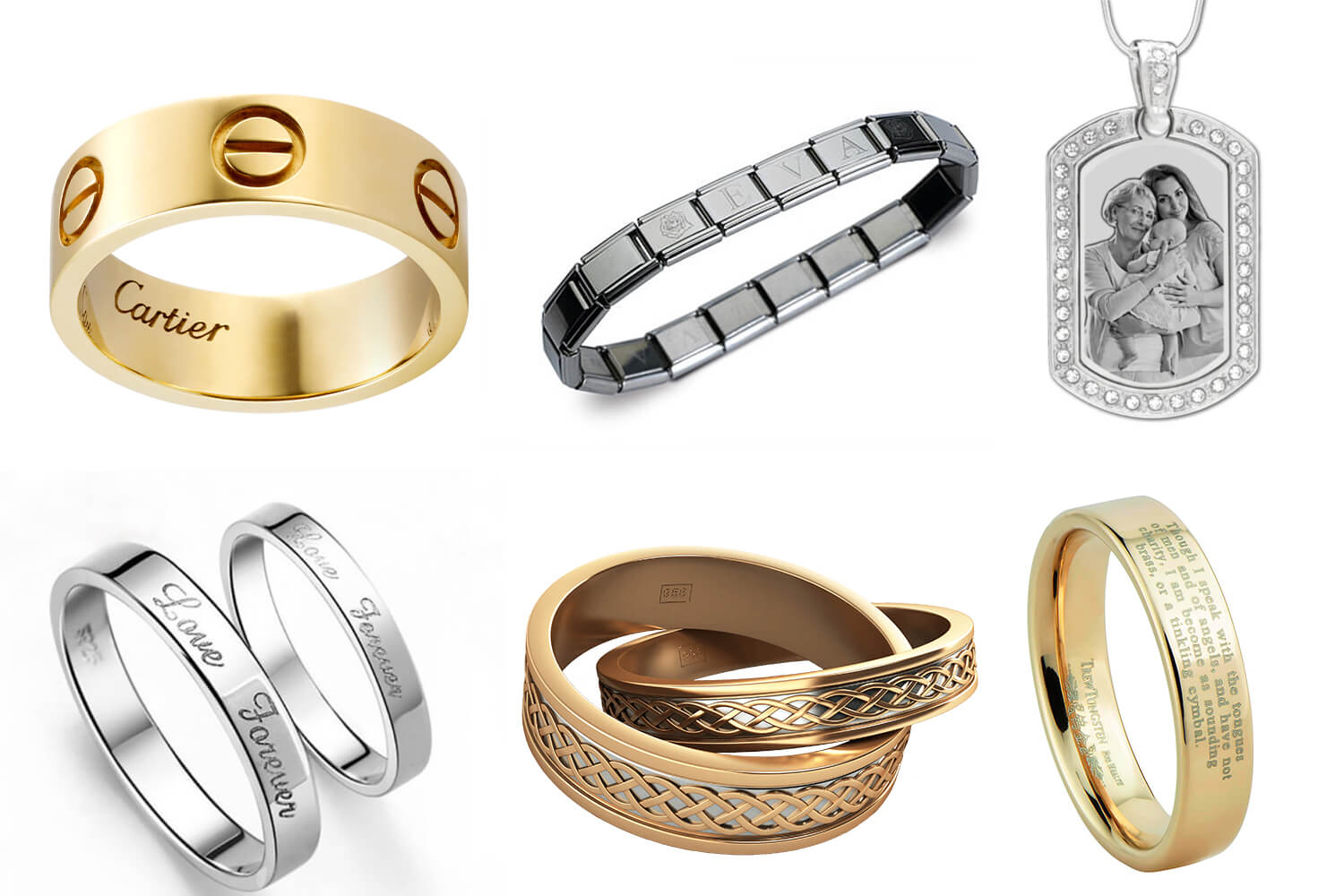
The SuperbMelt FLMM-series jewelry laser marking machine engraves gold, silver, platinum, K-gold, stainless steel, jade, ceramics, and mixed-composition jewelry with a minimum spot diameter of 0.01mm — delivering micro-text, serial numbers, QR codes, and detailed patterns that traditional mechanical engraving cannot achieve.
With marking speeds up to 13,000mm/s and laser power options of 20W, 30W, and 50W, the FLMM-series covers the full range of jewelry production needs — from small custom studios to large-scale OEM factories marking 10,000+ pieces per day. The air-cooled design requires no plumbing setup, and the red-ray 3-point assisted focus enables consistent results across batch production runs.
CE, ISO, and SGS certified. 15+ years of jewelry machinery experience. Factory direct with 2-year warranty and 24-hour engineer support.
This page covers: why jewelry manufacturers are switching to laser marking, which machine fits your production type, answers to the most common technical questions, and a complete buyer’s guide for key specifications.
| Type: | Fiber laser marking machine | 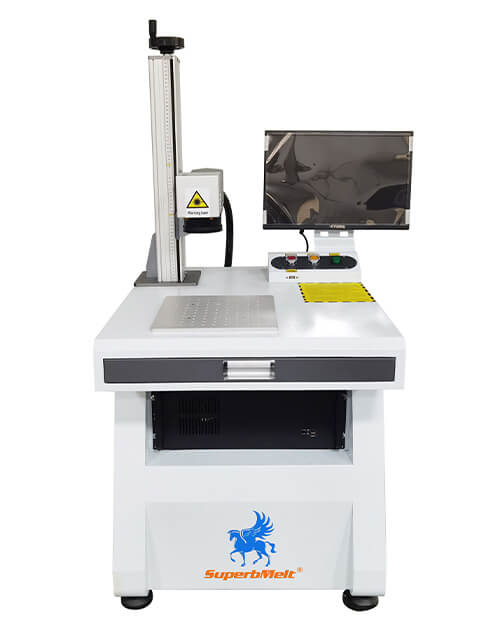 |
| Model number: | FLMM-series | |
| Laser power: | 20W/30W/50W | |
| Marking range: | 110x110mm | |
| Marking speed: | ≤7000mm/s or ≤13000mm/s | |
| Power supply: | AC220V/50HZ | |
| Cooling method: | Circulating air cooling | |
| Positioning method: | Red ray positioning | |
| Accessibility: | 3 red ray assisted focus | |
| Lifting stroke: | 550mm |
Features:
- 1. Micron-Level Precision — 0.01mm Minimum Spot Diameter The FLMM-series achieves a laser spot diameter as small as 0.01mm, enabling clear markings on 0.3mm-thick gold chains, 0.2mm fine silver pieces, and micro pavé prong gaps without deformation or cracking. Marking depth is adjustable from 0.01mm to 0.5mm with a heat-affected zone of only 0.01–0.1mm.
- 2. High-Speed Marking — Up to 13,000mm/s Equipped with a Jinhaichuang high-speed scanning galvanometer, the FLMM-series marks at up to 13,000mm/s — capable of processing 500 to 2,000 pieces per hour depending on design complexity. Design changes take 5 minutes via software, with no mold replacement required.
- 3. Broad Material Compatibility — Metals and Non-Metals Marks gold, silver, platinum, K-gold, stainless steel, copper, titanium, jade, ceramics, glass, wood, leather, and mixed-composition jewelry. Parameters can be precisely tuned to protect sensitive inlays and avoid damage to adjacent gemstones.
- 4. Multi-Format Support — DXF, PLT, BMP, JPG, AI, CorelDraw Import designs directly from CAD, CorelDraw, Adobe Illustrator, and other standard design software. Supports text (minimum 0.3mm height), logos, QR codes, barcodes, handwritten signatures, and photo-silhouette engravings up to 1,000 DPI.
- 5. Zero Consumables — 100,000-Hour Laser Source Lifespan The fiber laser source is rated for 100,000 operating hours (approximately 34 years at 8 hours/day). No consumables, no ink, no chemical reagents. Annual maintenance cost is only $14.13–$70.65, covering compressed air cleaning and lens alcohol wiping. Compared to mechanical stamping (ongoing mold costs) and chemical etching (reagent costs), total cost of ownership is significantly lower.
Advantages:
- Zero Material Loss — Eliminating the Hidden Cost of Traditional Methods Chemical etching causes 3–5% material loss per batch. For a factory producing 100kg of gold jewelry monthly, switching to laser marking saves 36–60kg of gold annually — over USD 141,300 in material cost savings per year. Laser marking removes no material and introduces no chemicals, making loss effectively zero.
- Permanent Markings That Survive 100,000 Friction Cycles Lab tests confirm that gold jewelry with laser markings maintains clarity after 100,000 friction cycles. Traditional stamping begins to blur after 10,000–20,000 cycles. The marking is formed by altering the surface material itself — not by adding ink or coating — making it heat-resistant, corrosion-resistant, and polish-resistant. Even repeated jewelry polishing will not erase it.
- Supports Full Traceability and Brand Protection Unique serial numbers, QR codes, and data matrix codes can be engraved on every individual piece. These codes link to manufacturer databases for full lifecycle traceability — from production to after-sales — meeting regulatory requirements in markets that mandate material purity marks (18K, 925, PT950), brand logos, and country-of-origin markings.
- Non-Destructive Process — Safe for Delicate and Hollow Structures Zero physical pressure is applied at any point. Safe for hollow gold structures, thin-wall platinum settings, pieces with adjacent gemstones, and ultra-fine filigree work. The 18K gold ring engraving test confirmed no change in gold content (75% purity maintained), no deformation after 180° bending, and no change in material hardness.
- Fast ROI — 6 to 12 Months Payback Period for Small Studios For small-to-medium jewelry workshops (10–50 workers), the desktop 20–50W FLMM-series enables fast design switching (3–5 style changes per day), eliminates mold costs, and reduces precious metal loss — with a typical investment payback period of 6–12 months.
Which Laser Type Is Best for Jewelry Marking?
| Laser Type | Best Materials | Key Advantage | Recommended For |
|---|---|---|---|
| Fiber Laser (20–50W) | Gold, silver, platinum, K-gold, stainless steel | Highest precision (0.01mm), fastest speed, lowest running cost | Most jewelry factories, custom studios, e-commerce sellers |
| CO₂ Laser | Jade, gemstones, wood, ceramics, plastic inlays | Low cost, suitable for non-metal inlays | Factories focusing on jade and non-metal jewelry components |
| UV Laser | High-end precious metals, fragile gemstones (pearls, opal) | Ultra-fine marking (≤0.01mm heat zone), zero surface oxidation | High-end jewelry brands, precision component marking |
The SuperbMelt FLMM-series uses fiber laser technology — the optimal choice for metal jewelry marking, offering the best combination of precision, speed, and cost-effectiveness for gold, silver, and platinum.
→ See full laser type comparison and power selection guide in Chapter 4 below

2 years warranty
The warranty for our machine is one year longer than the warranty provided by other factories.

Strong service team
We will give response within 24 hours against your problem by our professional engineer.

Why SuperbMelt Jewelry Laser Marking Machine


Any Question About SuperbMelt Jewelry Laser Marking Machine
Complete Guide to Jewelry Laser Marking Machines: From Industry Trends to Practical Applications
In today’s jewelry industry—where personalization, high quality, and standardization are increasingly demanded—laser marking machines have shifted from optional equipment to core productivity tools. They not only solve many long-standing issues of traditional engraving but also empower jewelry businesses to build differentiated competitiveness.
This guide breaks down jewelry laser marking machines from multiple angles: industry trends, target users, key questions, purchasing priorities, application scenarios, and technical advantages. It helps you clearly understand the value of this essential device and how to use it effectively.
Why Is the Jewelry Industry Increasingly Relying on Laser Marking?
The jewelry industry’s growing reliance on laser marking is fundamentally the result of technological advancement precisely matching industry needs. The limitations of traditional marking methods and the breakthrough advantages of laser technology together drive this irreversible transformation.
1.1 The Critical Pain Points of Traditional Marking
For many years, the jewelry industry has relied on hand engraving, mechanical stamping, and chemical etching—methods that face numerous serious limitations:
• Insufficient precision and material damage
Mechanical stamping force is difficult to control and can easily deform or crack delicate components such as ultra-thin gold sheets (≤0.3mm) or fine silver pieces.
Hand engraving often results in inconsistent depth, skewed fonts, and low precision, making it unsuitable for micro-markings (e.g., brand logos smaller than 0.5mm).
• High material loss and costly waste
Chemical etching uses strong acids and alkalis that corrode the surface, causing 3%–5% material loss.
Mechanical stamping produces metal debris that contributes to ongoing waste.
For high-value metals like gold and platinum, this accumulated loss significantly increases costs.
• Markings wear off easily and lack traceability
Traditional markings are shallow (≤0.1mm) and fade with friction or polishing.
They lack uniqueness, making product authentication and traceability nearly impossible, failing to meet modern brand protection and quality-control needs.
• Low efficiency and poor scalability
Hand engraving produces only a few dozen pieces per person per day.
Mechanical stamping requires mold changes (each mold costs USD 70.65–282.6), and switching designs takes 1–3 days.
Traditional methods simply cannot support the industry trend toward “small batch, multiple styles” or fast e-commerce order fulfillment.
• Environmental risks and compliance pressure
Chemical etching produces hazardous wastewater requiring costly treatment systems.
Mechanical stamping generates noise pollution.
Failing to comply with tightening environmental regulations can result in production suspension.
1.2 The Revolutionary Advantages of Laser Marking
Laser marking creates high-precision, high-efficiency, and environmentally friendly engraving through high-energy laser-material interaction—directly addressing industry pain points.
• Micron-level precision with zero damage
Laser spot diameter can be as small as 0.01mm, enabling ultra-clear marking on:
0.3mm-thick gold chains
0.2mm fine silver pieces
micro pavé prongs
gemstone gaps
Marking depth is adjustable (0.01–0.5mm) with a heat-affected zone of only 0.01–0.1mm, ensuring no deformation or cracking.
• Zero material loss, significantly reducing cost
Laser marking does not remove or corrode material—loss is close to 0%.
Compared with the 3%–5% loss from chemical etching, a factory producing 100 kg of gold jewelry monthly can save 36–60 kg of gold annually—over USD 141,300 in cost savings.
• Permanent, wear-resistant markings with full traceability
Laser markings alter the molecular structure of the surface, making them:
heat-resistant
corrosion-resistant
wear-resistant
Even repeated polishing won’t erase them.
Unique QR codes and serial numbers support full-process traceability—from production to after-sales—greatly strengthening brand protection.
• High efficiency and flexible production
Laser marking requires no molds.
Changing designs takes 5 minutes via software.
A single machine can mark 500–2,000 pieces/hour—10–50× faster than hand engraving.
It supports personalization (e.g., names, dates on ring interiors), increasing product value and customer satisfaction.
• Environmentally friendly and fully compliant
No wastewater, no chemicals, no noise—only electricity consumption.
Meets environmental standards with zero additional compliance cost.
No chemical exposure protects workers’ health and reduces labor risk.
• Compatible with all jewelry materials
Laser marking works on:
gold
platinum
K gold
silver
gemstones
jade
ceramics
mixed compositions
Parameters can be precisely tuned to avoid damaging sensitive inlays.
1.3 Driven by Regulations and Market Demand
• Regulatory requirements
Many regions legally require jewelry to have clear markings such as:
material purity (18K, 925, PT950)
brand logo
origin
Laser marking’s precision and consistency ensure full compliance and prevent penalties for improper labeling.
• Consumer demand upgrade
Modern buyers expect not just beauty and value but also authenticity, traceability, and personalization.
Unique laser-engraved codes and custom markings increase customer trust and purchasing intention.
Data shows:
Jewelry with personalized laser markings can increase average order value (AOV) by 15%–30%.
Who Are Jewelry Laser Marking Machines (for Gold, Platinum, Silver, etc.) Suitable For?
Laser marking machines are not “universal equipment.” Their suitability depends heavily on a user’s production scale, product type, and core requirements. The following types of users can achieve the highest ROI when choosing a laser marking machine:
2.1 Small to Medium Jewelry Workshops (10–50 workers)
Core needs:
Small-batch, multi-style production (changing designs 3–5 times a day), controlling precious metal loss, meeting hallmarking compliance, and improving production efficiency.
Why it fits:
These workshops often face mixed orders, tight delivery schedules, and high cost sensitivity. A laser marking machine requires no molds, offers fast style switching, and easily adapts to different orders.
Zero material loss significantly reduces raw material cost.
High marking efficiency (500–1000 pcs/hour) shortens production cycles.
Standardized hallmarking avoids compliance risks.
Recommended: Desktop fiber laser marking machine (20–50W)→ View SuperbMelt FLMM-Series Fiber Laser Marking Machine
Footprint ≤ 1㎡
Easy to operate
Payback period: 6–12 months
- Investment: Contact SuperbMelt for current pricing based on configuration and region.
Typical payback period: 6–12 months for small workshops based on reduced material loss and labor savings.
2.2 High-End Jewelry Brands / Custom Studios
Core needs:
Brand differentiation, personalized engraving services (wedding rings, luxury jewelry), permanent and aesthetic markings, and premium brand image.
Why it fits:
High-end jewelry demands extreme precision. Laser marking provides micron-level accuracy, capable of marking inner ring walls, pendant backs, and very fine surfaces without damaging the piece.
Supports personalized text, patterns, QR codes—enhancing exclusivity and brand value.
Recommended: High-precision fiber laser marking machine (30–60W)
Equipped with CCD vision positioning
Accuracy ±0.001 mm
Suitable for complex, detailed patterns
2.3 Jewelry E-commerce / Live-Stream Sellers
Core needs:
Fast turnaround for small-batch custom orders (100–500 daily), shorter shipping time, improve customer satisfaction, and reduce return rates.
Why it fits:
E-commerce relies on fast, personalized production.
Laser marking machines allow:
Online receipt of customized files (names, symbols, patterns)
Parameter adjustments within 5 minutes
Daily throughput of 5,000+ pieces per machine
Personalized engraving helps reduce “not as expected” returns by 20–30%.
Recommended: Fully automatic fiber laser marking machine (50W+) → View SuperbMelt 50W Laser Marking Machine
Supports auto loading/unloading
Can operate unattended
2.4 Jewelry Repair / Refinishing Shops
Core needs:
Mark restoration, customized engraving, quick operation, and zero damage to the jewelry.
Why it fits:
Repair shops have limited space (5–10㎡) and handle many types of jewelry. A portable laser marking machine (≤10kg) can be moved easily between workstations.
The non-destructive marking allows restoring faded hallmarks or adding new ones without affecting the appearance of the jewelry—expanding service offerings and increasing ticket size.
Recommended: Portable fiber laser marking machine (20–30W)
Works with 220V household power
No complex installation
2.5 Large-Scale Jewelry OEM Factories (50+ workers)
Core needs:
Mass production, automated traceability (unique serial code for every item), batch consistency, reduced labor cost.
Why it fits:
OEM factories produce thousands of items per day. Traditional marking requires many workers and is prone to errors.
Laser marking machines can integrate into production lines to achieve:
Automatic loading, positioning, marking, unloading
Marking consistency error ≤0.01 mm
ERP integration for auto-generated traceability codes
Full lifecycle product management
Recommended:
High-power fiber laser marking machine (80–120W)
CO₂ laser marking machine (for non-metal inlays)
Automated line integration
Daily output per machine: 10,000+ pieces
Not sure which configuration fits your workshop? Tell us your daily production volume, primary materials, and jewelry types — our engineers will recommend the right machine and provide a free ROI calculation. [Get Free Machine Recommendation →]
Core Questions Users Care About
When selecting and using a laser marking machine, users are most concerned about whether it meets their actual needs and whether there are hidden risks. Below are core questions and answers based on real search intent and industry feedback:
3.1 Will laser marking damage the material or purity of precious metals such as gold, platinum, or silver?
Answer: No.
The principle of laser marking is to use laser energy to create physical changes (melting, vaporization) on the metal’s surface, not chemical changes. Therefore, it does not affect the purity or internal structure of the metal.
The heat-affected zone is extremely narrow (only 0.01–0.1 mm), far below the deformation threshold of precious metals, so it will not cause brittleness, cracking, or warping.
Practical verification:
Using a 50W fiber laser marker to engrave 0.1 mm deep text on an 18K gold ring, the gold content remained 75% after testing. The ring did not deform, and even after being bent 180°, the marking stayed clear with no change in material hardness.
Note: Choose machines from reputable manufacturers. Using excessive power (>100W) or incorrect parameters may cause surface oxidation, which can be avoided with argon gas protection.
3.2 How clear and permanent is the marking? Will it wear off during daily use?
Answer: The marking is clear and permanently wear-resistant.
Laser marking depth is adjustable (0.01–0.5 mm). Even very shallow markings (0.01 mm) are visible due to color contrast (gold becomes light brown; platinum becomes grayish-white).
Deep markings (0.1–0.5 mm) have a tactile texture and are highly visible.
Because the marking is formed by altering the material itself—not by adding ink or coating—it is extremely durable. Tests show that gold jewelry with laser marking maintains clarity after 100,000 friction cycles, far outperforming traditional stamping (which starts to blur after 10,000–20,000 cycles).
Application:
High-end jewelry brands use 0.05–0.1 mm shallow markings for logos and material marks.
Traceability codes or serial numbers typically use 0.1–0.2 mm deep markings.
3.3 Can laser marking achieve personalization, such as engraving inside a ring, complex patterns, or QR codes?
Answer: Yes—fully supports a wide range of customization.
Laser markers are computer-controlled and compatible with CAD, CorelDRAW, and other design software. They can accurately engrave text (Chinese, English, symbols), logos, patterns, QR codes, barcodes, handwritten signatures, and even silhouette images.
Text engraving:
Minimum text height: 0.3 mm
For a 2 cm inner ring area: can engrave 8–10 Chinese characters
Adjustable font, size, spacing
Pattern engraving:
High-precision reproduction of complex textures
Up to 1000 DPI, far more detailed than hand engraving
QR / barcode engraving:
Directly scannable
Can store product information, traceability links, authenticity verification, etc.
Case:
A wedding ring customization brand used a laser marker to engrave handwritten signatures + zodiac icons on ring interiors. Processing time: 3 minutes per piece, average order value increased by 20%, and custom orders grew from 30% to 60%.
3.4 Is the machine difficult to operate? Does it require professional technicians? Can ordinary staff learn quickly?
Answer: Very easy to operate—most users master it within 1–2 hours.
Modern jewelry laser marking machines use a “beginner-friendly” design with just three steps:
Import text / pattern into the computer (supports simple copy-paste).
Select marking parameters (built-in presets for gold, platinum, silver—no manual tuning needed).
Place the jewelry piece and start marking (some models have CCD visual positioning for auto alignment).
The machine includes both touch-screen and computer interfaces, and manufacturers provide free training, manuals, and video tutorials.
Real feedback:
A jewelry shop assistant with zero technical background learned to independently complete ring engraving and pendant marking after 1 hour of training, handling over 200 custom orders per day.
3.5 Is the maintenance cost high? Does the machine require frequent replacement of consumables?
Answer: Maintenance cost is extremely low with almost no consumables.
Core components such as the laser source, galvanometer, and field lens have long lifespans:
Fiber laser source: 100,000 hours (≈ 34 years at 8 hours/day)
Galvanometer and field lens: 50,000 hours
No consumables needed
Daily maintenance includes only:
Weekly cleaning of internal dust with compressed air (5 minutes)
Monthly cleaning of the field lens with alcohol (2 minutes)
Annual inspection of laser source & circuits (usually free service)
Compared with traditional stamping (requires mold replacement) and chemical etching (requires chemical reagents), the yearly maintenance cost of a laser marking machine is only $14.13–$70.65, mainly for electricity and cleaning supplies.
Five Key Specifications You Must Pay Attention to When Buying a Jewelry Laser Marking Machine
4.1 Laser Type & Power: Determine Material Compatibility and Marking Results
Core logic: Different laser types match different jewelry materials, and power affects marking speed, depth, and precision.
Laser Type Comparison
| Laser Type | Compatible Materials | Marking Effect | Advantages | Disadvantages | Recommended Users |
|---|---|---|---|---|---|
| Fiber Laser | Gold, platinum, K-gold, silver, stainless steel, and other metals | Clear markings, strong contrast, controllable depth | Long lifespan (100,000 hrs), low energy consumption (20–50W), fast speed | Not suitable for non-metals | Most jewelry factories, customization studios, e-commerce sellers |
| CO₂ Laser | Jade, gemstones, wood, plastic, and other non-metals | Surface etching with no significant depth | Low cost, suitable for marking non-metal inlays | Short lifespan (20,000 hrs), not suitable for metals | Factories focusing on jade and jewelry inlays |
| UV Laser | High-end precious metals, fragile gemstones (pearls, opal, etc.) | Ultra-fine marking, minimal heat impact (≤0.01mm) | Extremely high precision, no oxidation, no material damage | Expensive (2–3× fiber laser), slower | High-end jewelry brands, precision component marking |
Power Selection Guide
Small studios / repair shops (20–30W): Light marking (0.01–0.1mm), small-scale production (≤500 pcs/hr)
SME factories / e-commerce sellers (30–60W): Medium depth (0.05–0.2mm), mid-sized batches (500–1500 pcs/hr)
Large OEM factories (60–120W): Deep marking (0.1–0.5mm), high-volume production (≥1500 pcs/hr)
Avoiding mistakes: Do not blindly choose high power—higher wattage increases cost and may cause surface oxidation. For jewelry/precious metals, fiber laser is the best cost-performance choice.
4.2 Marking Precision & Resolution: Determine Fineness and Application Fit
Core logic: Precision affects clarity of micro text (e.g., 0.3mm fonts), while resolution determines pattern detail quality.
Key Parameters
Marking precision: Minimum laser spot diameter + positioning accuracy.
High-quality machines: spot ≤0.01mm, accuracy ±0.001mm
Resolution: Pixels per unit area (300–1000 DPI).
Higher resolution = better detail (complex patterns, photo silhouettes require ≥600 DPI)
Selection Guide
Standard branding/logos, text ≥0.5mm: Precision 0.01mm, resolution 300–600 DPI
Custom micro-engraving (0.3mm text, detailed patterns), high-end jewelry: Precision ≤0.005mm, resolution ≥600 DPI
Testing Method
Ask the manufacturer to engrave 0.3mm Chinese characters and thin complex patterns on a 0.3mm silver sheet.
Check for clarity, smooth edges, and no breaks or blurring.
4.3 Marking Speed & Stability: Determine Productivity and Batch Suitability
Core logic: Speed affects delivery capacity; stability affects long-term production consistency and failure rate.
Key Parameters
Marking speed: 300–1000 mm/s for standard fiber lasers; high-end machines reach 1500 mm/s
Stability:
24-hour continuous operation failure rate ≤0.5%
Batch marking consistency error ≤0.01mm (for 1,000 pcs)
Selection Guide
Small batches (≤1000 pcs/day): 300–500 mm/s, prioritize stability
Medium batches (1000–5000 pcs/day): 500–800 mm/s, must support ≥8 hours continuous work
Large batches (≥5000 pcs/day): ≥800 mm/s, choose industrial-grade laser sources (IPG, Raycus)
Avoiding mistakes:
Manufacturers often list maximum theoretical speed, not real production speed.
Request actual marking test videos (e.g., engraving a specific logo and measuring exact time per piece).
4.4 Positioning System & Ease of Operation: Determine Accuracy and Learning Curve
Core logic: Positioning ensures accurate marking (e.g., centered inside rings), while ease of use affects labor cost and training time.
Positioning Systems
Manual Positioning:
Uses fixtures + visual alignment
Accuracy ±0.1mm
Suitable for simple pendants, small batches
CCD Vision Positioning:
HD camera auto-detects item outline and positioning points
Accuracy ±0.001mm
Ideal for rings, irregular pendants, and mass production
Saves 10–20 minutes of calibration per batch
Ease-of-Use Indicators
Software compatibility: CAD, CorelDRAW, AI; supports PLT, DXF, BMP, JPG, etc.
Preset parameters: At least 5 built-in presets (gold, platinum, silver, K-gold)
Automation: Auto feeding, production-line integration, remote monitoring via app (advanced models)
Selection Guide
Small studios / repair shops: Manual positioning + basic software
E-commerce / SME factories: CCD positioning + smart software
Large OEM factories: CCD + automation for production line integration
4.5 Auxiliary Features & After-Sales Service: Determine User Experience and Long-Term Reliability
Core logic: Auxiliary functions solve special marking issues (oxidation, material protection), while after-sales ensures long-term stability.
Key Auxiliary Features
Argon protection system: Prevents oxidation on precious metals (e.g., gold turning dark)
Red-light preview: Shows marking area before engraving
Safety protection:
Laser safety ≥ Class IV
Interlock system (door opens → laser stops)
Emergency stop button
Dust collection: Removes debris during marking (especially non-metals)
After-Sales Service Essentials
Warranty:
Laser source ≥ 2 years (top brands offer 3 years)
Whole machine ≥ 1 year
Response speed:
24/7 technical support
On-site repair within 48 hours (local service center preferred)
Training:
Free on-site training (1–2 sessions)
Manuals, video tutorials, troubleshooting guides
Spare parts supply:
Core parts (field lens, galvanometer) delivery ≤ 7 days
Selection Guideline
Choose manufacturers with solid jewelry industry experience and local support.
Avoid “no-brand” machines—downtime from failures can cost far more than the equipment.
SuperbMelt After-Sales Commitment for FLMM-Series:
- Warranty: 2-year full machine warranty (laser source + all components), which is 1 year longer than the industry standard
- Response time: Engineer response within 24 hours for technical questions
- On-site repair: Available within 48 hours for customers in covered service regions
- Training: Free remote training session included with every machine purchase, plus operation manuals and video tutorial library
- Spare parts: Core components (field lens, galvanometer) available with ≤7-day delivery
- Parameter support: Free laser parameter guidance for new materials throughout the machine’s lifespan
SuperbMelt has 15+ years of experience exclusively in gold and jewelry machinery — not general industrial equipment. This means our technical team understands the specific marking requirements of 18K gold, platinum hallmarking, and jewelry anti-counterfeit applications, not just generic machine operation.
How Laser Marking Is Used in Real Jewelry Manufacturing Scenarios
Laser marking machines play an important role throughout the entire jewelry production, customization, and after-sales process. Below are three of the most common real-world scenarios, with detailed breakdowns of workflows and application value:
5.1 Scenario 1: Jewelry Material & Brand Marking (Mass Production)
Application Need:
A medium-sized gold processing factory produces 1,000 pieces of 18K gold necklaces daily. They need to engrave material marks (18K), brand logos, and origin (“China”). The marks must be clear, consistent, and must not affect the necklace’s shine.
Equipment Selection:
30W fiber laser marking machine (with CCD visual positioning + argon protection)
Operation Workflow:
Pre-treatment: Clean the necklaces using an ultrasonic cleaning machine to remove oil and dust. After drying, place them into a special fixture (10 pieces per fixture, supports batch positioning).
Parameter Setting: Open the marking software, import the brand logo, “18K,” and origin text. Select the preset “18K gold” parameters (25W power, 500mm/s speed, 0.05mm depth). Enable argon protection (5L/min).
Positioning & Marking: Start CCD visual positioning. The system automatically recognizes the marking area (e.g., pendant back), calibrates, and begins batch marking. Each batch of 10 pieces takes 3 minutes.
Post-processing: After marking, wipe the necklace with a soft cloth. No polishing required. Proceed to the next process (electroplating, packaging).
Application Value:
One machine can produce 1,000 pieces/day with only one operator. Marking consistency error ≤0.01mm, fully meeting branding standards.
Zero-loss operation saves ~10g of gold per day, equaling over $4,239 USD in annual savings.
Equipment: 30W Fiber Laser Marking Machine with CCD — View FLMM-30W Specs →
5.2 Scenario 2: Personalized Wedding Ring Engraving (E-commerce Orders)
Application Need:
A jewelry e-commerce shop offers customized engraving for wedding rings—names, dates, signatures, zodiac symbols—requiring 24-hour delivery with beautiful and non-damaging results.
Equipment Selection:
50W fiber laser marking machine (with CCD visual positioning + intelligent design software)
Operation Workflow:
Order Intake: Customers submit customization requests (e.g., “Zhang San + Li Si + 2024.05.20 + heart icon”). The service team converts files into design formats (JPG, TXT supported).
Workpiece Preparation: Place the ring (18K gold, platinum) into a dedicated ring fixture that fits sizes 0–24.
Design & Preview: Import customer files into the marking software. Adjust text size, spacing, and position (centered on the inner ring). Preview using the red-light simulation and send to customer for confirmation.
Marking Execution: After customer confirmation, use the preset parameters:
18K Gold: 30W power, 300mm/s speed, 0.03mm depth
Platinum: 35W power, 250mm/s speed, 0.04mm depth
Marking time per ring: 30 seconds
Quality Check & Shipping: Inspect clarity and ring integrity. Pack and ship.
Application Value:
Capable of processing 400+ customized orders per day, compared to ≤50/day with hand-engraving.
Personalization increases product value—average order price rises from $423.9 → $508.7, with a 40% increase in conversion rate.
5.3 Scenario 3: Jewelry Traceability Code & Serial Number Engraving (Brand Anti-Counterfeit)
Application Need:
A high-end jewelry brand engraves a unique QR code and serial number on each diamond pendant. Customers can scan the code to verify authenticity, diamond grade, and production info—preventing counterfeits.
Equipment Selection:
60W fiber laser marking machine (with CCD visual positioning + ERP system integration)
Operation Workflow:
Data Generation: The ERP system generates unique serial numbers and QR codes (containing product ID, diamond grade, batch info). Data syncs to the marking software.
Workpiece Positioning: Fix the pendant on a high-precision fixture. Start CCD visual positioning to identify hidden marking areas (e.g., pendant underside).
Marking Execution: Select the preset “platinum” parameters (40W power, 400mm/s speed, 0.08mm depth). Enable argon protection. Mark the 5mm × 5mm QR code and 0.5mm serial number. Time per piece: 1 minute.
Data Matching: After marking, the serial number and QR code automatically sync to the brand traceability database. Customers scan the code to access the brand’s website.
Quality Check & Storage: Check QR code readability and clarity. Approved pieces go to inventory.
Application Value:
Achieves full-process product traceability and effectively prevents counterfeits (unique QR codes cannot be replicated). Enhances brand trust—customer repurchase rate increases 25%.
ERP integration improves inventory management and order tracking efficiency.
Laser Marking vs. Traditional Methods: A Complete Cost and Efficiency Comparison
Once jewelry factories experience the advantages of laser marking, it becomes difficult to revert to traditional marking methods. This “irreversible” choice stems from laser marking’s comprehensive superiority in cost, efficiency, quality, and compliance.
6.1 Cost Gap: “Zero Waste + Low Labor” vs. High Hidden Costs
Material Cost: Laser marking has nearly 0% precious metal loss, while chemical etching loses 3%-5% and mechanical stamping loses 2%-3%. For a factory producing 100 kg of gold daily, laser marking can save 3-5 kg of gold per day, resulting in over $141,300 USD annual savings.
Labor Cost: One laser marking machine can mark 500–2,000 pieces/hour. One operator can manage 2–3 machines simultaneously, with daily labor cost only $7.07–$14.13 USD. Traditional hand engraving completes 50–100 pieces/day per person, requiring 10× more labor, with daily labor cost $70.65–$141.3 USD.
Consumables / Mold Cost: Laser marking requires no consumables, only electricity (0.5–1 kWh/hour). Traditional stamping requires replacing molds ($70.65–$282.6 per set; changing design wastes a mold), and chemical etching requires continuous purchase of reagents ($141.3–$423.9/month).
6.2 Efficiency Gap: “Fast Changeovers + High Volume” vs. Slow Traditional Methods
Changeover Efficiency: Laser marking changes designs in 5 minutes via computer parameter adjustment, supporting small-batch, multi-style production ideal for e-commerce. Traditional stamping requires 1–3 days (new mold), chemical etching 2–4 hours (adjust reagents/templates), unsuitable for frequent design changes.
Batch Production Efficiency: A single laser marking machine can produce 5,000+ pieces/day, while hand engraving ≤100/day, stamping ≤1,000/day. During peak seasons (e.g., Valentine’s Day, Christmas), laser marking easily handles order surges, whereas traditional methods often delay orders due to limited capacity.
6.3 Quality Gap: “Precise + Permanent” vs. Limited Traditional Accuracy
Marking Precision: Laser marking achieves micron-level precision, clearly marking 0.2mm-thin silver chains or 0.3mm-thick gold sheets. Traditional stamping precision is only 0.1–0.2mm, hand engraving ≥0.5mm error.
Durability: Laser markings are permanent and wear-resistant, unaffected by repeated polishing. Traditional marks (≤0.1mm) blur after 1–2 years.
Appearance: Laser marks are delicate, burr-free, and do not damage metal luster. Hidden areas (inner ring, gemstone gaps) can be marked without affecting overall aesthetics. Traditional stamping can deform parts and create burrs, chemical etching may corrode surfaces and reduce shine.
6.4 Compliance & Brand Gap: Enabling Brand Upgrades
Compliance: Standardized laser markings meet global jewelry material certification and origin labeling requirements, avoiding penalties for non-compliance. Traditional marks are prone to blurring and irregularity, posing compliance risks.
Brand Value: Laser marking supports personalization and traceability codes, enhancing product differentiation and brand premium, helping brands escape “price wars.” Traditional marking cannot achieve these features, weakening competitiveness.
Market Recognition: Consumers increasingly value quality and traceability. Jewelry with laser-marked traceability codes and personalized markings enjoys higher market recognition and repurchase rates. Data shows brands with laser marking see 15%-20% higher annual market share growth than those without.
6.5 Environmental & Safety Gap: Modern Compliance vs. Phase-Out Risk
Environmental Requirements: Laser marking produces no wastewater, residue, or noise pollution, meeting environmental regulations without extra investment. Traditional chemical etching generates waste liquids, mechanical stamping produces excessive noise. With stricter regulations, these traditional methods face obsolescence.
Operational Safety: Laser marking includes safety devices (protective goggles, interlock systems), with no chemical exposure, protecting workers’ health. Chemical etching involves strong acids/bases, posing burn risks; mechanical stamping carries crush hazards—both have significant safety concerns.
Summary Comparison: Laser Marking vs. Traditional Methods
| Factor | Laser Marking | Mechanical Stamping | Chemical Etching |
|---|---|---|---|
| Material loss | ~0% | 2–3% | 3–5% |
| Design change time | 5 minutes (software) | 1–3 days (new mold) | 2–4 hours |
| Production speed | 500–5,000 pcs/hr | ≤1,000 pcs/hr | Slow batch |
| Mark durability | 100,000+ friction cycles | Fades after 10,000–20,000 cycles | Fades within 1–2 years |
| Minimum precision | 0.01mm | 0.1–0.2mm | 0.3mm+ |
| Annual consumable cost | $14–$70 (electricity only) | $70–$283/mold set | $141–$424/month (reagents) |
| Wastewater/chemicals | None | Metal debris | Acid/alkali waste |
| Regulatory compliance | Full compliance | Risk of blurring/irregularity | Wastewater treatment required |
| Traceability support | QR code, serial number, ERP | Not supported | Not supported |
Data based on industry averages for a factory producing 100kg of gold jewelry monthly.
Summary:
Laser marking machines are not just efficiency tools; they are also cost control tools, brand upgrade tools, and compliance assurance tools. Their comprehensive advantages over traditional marking make it increasingly impossible for jewelry factories to return to low-efficiency, high-cost, low-quality traditional methods. This technological iteration drives industry development and is a core choice for jewelry companies to remain competitive in a highly competitive market.
FAQ Guide of Jewelry Laser Marking Machine
Is there anything you would like to know about the jewelry laser marking machine? Then you have come to the right place. To make the concepts easier for you to understand, we have made the answers to your questions as easy to understand as possible.
After this lengthy piece, if you have more questions, use the contact details on our main website to talk to our customer representatives. We will make sure you get the most professional assistance possible.
- 1. What is the best laser marking machine for jewelry?
- 2. Can you laser mark jewelry without damaging it?
- 3. Can you laser mark sterling silver?
- 4. Can you laser mark gold-filled jewelry?
- 5. What laser can mark metal jewelry?
- 6. Is laser marking on jewelry difficult to learn?
- 7. What is a jewelry laser marking machine?
- 8. How do you engrave a name on a necklace with a laser machine?
- 9. How do fiber lasers work in jewelry marking machines?
- 10. What are the types of laser marking used in jewelry?
- 11. How do fiber lasers work?
- 12. What is a fiber laser marker?
- 13. Can you mark stainless steel?
- 14. How do you stamp jewelry?
- 15. What form of manufacturing is laser marking?
- 16. Can you cut gold with a laser mark?
- 17. What are the different types of marking?
- 18. What are the types of jewelry laser marking?
- 19. Can a laser mark metal?
1. What is the best laser marking machine for jewelry?
For most jewelry applications — gold, silver, platinum, and stainless steel — a fiber laser marking machine is the industry-standard choice. The SuperbMelt FLMM-series (20W / 30W / 50W) uses a 1064nm fiber laser that is highly absorbed by precious metals, achieving a minimum spot diameter of 0.01mm with zero material loss.
For non-metal jewelry components such as jade, gemstones, ceramics, and pearl inlays, a CO₂ laser is more appropriate. For extremely high-precision work on fragile or heat-sensitive gemstones, a UV laser provides the lowest thermal impact.
The right choice depends on your primary material: fiber laser for metals, CO₂ for non-metals, UV for ultra-precision on heat-sensitive materials. The FLMM-series covers the full range of common jewelry metals in a single machine.
2. Can you laser mark jewelry without damaging it?
Yes — fiber laser marking is specifically designed to be non-destructive to jewelry. The process applies no physical pressure, and the heat-affected zone is only 0.01–0.1mm, far below the deformation threshold of gold, silver, or platinum.
A verified test using a 50W fiber laser on an 18K gold ring confirmed: gold purity remained at 75% after marking, the ring did not deform after bending 180°, and material hardness showed no measurable change. For pieces with adjacent gemstones, parameters can be precisely tuned to keep the laser energy away from the setting area.
No bonding agents, chemicals, or post-processing are required. The machine marks directly onto the metal surface.
3. Can you laser mark sterling silver?
Yes. Sterling silver (92.5% silver, 7.5% alloy) responds well to fiber laser marking. Because silver has higher reflectivity at the 1064nm wavelength compared to gold, slightly higher power settings are required.
Recommended starting parameters for sterling silver: 40–60% power, 500–800mm/s speed, 40–60kHz frequency. The result is a clean, permanent mark with visible contrast — silver surfaces darken slightly at the mark, creating clear visibility. Marks survive ultrasonic cleaning, polishing, and normal daily wear without fading.
4. Can you laser mark gold-filled jewelry?
Yes, with a specific consideration. Gold-filled jewelry has a base metal core (typically brass or copper) bonded with a gold layer. The fiber laser can engrave through the gold layer and into the base metal.
If deep engraving is performed, the base metal may become exposed at the engraving area, creating a two-tone appearance (gold surface with a darker mark). For traceability codes and serial numbers where depth is needed, this is acceptable and standard practice. For purely decorative surface markings on gold-filled items, use lower power settings (20–30% power) to keep the mark within the gold layer and maintain uniform color.
5. What laser can mark metal jewelry?
Fiber lasers are the optimal choice for marking metal jewelry. The 1064nm wavelength of a fiber laser is efficiently absorbed by most metals — gold, silver, platinum, copper, stainless steel, titanium, and their alloys — producing precise, permanent marks.
CO₂ lasers operate at 10,600nm, which is less efficiently absorbed by polished metal surfaces, making them unsuitable for direct metal jewelry marking. UV lasers work well on metals but are slower and significantly more expensive. For the combination of precision, speed, cost-effectiveness, and metal compatibility, fiber laser is the standard for the jewelry manufacturing industry.
6.Is laser marking on jewelry difficult to learn?
No. Most operators master the FLMM-series within 1–2 hours. The workflow has three steps: (1) import design file from CAD, CorelDraw, or standard image formats; (2) select the built-in material preset (gold, platinum, silver, K-gold presets included); (3) position the piece using the red-light guide and start marking.
No manual parameter tuning is required for standard jewelry types. SuperbMelt provides free training sessions, operation manuals, video tutorials, and 24/7 technical support. A real example: a jewelry shop assistant with no prior technical background completed independent ring and pendant marking after 1 hour of training, handling 200+ custom orders per day.
7. What is a jewelry laser marking machine?
A jewelry laser marking machine uses a focused laser beam to create permanent marks on jewelry surfaces — including text, logos, serial numbers, QR codes, hallmarks, and decorative patterns — without physical contact or chemical treatment.
The most common type for jewelry is the fiber laser marking machine, which generates a 1064nm laser beam through a fiber-optic cable, focuses it to a spot as small as 0.01mm via a galvanometer scanning system, and moves it across the workpiece at speeds up to 13,000mm/s. The laser energy causes controlled material removal or surface modification, creating a visible mark that is permanent, wear-resistant, and unaffected by polishing or cleaning.
Key applications in jewelry: hallmark stamping (18K, 925, PT950), brand logo engraving, personalized ring interior text, QR code and serial number marking for traceability, and anti-counterfeit coding.
8. How do you engrave a name on a necklace with a laser machine?
The process takes approximately 30–60 seconds per piece:
- Design preparation: Type the name in the marking software (supports all fonts, minimum text height 0.3mm). Adjust size and position using the red-light preview on the necklace surface.
- Fixture setup: Place the necklace on a flat fixture or chain holder to keep it stable during marking.
- Parameter selection: Select the preset for the necklace material (18K gold, silver, stainless steel). No manual adjustment needed for standard materials.
- Mark: Start the machine. The galvanometer scans the laser beam across the name in seconds.
- Quality check: Inspect mark clarity. Wipe with a soft cloth. No polishing or post-treatment required.
The minimum text height is 0.3mm, allowing up to 8–10 characters in a standard pendant area. Handwriting fonts, symbols, and small portrait silhouettes are also supported.
9. How do fiber lasers work in jewelry marking machines?
A fiber laser generates a laser beam by passing light through an ytterbium-doped optical fiber, amplifying it to produce a high-power, single-frequency beam at 1064nm wavelength. This beam is then directed into a galvanometer scanner — a high-speed mirror system — that deflects the beam across the workpiece with sub-millisecond precision.
The 1064nm wavelength is efficiently absorbed by gold, silver, platinum, and most metals, converting to heat energy at the surface and causing controlled material removal (engraving) or surface modification (color change, oxidation). The galvanometer can redirect the beam up to 13,000mm/s, enabling both high-speed batch production and slow-speed fine detail work by adjusting the scan speed parameter.
Compared to CO₂ lasers (10,600nm) and UV lasers (355nm), fiber lasers offer the best combination of metal absorption efficiency, operating lifespan (100,000 hours), and energy efficiency for jewelry applications.
10. What are the types of laser marking used in jewelry?
Four laser marking processes are used in jewelry manufacturing:
1. Laser engraving (ablation): Removes surface material to create a recessed mark. Used for hallmarks, serial numbers, personalized text, and QR codes. Creates visible depth (0.01–0.5mm adjustable). Most common process in jewelry.
2. Laser annealing: Heats the metal surface to create a color change without removing material. Used on stainless steel and titanium to produce black, gray, or colored marks with no surface texture change. Common for watch cases and surgical jewelry components.
3. Laser foaming (carbon migration): Causes carbon in metal alloys to migrate to the surface, creating a raised, light-colored mark. Used on specific metal alloys for subtle surface marks.
4. Laser coloration (MOPA): Uses a MOPA fiber laser with adjustable pulse duration to create color effects on gold and stainless steel through controlled oxidation. Produces decorative colored patterns without coatings. Used in high-end jewelry customization and luxury branding.
For standard jewelry hallmarking, personalization, and traceability — laser engraving with a fiber laser is the correct process.
11. How do fiber lasers work?
A fiber laser technology is a highly precise process that uses a beam of light to make various surfaces of materials. It focuses the beam of light by concentrating on the surfaces that need to be marked. What happens during the marking process is that the beam interacts with the surface of the material being marked.
Through the interaction, the beam alters the chemical properties of the surface of the material, thereby altering its appearance. Note that the concentrated beam must only target a given area of the material to deliver the marks.
That is why laser marking material will always give you high-quality, durable marks compared to other technologies on the market. The marks created by the laser marking machine are easily readable, and you can scan them on any surface of your choice.
These also explain why laser marking is the most preferred application in a range of industries, especially where precision is preferred.
12. What is a fiber laser marker?
Let’s first look at the laser marking process. Laser marking is a process that leverages a highly concentrated beam of light to deliver a permanent mark on a given surface.
The process is completed with the help of a UV laser machine, fiber, continuous wave, pulsed, or green. Laser marking is a process with a vast range of application areas. The most common applications of laser marking include engraving, etching, annealing, discoloration, and carbon migration.
Your laser marking machine can be automated and operates at an extremely high speed. Note that the marks it leaves on the surface of materials are permanent, but there is nothing to worry about since it has the best level of precision on the market.
13. Can you mark stainless steel?
There are many ways to mark stainless steel, so the most precious answer to the question is yes. At Superbmelt, we have a laser marking system that you can use to mark stainless steel whenever you want.
Laser marking application has been there for many years, but we have integrated newer technology to make the whole thing work perfectly. The technology lets you leverage a high degree of flexibility to mark stainless steel.
Stainless steel can also be used to make jewelry, which is not something new these days. If you see such jewelry, they have been marked with the help of laser marking technology and other means. Is this something you would like to try? Be sure to get in touch with us today if that is the case.
14. How do you stamp jewelry?
First, it is possible to stamp your jewelry by hand or with the help of a stamping jig. It all depends on the nature of the results you would be happy to get. The process can also be done with the help of a brass hammer.
It is worth noting that the entire process might get delicate. You should be careful enough not to interfere with the surface you are working on; that is when you are using a brass hammer.
Regardless of the method you feel is the best, it is vital to get the best stamping kits from reputable dealers in the industry. For instance, Superbmelt has some of the best kits. Just take a look at the items available, place your order, and they will be delivered to your location.
Better still, you could send your jewelry to us, and we will do the stamping on your behalf. Either way, you will be happy with the results.
15. What form of manufacturing is laser marking?
Laser engraving can be quite confusing, but it belongs in the Subtractive Manufacturing method. If you don’t know what that means, subtractive manufacturing comes from the fact that some chemical properties are altered, and the particles are displaced to give the marks.
It is a process that you can use to create a vast range of images on the material of your choice. Note that the marks are placed in a way that you can see them at eye level. The application delivers a high level of heat that will then vaporize the matter. The cavity is created, and that is what we call a mark.
16. Can you cut gold with a laser mark?
A laser machine has some of the best applications that place it at the top of the chart. You can successfully use it to cut gold with a laser mark and achieve the best precision. No matter the design, you can get the work done in a matter of seconds.
This is also true for gold-filled jewelry. You can also mark them. The only difference is that the material inside will be exposed. As such, after engraving, you might want to coat them one more time with the right material.
17. What are the different types of marking?
There are different types of marks you can place on the surface of your material with the help of a laser marking machine. For instance, we have stain marking, ablation marking, dark marking, and engraving.
These are the most popular marking methods you are likely to find in the industry. Note that these are four marking methods, and each one of them will give you a different mark on the surface of your material. Thus, you need to choose the type of mark based on what you would like to do with it.
18. What are the types of jewelry laser marking?
Again, in this case, we can state that we have at least four types of jewelry laser marking. First, we have annealing laser marking. It is mainly used on metals that contain some traces of carbon. You are likely to find this method in the medical industry and it is also a bit slower.
Next, we have the carbon migration laser marking that can be used on metals and metal alloys. With this method, you will need to apply heat at an extremely rapid pace. It is the heating process that will move carbon to the surface.
Foaming laser marking is the third type of jewelry laser marking on our list. It is great when you need light markings. However, this method is mostly used on plastics rather than metals and will provide you with very smooth markings.
Coloration laser marking is the final type of marking we have on this list. The color results will be based on the oxidation process. The good thing about this method is that it can be used on both plastics and metals.
19. Can a laser mark metal?
The jewelry laser marking machine leverages the latest technology you can ever find on the market today. As such, if you are looking for something that will give you a high-speed marking of metal, then you should go for laser marking technology.
Laser etching is the best for metal and steel surfaces, so you can be sure that it works. With the technology, you will get some of the most resistant marks. Finally, it is worth noting that with laser technology, you can work on any steel alloy, such as die steel, carbon steel, and anodized steel. So the best answer is yes, laser marking technology can be used on metals.
 © Copyright 2008-2026 Superb Electromachinery Co., Limited