Chapter 1:
Basic Definition and Core Functions of the Automatic Rod Cutting Machine
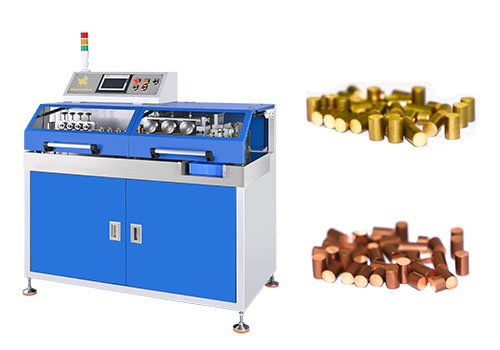
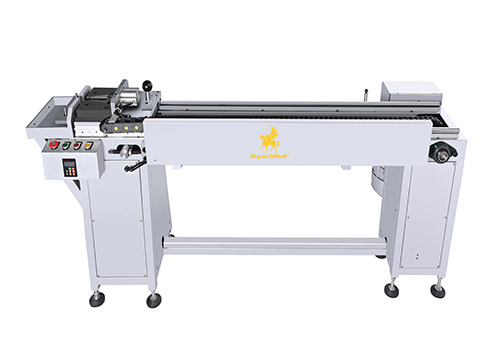
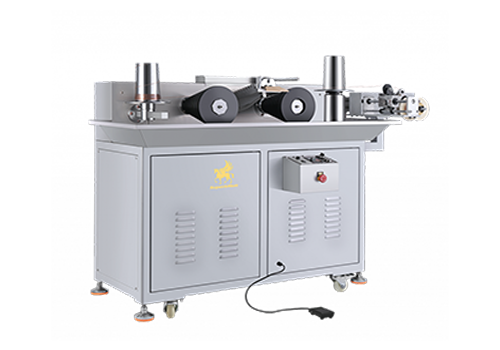
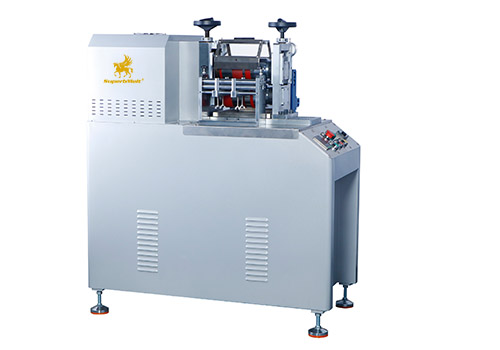
In industrial production and precision manufacturing, an Automatic Rod Cutting Machine is a type of automated equipment specifically designed for cutting rod-shaped raw materials. Through pre-set programs, mechanical transmission, and precision control systems, it enables accurate, efficient, and high-volume cutting of both metallic and non-metallic rods. Its core advantage lies in replacing the instability of manual operations while significantly improving cutting accuracy and production efficiency. This equipment is widely used in industries such as hardware, electronics, medical devices, and jewelry manufacturing.
1. Definition
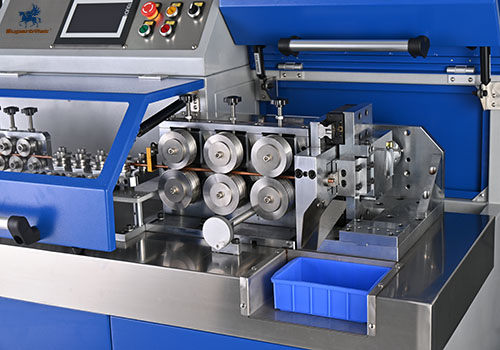
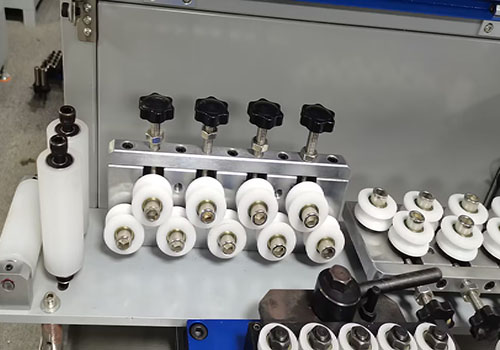
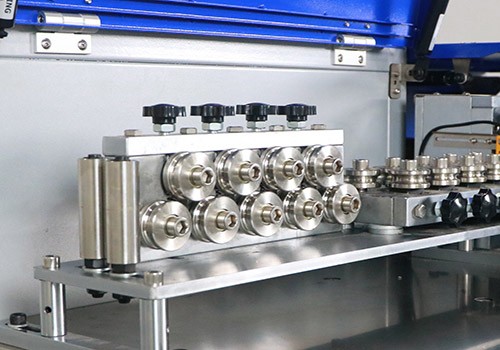
An Automatic Rod Cutting Machine is a specialized subdivision of automated cutting equipment, developed for rod-shaped materials (such as cylindrical, square, or irregular metal rods). It integrates four key modules—feeding, cutting, positioning, and control systems—to achieve fully automated operations from material loading to final cutting.
Compared with traditional manual cutting machines (e.g., hand saws or abrasive cutters), it requires no continuous human intervention. Once parameters such as cutting length, angle, and quantity are set, the machine can operate continuously for 24 hours.
2. Core General Functions
Precision Positioning and Cutting:
Using servo motors, laser positioning, or photoelectric sensors, the cutting error can be controlled within 0.01–0.1 mm (depending on equipment grade). This eliminates common manual issues like uneven lengths or slanted cuts.
Automated Batch Processing:
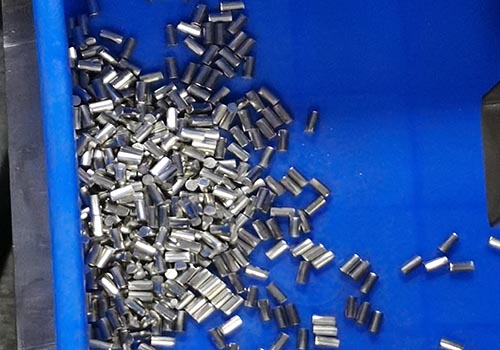
Equipped with an automatic feeding track, the machine can process multiple rods at once. It automatically completes the “feeding–positioning–cutting–unloading” cycle, handling thousands of rods per day—far surpassing manual productivity.
Multi-Specification Adaptability:
By changing cutting tools (e.g., high-speed steel blades, diamond saws) or adjusting parameters, the machine can cut materials of various types (metal, plastic, ceramic) and cross-sections (round, square, hexagonal), meeting diverse industrial needs.
Safety and Stability:
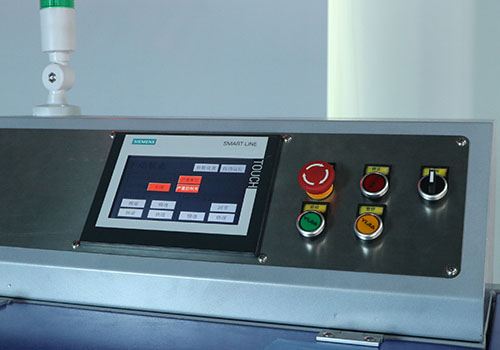
Built-in overload protection, emergency stop buttons, and protective covers prevent debris projection or mechanical failure. The automated process minimizes human interference, reduces defects, and ensures workplace safety.
Chapter 2:
Core Applications of the Automatic Rod Cutting Machine in the Jewelry Industry
2.1, Batch Cutting of Shaped Jewelry Components (Semi-Finished Processing)
The jewelry industry demands exceptional precision, consistency, and surface quality in raw materials. Traditional manual methods—such as hand sawing or grinding—are inefficient, inaccurate, and produce rough cuts. The Automatic Rod Cutting Machine addresses these pain points, serving as a crucial tool for raw material preprocessing and semi-finished component fabrication. Its key applications can be divided into four categories:
1. Precision Cutting of Precious Metal Rods (Raw Material Preparation)
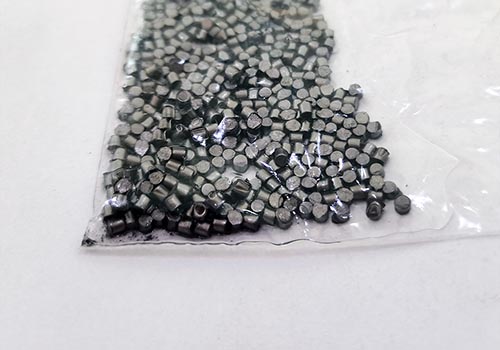
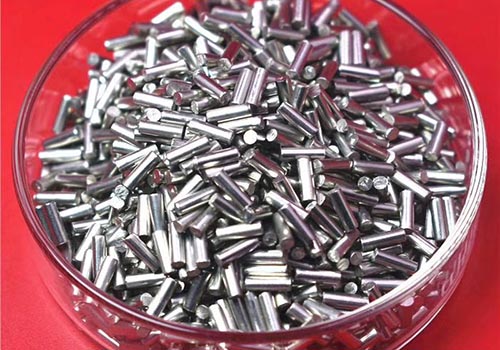
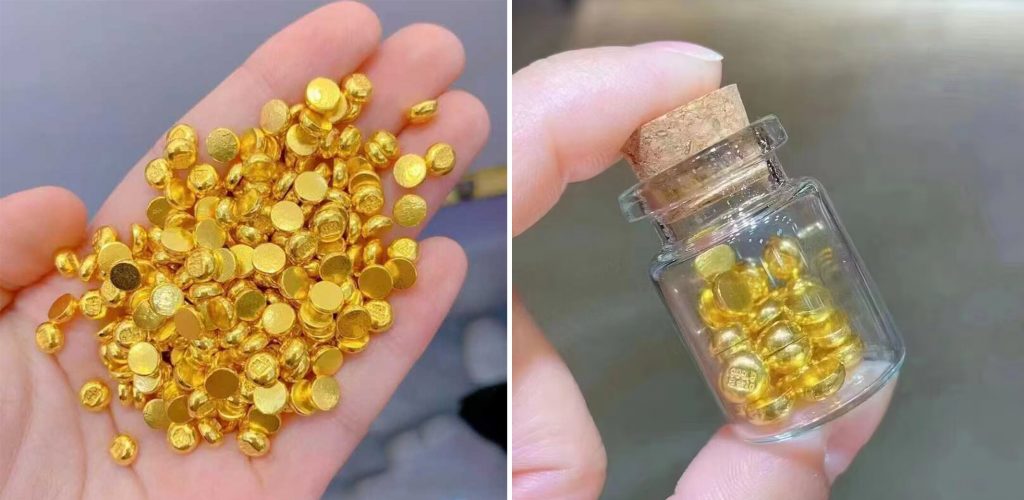
Precious metals such as gold, silver, and platinum are often supplied as cylindrical rods (typically 1–10 mm in diameter and 1–2 meters in length). Before further processing (rolling, drawing, or forming), these rods must be cut into short blanks.
Function:
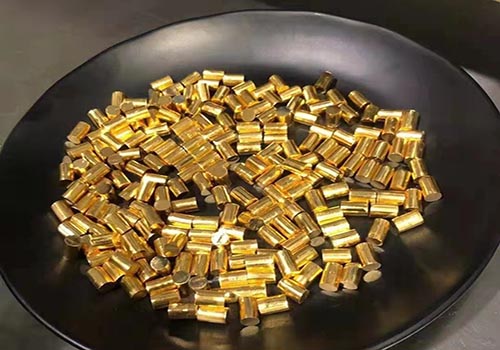
According to jewelry design needs, long rods are cut into fixed-length segments (e.g., 5–8 mm blanks for rings, 10–15 mm for pendants). The cutting error is controlled within 0.05 mm, minimizing material waste—critical given the high cost of precious metals.
Advantages:
Compared to manual cutting, automated cutting eliminates hand tremors and length variations, producing clean, burr-free surfaces that require no secondary polishing. Manual cutting typically causes 1–3% metal loss due to burr formation, whereas automation reduces loss to below 0.1%.
2. Batch Cutting of Shaped Jewelry Components (Semi-Finished Processing)
Some jewelry designs require rods of special profiles (e.g., square silver bars or hexagonal gold rods) or cuts at specific angles (e.g., 45° bevels or curved edges) for making bracelet links, earring hooks, or necklace clasps.
Function:
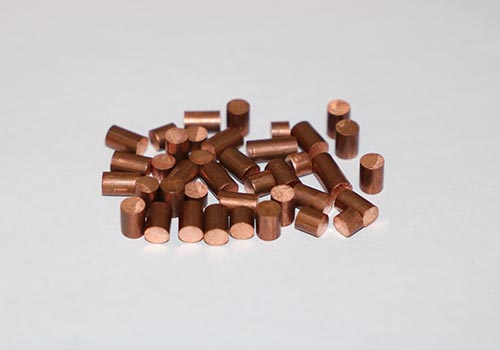
Through customized fixtures and programmed settings, the machine can achieve precise angled and repetitive cuts. For instance, in manufacturing 1,000 square copper rods (silver-plated) for a bracelet, each piece can be cut with a 30° bevel, maintaining an angular deviation under 1°, ensuring seamless assembly.
Use Case:
Ideal for luxury jewelry brands such as Chow Tai Fook or Pandora, which require mass production of standardized parts. One automatic machine can replace 5–8 workers, ensuring uniformity and eliminating design variations caused by manual cutting.
3. Micro Cutting for Gem-Setting Components (Fine Processing)
Gem-set jewelry (e.g., diamond rings, gemstone pendants) requires small metal parts—like prongs and seats—cut from fine rods (0.5–2 mm in diameter) with extreme precision. Even a 0.03 mm deviation can affect stone stability.
Function:
Using micro-precision cutting technology (some advanced models feature laser heads), the machine cuts ultra-small rod blanks with smooth, deformation-free surfaces. For example, it can cut an 18K gold rod of 0.8 mm diameter into 1.2 mm prong blanks with surface roughness reaching Ra0.8 μm (mirror finish), ready for shaping and polishing.
Value:
This resolves the problem of manual cutting where thin rods easily break and size control is inconsistent (manual rejection rates exceed 20%, while automation reduces it to below 1%). Precise blanks also improve gem security, minimizing the risk of stone loosening.
2.2, Environmental Protection and Cost Control
The jewelry industry is highly sensitive to environmental impact and production costs. Precious metals are scarce, and waste must be minimized, while dust and debris from manual cutting require costly disposal.
Environmental Function:
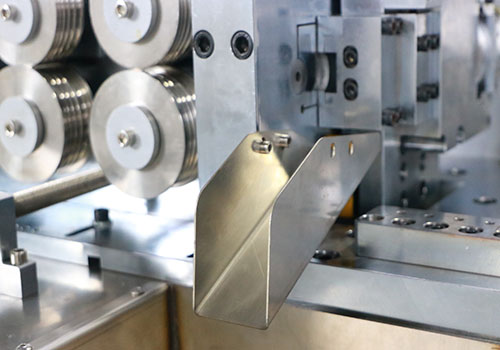
The machine is equipped with a debris collection system that recovers over 99% of metal shavings (gold, silver, etc.) for remelting and reuse. Its enclosed cutting chamber prevents dust dispersion, complying with EU REACH standards and China’s GB 2894-2021 Safety Marking Guidelines.
Cost Advantage:
For instance, when processing 1,000 gold rods (5 mm diameter) per day, manual cutting requires three operators (≈$833/month each), with a daily labor cost of $83 and material loss worth $278.
In contrast, the automated system’s daily energy and tool wear cost about $42, with material loss around $28, saving approximately $319 per day—a substantial long-term reduction in unit production cost.
Chapter 3:
Key Considerations for Jewelry Manufacturers When Choosing an Automatic Rod Cutting Machine
Due to the jewelry industry’s precision requirements, equipment selection should focus on three primary indicators:
Precision Level:
Choose machines with micron-level accuracy (cutting error ≤ 0.05 mm), especially for fine rods and precious metals, as precision directly impacts product quality.
Material Compatibility:
Ensure compatibility with common jewelry materials such as gold, silver, K-gold, copper, and titanium steel. Some machines may require specialized blades (e.g., diamond saws for gold) to prevent sticking or deformation.
Compact Design and Flexibility:
Jewelry workshops often have limited space; compact tabletop models (footprint ≤ 1 m²) are preferred. Support for quick mold changeovers (≤10 minutes for fixture and program swaps) enables agile, small-batch production for designer or custom jewelry studios.
The Automatic Rod Cutting Machine is not a general-purpose cutter but a precision automation tool specifically engineered for rod materials. In the jewelry sector, it serves not only as an efficiency enhancer but also as a key instrument for cost control, quality assurance, and environmental compliance.
From precious metal preprocessing to batch production of shaped components and micro-cutting for gemstone settings, it plays a vital role in the upstream stages of jewelry manufacturing—helping brands achieve a balance between mass production efficiency and high-quality standards.
It is particularly well-suited for medium-to-large jewelry brands, OEM factories, and high-end custom studios seeking both productivity and precision in modern jewelry fabrication.



 © Copyright 2008-2026 Superb Electromachinery Co., Limited