
Wire Annealing Machine
Industrial wire annealing machine for gold, silver, copper & platinum — precise temperature control, CE/ISO/SGS certified, 80-minute full annealing cycle
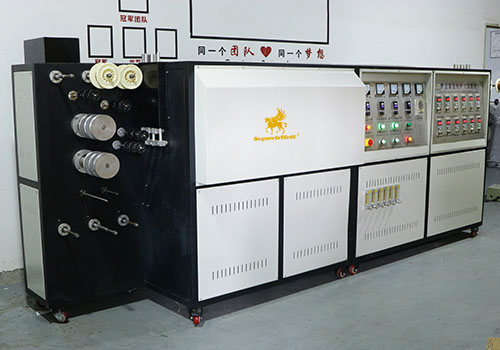
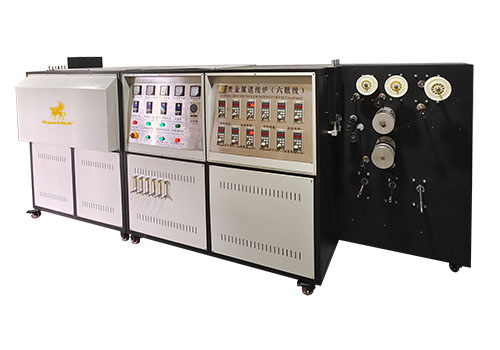
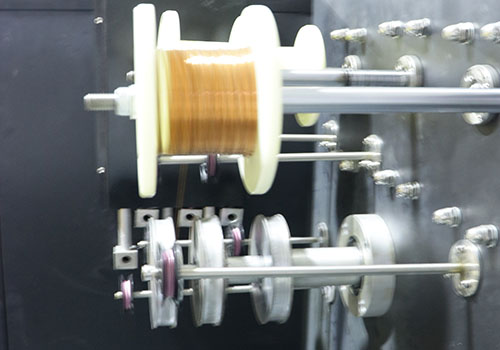
The SuperbMelt Wire Annealing Machine delivers continuous, uniform annealing for gold, silver, copper, and platinum wire — achieving temperatures up to 1200°C with an 80-minute processing cycle. Equipped with frequency-converter speed control (30–1000 rpm), multi-gas atmosphere protection (argon, nitrogen, ammonia), and snap-lock stainless steel internals for zero rust and fast setup.
Trusted by jewelry manufacturers, electronics producers, and wire processing factories in 50+ countries. ISO, CE, and SGS certified.
| Model number | SPB-AWF3 |
| Power source | 3 phase 380V, 50/60Hz |
| Power | 18 kw |
| Applicable metal | Gold, Silver, Platinum, Palladium, and their alloys |
| Heating length | 1200mm |
| cooling length | 1500mm |
| Max temperature | ≤1000℃ |
| Wire withdrawal diameter | ≥0.3Mpa, flow rate≥20L/min, ≤45℃ |
| Dimension | 4500*800*1500mm |
| Weight | 400 kg |
- Variable Speed Control (30–1000 rpm)
Built-in frequency converter allows stepless speed adjustment from 30 to 1000 rpm. Adapts to gold, silver, copper, and platinum wire with different ductility requirements — no manual gear switching required. - Multi-Gas Atmosphere Protection
Supports argon, nitrogen, ammonia, and liquid hydrogen protective atmospheres to prevent oxidation and surface discoloration during annealing. Essential for high-purity gold and platinum jewelry wire applications. - Tool-Free Snap-Lock Installation
Snap-lock joints and a two-stage connection design allow fast, tool-free assembly. All internal pipe connections are made from stainless steel for rust-free, long-term operation. - Individual 4-Channel Wire Control
Each of the four wire channels has independent speed control, allowing different wire types or gauges to be annealed simultaneously without cross-interference. Maximum production flexibility for mixed-output workshops. - High-Efficiency Heating: Full Cycle in 80 Minutes
Furnace core achieves temperatures up to 1200°C with rapid heat-up speed. Completes a full gold wire annealing cycle in approximately 80 minutes — 30–50% faster than conventional batch furnaces, reducing idle time and boosting daily output.
- Jewelry Manufacturing
The primary application for this machine. Gold, silver, and platinum wire must be softened before weaving into necklace chains, bracelet links, and ring shanks. SuperbMelt’s continuous-feed design eliminates wire breakage during high-speed jewelry weaving operations, ensuring uninterrupted chain production. - Electronics Manufacturing
Copper and aluminum wire used in connectors, resistors, and wire harnesses must be annealed to improve conductivity and ductility. This machine’s precise temperature control ensures consistent electrical properties across every meter of output wire. - Metal Wire Processing
Used by wire mills and processing factories to soften steel, copper, and alloy wire before downstream forming, drawing, or braiding operations. Continuous inline operation eliminates the batch-wait cycles of conventional furnaces. - Automotive Parts Manufacturing
Annealed wire used in sensors, wiring harnesses, and body structure components requires consistent mechanical properties. This machine delivers uniform heating across all four wire channels simultaneously, meeting automotive-grade quality standards.
Why SuperbMelt Wire Annealing Furnace


Any Question About SuperbMelt wire annealing furnace
Regarding the SuperbMelt Wire Annealing Machine Guide
What Is Wire Annealing? A Guide for Jewelry & Wire Manufacturers
The term “wire annealing” describes the heating and cooling procedure used to modify the characteristics of metal wire, especially its flexibility and hardness. Annealing is the process of heating the wire to a predetermined temperature and then lowering it gradually. This procedure makes the wire more ductile and less prone to internal stress, which improves its malleability and ease of use in a variety of applications. In order to strengthen the mechanical characteristics and increase the workability of metal wires, annealing is frequently employed in the jewelry, electronics, wire forming, automotive, and aerospace sectors.
1.1, Why Wire Annealing Is Critical in Jewelry and Electronics Production
Annealing is important because it can change the properties of metal materials, particularly those that are manufactured using a variety of mechanical and thermal methods. The following are some important details on the importance of annealing:
Relieving Internal tensions: The metal structure’s internal tensions brought on by machining, casting, and forging are lessened by annealing. If these pressures are not adequately relieved, the material may deform, distort, or even shatter. Annealing lowers the possibility of failure during further processing or usage by allowing the material to relax and return to its equilibrium condition.
Enhancing Ductility: When metals are subjected to deformation operations like bending, stretching, or shaping, annealing makes them more flexible and less likely to fracture. This is especially important for industries that frequently involve forming, like metalworking.
Improving Machinability: Annealing the metal softens it, which makes it simpler to deal with or process with cutting tools. It enhances the surface finish of the machined items and lessens tool wear and tear.
Refining Microstructure: The process of annealing helps the metal’s microstructure become more homogeneous and refined, which can improve its mechanical qualities including toughness, strength, and hardness. In crucial applications where material integrity is crucial, this is extremely crucial.
Reducing Hardness: By recrystallizing the grain structure and removing dislocations, annealing can aid in returning the original softness and toughness of metals that have undergone operations like cold working or heat treatment. This is essential to preserving the material’s intended qualities.
Eliminating Work Hardening: When metals undergo plastic deformation, a process known as annealing takes place to counteract the effects of work hardening. Annealing is a process that restores the ductility of metal and lessens the effects of work hardening by heating the material to a certain temperature and then gradually cooling it down.
In general, annealing is a crucial step in the production of metal components because it guarantees that the materials have the structural integrity and mechanical qualities needed for the intended uses.
1.2, How Wire Annealing Works: The 3-Stage Process
Feed → Heat → Cool. Wire is continuously fed from an input spool through a high-temperature heating zone (up to 1200°C), then passed through a controlled water-cooling section before being re-spooled as softened, ductile output wire. The entire process runs inline without stopping, making it ideal for continuous jewelry chain and electronics wire production.
Types of Annealing Furnaces
2.1, Vacuum Annealing Furnace
A particular kind of heat treatment apparatus called a vacuum annealing furnace is used to anneal materials under low pressure or vacuum. Vacuum annealing furnaces include the following main characteristics and benefits:
Oxidation Prevention: Vacuum annealing furnaces work by generating a low-pressure or vacuum atmosphere inside the furnace chamber, which stops the material from oxidizing. For materials that are vulnerable to surface reactions or are sensitive to oxygen, this is especially crucial.
Contamination Control: In order to maintain the purity of the annealed material, vacuum annealing furnaces reduce the possibility of contamination by gases or other contaminants found in the ambient. For applications like semiconductor manufacturing or aerospace component manufacturing, where material integrity and cleanliness are critical, this is essential.
Accurate Temperature Control: Vacuum annealing furnaces provide accurate temperature control, enabling the material to be heated uniformly without temperature gradients or hot spots. This guarantees reliable annealing outcomes and aids in obtaining the material’s intended metallurgical qualities.
Swift Heating and Cooling: The lack of air or other gases in the chamber allows vacuum annealing furnaces to heat and cool at swift rates. Because of this, vacuum annealing is perfect for high-speed production operations, resulting in reduced processing times and higher output.
Versatility: A wide range of materials, including metals, ceramics, and composites, can be processed in vacuum annealing furnaces due to their versatility. They are frequently employed in the annealing of titanium alloys, stainless steel, tool steel, and other high-performance materials utilized in the aerospace, automotive, and medical sectors.
Processing in Batches or Continuously: Vacuum annealing furnaces can be configured in batch or continuous modes, offering production flexibility based on the particular needs of the application.
For heat treating materials in a variety of sectors, vacuum annealing furnaces are a necessary piece of equipment because they provide accurate temperature control, oxidation prevention, contaminant control, and quick heating and cooling.
2.2, Box Annealing Furnace
Materials are put in the chamber of a box-shaped heat treatment apparatus called a box annealing furnace for annealing procedures. The following are the main characteristics and benefits of box annealing furnaces:
All sections of the material being handled will receive consistent annealing results because to the homogenous heating provided by box annealing furnaces. Achieving the appropriate metallurgical characteristics and preventing temperature gradients depend on this homogeneity.
Controlled Atmosphere: A lot of box annealing furnaces include the ability to regulate the chamber’s atmosphere, allowing for annealing operations in protective or inert gases like hydrogen or nitrogen. This aids in preventing contamination and oxidation of the material, particularly with reactive or sensitive metals.
Flexibility: A broad variety of materials, shapes, and sizes can be accommodated by box annealing furnaces. They can be used to anneal metals, ceramics, composites, and other materials that are utilized in manufacturing, electronics, aerospace, and automotive industries.
Batch Processing: Several parts or components can be annealed at once using box annealing furnaces, which normally run in batch mode. Due to their capacity for batch processing, box annealing furnaces are the best choice for small to medium-sized production runs because of their increased efficiency and throughput.
Heating profiles that can be customized: A lot of box annealing furnaces include the ability to program heating profiles, which let users set exact temperature ramps, soak periods, and cooling rates based on the material and annealing requirements. This customisation improves process control and guarantees ideal annealing outcomes.
Operation Ease: Box annealing furnaces are ideal for a variety of applications and industries since they are comparatively easy to use and maintain. To guarantee dependable and effective functioning, they are outfitted with monitoring systems, safety measures, and controls that are easy to use.
All things considered, box annealing furnaces offer consistent heating, a regulated environment, adaptability, the capacity to process batches, adjustable heating profiles, and simplicity of use, making them indispensable tools for annealing procedures in a range of industrial applications.
2.3, The Purpose of Tempering
A specialized heat treatment tool used to anneal materials in a regulated atmosphere is an atmosphere-controlled annealing furnace. These furnaces provide accurate control of the atmosphere inside the furnace chamber, usually with the use of gases like hydrogen, nitrogen, or argon. The following are some important details of furnaces for atmosphere-controlled annealing:
The goal of atmosphere-controlled annealing furnaces is to anneal materials while managing the ambient atmosphere’s composition. This aids in stopping undesired reactions during the annealing process, such as oxidation and decarburization.
Features: These furnaces have systems for monitoring and controlling temperature and pressure in addition to introducing and regulating gases inside the chamber. They frequently have insulation, heating components, and chambers made to resist extreme temperatures and preserve a steady environment.
Benefits: Atmosphere-controlled annealing furnaces provide for precise annealing with optimal material properties by managing the atmosphere. Grain structure refinement, mechanical property improvement, and surface finish enhancement are all included in this.
Applications: The aerospace, automotive, electronics, and manufacturing industries use atmosphere-controlled annealing furnaces. They can be used to anneal a wide range of materials, such as ceramics, metals, composites, and speciality alloys.
Customization: Because of the furnaces’ adaptability and customization choices, users can adjust the annealing process to meet certain material needs. To get the appropriate annealing results, parameters including temperature profiles, heating rates, soak periods, and cooling rates can be changed.
Quality Control: Annealing furnaces with atmosphere control aid guarantee dependable and constant annealing outcomes that satisfy exacting requirements and standards. Through their contribution, superior materials with enhanced mechanical properties and performance characteristics are produced.
To sum up, atmosphere-controlled annealing furnaces are crucial pieces of machinery that allow you to precisely regulate the surrounding atmosphere throughout the annealing process. They are essential instruments in contemporary production processes across a range of industries because of their adaptability, flexibility, and quality assurance.
Conclusion
The SuperbMelt Wire Annealing Machine is an essential tool for industries that need accurate annealing procedures. This equipment allows for controlled annealing environments, providing ideal conditions for materials such as metals, ceramics, and composites. Its properties are similar to those of atmosphere-controlled annealing furnaces. It maintains the integrity of the material while boosting desired qualities because of its capacity to stop oxidation and other unwanted processes.
Furthermore, customers can optimize factors like temperature profiles, heating rates, and cooling rates by customizing the machine to meet specific material requirements. This is made possible by its flexibility and customization possibilities. This guarantees accurate and dependable annealing outcomes, satisfying exacting requirements and quality standards in a range of industrial applications.
Essentially, the SuperbMelt Wire Annealing Machine is a key component of the heat treatment toolbox, enabling excellent annealing results and spurring innovation across several industries with its accuracy, dependability, and adaptability.
FAQ Guide of Wire Annealing Machine
- 1. What wire diameter range can the SuperbMelt wire annealing machine handle?
- 2. How long does a full annealing cycle take?
- 3. What protective gases does the wire annealing machine support?
- 4. Can the machine anneal multiple wires simultaneously?
- 5. What is the difference between a wire annealing machine and an annealing furnace?
- 6. What is the power requirement and installation setup?
1. What wire diameter range can the SuperbMelt wire annealing machine handle?
The SuperbMelt wire annealing machine (Model SPB-AWF3) is designed to handle wire with a withdrawal diameter of ≥0.3Mpa flow rate conditions. It is optimized for fine to medium gauge precious metal wire commonly used in jewelry chain production, including gold, silver, platinum, and palladium wire. Contact our team with your specific wire gauge requirements for a compatibility confirmation.
2. How long does a full annealing cycle take?
The SPB-AWF3 achieves full annealing completion in approximately 80 minutes from cold start to finished output. The furnace core reaches operating temperatures up to 1200°C rapidly thanks to high-efficiency induction heating. This is significantly faster than conventional batch annealing ovens, which typically require 4–8 hours per cycle.
3. What protective gases does the wire annealing machine support?
The machine supports multiple protective gas atmospheres including argon, nitrogen, ammonia, and liquid hydrogen. Using protective gas during annealing prevents oxidation and surface discoloration on precious metal wire, which is especially critical for high-purity gold and platinum applications in jewelry manufacturing.
4. Can the machine anneal multiple wires simultaneously?
Yes. The SuperbMelt wire annealing machine features a four-eye wire annealing configuration, allowing up to four wire strands to be annealed at the same time. Each wire channel has independent speed control via the frequency converter system, so different wire types or gauges can be processed simultaneously without interference.
5. What is the difference between a wire annealing machine and an annealing furnace?
A wire annealing machine is specifically engineered for continuous inline annealing of metal wire in coil or spool form. Wire is fed through a heated tube zone and then cooled in a controlled cooling section before being re-spooled — making it ideal for high-volume jewelry wire production. An annealing furnace, by contrast, processes batches of parts or wire coils placed inside a chamber, requiring full stops between cycles. For continuous wire production, an inline wire annealing machine is significantly more efficient.
6. What is the power requirement and installation setup?
The SPB-AWF3 operates on a 3-phase 380V, 50/60Hz power supply with a total power consumption of 18kW. No special foundation or ventilation installation is required. The machine uses snap-lock stainless steel internal pipe connections for tool-free assembly. Machine dimensions are 4500×800×1500mm and weight is approximately 400kg. A standard pallet truck or forklift is sufficient for positioning.
 © Copyright 2008-2026 Superb Electromachinery Co., Limited