Tube Coiling Machine

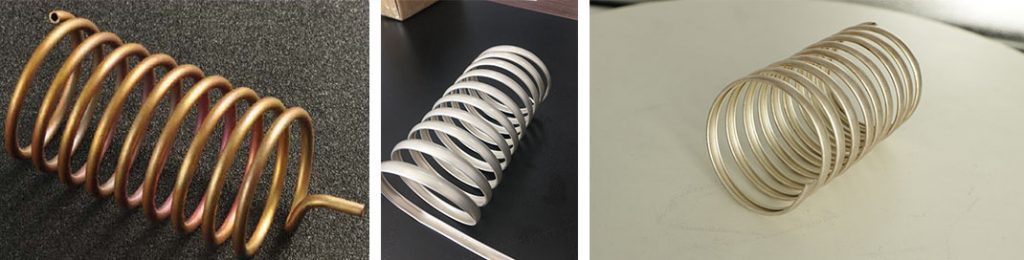
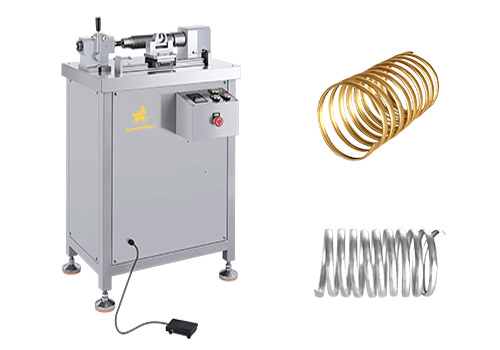
SuperbMelt tube coiling machine coils gold, silver, copper, and alloy sheets into hollow bangle tubes, ring tubes, and necklace tubes — the essential equipment for hollow jewelry bangle manufacturing.

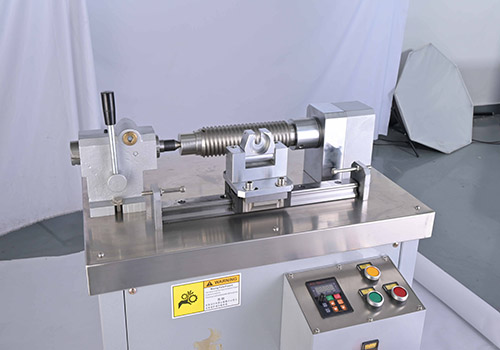
The SuperbMelt tube coiling machine is the core equipment for manufacturing hollow gold and silver bangles, ring tubes, and necklace tubes in jewelry production. It coils pre-rolled metal sheets into precise cylindrical tubes by wrapping them around a mandrel under controlled tension, producing consistent inner diameters from 15mm to 80mm.

Compatible sheet materials include 24K gold, 18K gold alloys, sterling silver, silver alloys, copper, brass, and metal alloy sheets. Sheet thickness range: 0.3mm to 2.0mm. The adjustable mandrel system allows diameter fine-tuning without changing tooling, enabling rapid changeover between different bangle sizes within a single production shift.

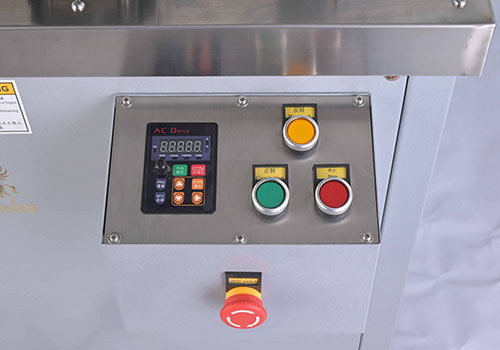
The machine features variable speed control, enabling operators to match coiling speed to material hardness and desired tube wall consistency. The precision guide system maintains sheet edge alignment throughout the coiling process, producing tubes with uniform wall thickness and clean seam edges ready for downstream welding and finishing.

Why SuperbMelt Tube Coiling Machine

Professional R&D Team:
Over 15 years R&D experience in gold machinery with a top engineer team supported
High Quality:
Only choose famous brand main electric components for production
ISO CE SGS Approved:
Professional certification bodies certify that the machines are of high quality
Facebook
Twitter
LinkedIn
WhatsApp

    Any Question About SuperbMelt Tube Coiling Machine

    SuperbMelt Tube Coiling Machine Guide

    Chapter 1:

    How to make a bracelet

    1.1, Handmade Process

    First, get all the supplies ready, such as the bracelet’s primary material and ornamental components. While beads, jewels, pendants, and other ornamental components can be used as accents, the main body material can be made of metal wire, leather, rope, etc.

    Next, using the bracelet’s size and form as a guide, measure and mark the necessary length and breadth on the main body material. To shape and size the main body material, use equipment like pliers, scissors, and so on. If working with tougher materials like metal wire, use stronger cutting tools.

    Next, use pliers or other hand tools to bend the main body material into the desired form for the bracelet, making sure to bend it smoothly and without sharp edges to follow the pattern. Add ornamental elements to the bracelet based on style and personal tastes. Some ideas are to tie beads on a cord, set gemstones in metal wire, or use engraving tools to engrave leather surfaces.
    Join the bracelet’s two ends using metal clasps, jump rings, or other specialty connectors if it has holes or has to be fastened. Lastly, make sure the bracelet is securely fastened to every component and wipe the surface to remove any residue or contaminants.

    1.2, Casting Bracelet Method

    Metal Sheet Preparation: To begin, press metal (such as gold, silver, etc.) into thin sheets using SuperbMelt’s pressing machine. These sheets will be used as the bracelet’s raw material.

    Bracelet Design: Create a design plan for the bracelet based on its dimensions, form, and design specifications.

    Metal Sheet Cutting: To cut the metal sheet into coils that are the right size and shape, use the tube coiling machine. The bracelet’s primary structure will be composed of these coils.

    Coil Shaping: To bend the cut metal coils into the appropriate shape for the bracelet, shape them in accordance with the design specifications. To accommodate a range of bracelet sizes, adjust the coils’ length and diameter as necessary.

    Welding and Connection: To guarantee the bracelet’s integrity and stability, weld or join the ends together.

    Surface Treatment: To make the bracelet’s surface more polished, smooth, and glossy, use surface treatment techniques like polishing and buffing.

    Decoration and Inlay: Depending on the specifications of the design, add embellishments like diamonds or gemstones, or carry out engraving and carving.

    Quality Inspection: Verify that the final bracelet satisfies design standards and specifications by conducting a quality inspection.

    Packaging and Sales: Following the completion of all procedures, package the bracelet and get it ready for distribution to buyers.

    To satisfy consumer and market needs, high-quality, aesthetically pleasing bracelets may be made quickly using SuperbMelt’s tube coiling and pressing machines.

    1.3, How to 3D print a bracelet

    Design: To begin, use computer-aided design (CAD) software to generate a digital model of the bracelet. As you design the bracelet, take into account details like its dimensions, form, texture, and embellishments, and make sure the model’s construction satisfies the specifications needed for manufacturing.

    Preparation: Gather the materials required for the 3D printer based on the developed digital model. These materials are usually premium plastics that work well with the printer of choice, such polymer resin.

    Printing: In accordance with the printing settings, load the digital model into the 3D printer and begin printing. To build the bracelet’s sturdy framework, the printer will stack materials one layer on top of the other. The printing procedure might take many hours or even days, depending on the bracelet’s complexity and size.

    Post-processing: To enhance the bracelet’s surface quality and finish once printing is finished, post-processing may be necessary. This might entail sanding the surface, painting, providing a finish, or eliminating support components.

    Inspection and Adjustment: Examine the bracelet’s quality and look during post-processing. Make any necessary alterations to guarantee the bracelet satisfies the required requirements.

    Embellishments: To improve the bracelet’s appearance and allure, add embellishments like jewelry, jewels, or other ornamental components, depending on the design specifications.

    Chapter 2:

    The Complete Hollow Bangle Manufacturing Workflow

    Understanding where the tube coiling machine fits in the full production process helps jewelry manufacturers plan their equipment investment and production flow.

    Step 1: Metal Melting & Alloy Preparation Raw precious metal is melted and alloyed to the target karat (18K, 22K, etc.) in an induction melting furnace. Alloy composition determines the material’s final hardness, color, and workability. → SuperbMelt Gold Melting Furnace Series

    Step 2: Casting into Sheet or Strip Ingot The molten alloy is cast into a flat ingot or strip using a continuous casting machine or gold bar casting machine — producing the initial thick sheet from which bangle sheets will be rolled. → SuperbMelt Continuous Casting Machine

    Step 3: Sheet Rolling The cast ingot is progressively rolled to the target thickness (typically 0.5–1.5mm for bangle sheet) using a gold sheet rolling machine. Multiple passes are required, with thickness reduced by 10–20% per pass. → SuperbMelt Gold Sheet Rolling Machine

    Step 4: Annealing After each rolling pass, the sheet is annealed (heat-treated) to restore ductility and remove work hardening. Annealing is critical before tube coiling — unannealed hard sheet will crack during coiling. → SuperbMelt Wire & Sheet Annealing Machine

    Step 5: Tube Coiling ← This machine The annealed sheet is fed into the SuperbMelt tube coiling machine, which wraps it around the mandrel to form a hollow tube at the target inner diameter (15mm–80mm for bangles).

    Step 6: Seam Welding or Soldering The longitudinal seam of the coiled tube is closed by laser welding or traditional soldering. Laser welding produces a cleaner, stronger seam with no solder flux residue. → SuperbMelt Jewelry Laser Welding Machine (link if available)

    Step 7: Bangle Forming & Sizing The welded tube is formed into a round or oval bangle shape using a bangle forming machine or mandrel press, and sized to the target inner diameter.

    Step 8: Surface Finishing The formed bangle is polished to the required surface finish (mirror/satin/matte) using electro polishing or mechanical polishing equipment. → SuperbMelt Electro Polishing Machine

    Apply Our Best Quotation


      1. What is a Tube Coiling Machine?

      A Tube Coiling Machine is a specialized equipment used to coil metal tubes into various shapes, such as circular or spiral, for different applications.

      2. How does a Tube Coiling Machine work?

      A Tube Coiling Machine works by feeding a metal tube through a series of rollers or mandrels that shape the tube into the desired coil pattern while maintaining its structural integrity.

      3. What types of tubes can be coiled using a Tube Coiling Machine?

      Tube Coiling Machines can coil a wide range of metal tubes, including stainless steel, copper, aluminum, and various alloys.

      4. What are the main components of a Tube Coiling Machine?

      The main components of a Tube Coiling Machine typically include a feeding mechanism, rollers or mandrels for shaping the tube, a control panel for adjusting parameters, and safety features.

      5. What industries commonly use Tube Coiling Machines?

      Tube Coiling Machines are commonly used in industries such as HVAC (Heating, Ventilation, and Air Conditioning), automotive, aerospace, and manufacturing for applications like heat exchangers, refrigeration coils, and tubing assemblies.

      6. Can a Tube Coiling Machine handle different tube diameters?

      Yes, many Tube Coiling Machines are designed to accommodate a wide range of tube diameters by adjusting the settings or using interchangeable tooling.

      7. How precise is the coiling process with a Tube Coiling Machine?

      Tube Coiling Machines can achieve high precision in coiling, with some models capable of maintaining tolerances within a few millimeters or less.

      8. What are the safety measures to consider when operating a Tube Coiling Machine?

      Safety measures when operating a Tube Coiling Machine include wearing appropriate personal protective equipment, following proper machine operating procedures, and ensuring that guards and safety devices are in place and functioning correctly.

      9. Is training required to operate a Tube Coiling Machine?

      Yes, operators should receive training on how to safely and effectively operate a Tube Coiling Machine to prevent accidents and ensure optimal performance.

      10. Can a Tube Coiling Machine produce coils with different shapes?

      Yes, Tube Coiling Machines can be programmed to produce coils with various shapes and configurations to meet specific requirements.

      11. What coiling diameter range does the machine support?

      The SuperbMelt tube coiling machine supports coiling diameters from 15mm to 80mm, covering the full range of standard bangle inner diameters for Indian, Middle Eastern, East Asian, and Western markets. The mandrel system is interchangeable — different mandrel sizes are used for different target diameters. Quick-change mandrel holders allow diameter changeover within a single production shift without extended downtime.

      Custom mandrels can be manufactured for non-standard diameters outside the 15–80mm standard range. Contact SuperbMelt with your target inner diameter to confirm mandrel availability.

      12. What sheet thickness can the machine coil?

      The machine is compatible with metal sheet thickness from 0.3mm to 2.0mm. Thinner sheet (0.3–0.5mm) is typically used for fine bangle tubes and ring tubes; medium thickness (0.5–1.0mm) for standard gold and silver bangles; thicker sheet (1.0–2.0mm) for heavy bangles and industrial tube stock.

      For best results, sheet should be fully annealed before coiling. Work-hardened sheet (not annealed after rolling) is more likely to crack or spring back during coiling, especially on smaller mandrel diameters. SuperbMelt recommends annealing sheet to full softness immediately before the coiling step.

      13. Is the machine suitable for both gold and silver sheet?

      Yes. The machine is designed for precious metal sheet including 24K gold, 18K gold alloys (yellow, white, rose gold), 22K gold, sterling silver (92.5%), fine silver (99.9%), and silver alloys. It is also compatible with copper, brass, and other metal alloys.

      Gold and silver have different elastic recovery (springback) behavior. Gold alloys with higher alloy content (lower karat) tend to have more springback than pure gold or high-karat gold. SuperbMelt technical support provides material-specific parameter guidance (mandrel diameter offset, tension setting) to compensate for springback in different alloys.

      14. What bangle sizes does the machine produce?

      The machine produces bangle tube inner diameters from 15mm to 80mm. Common standard bangle sizes by market:

      • India women’s standard: 55–65mm inner diameter
      • India men’s/large: 65–75mm inner diameter
      • China/East Asia: 52–60mm inner diameter
      • Europe/US: 58–68mm inner diameter

      The inner diameter of the produced tube corresponds to the mandrel diameter used. For standard market sizes, SuperbMelt provides a standard mandrel set. For custom or regional specialty sizes, custom mandrels are available with 5–7 day lead time.

      15. What is the difference between tube coiling and bangle forming?

      Tube coiling (this machine) wraps flat metal sheet around a mandrel to form a straight hollow tube with a longitudinal seam — the output is tube stock, not a finished bangle shape.

      Bangle forming (a separate machine or process) takes the welded tube and bends it into a ring/oval/square bangle shape, closes it into the correct diameter circle, and sizes it to the final bangle dimensions.

      A complete bangle production line requires both tube coiling and bangle forming equipment. SuperbMelt manufactures both and can provide a matched equipment package for complete bangle production from sheet input to formed bangle output.

      16.How do I choose between different mandrel sizes for my bangle production?

      The mandrel diameter should equal the target bangle inner diameter — with a small offset to compensate for springback (elastic recovery after the coiling force is removed).

      For annealed 18K gold sheet (0.8mm thickness), the springback offset is typically 0.5–1.5mm depending on alloy composition. This means for a 60mm inner diameter bangle, you may need a 58.5–59.5mm mandrel. The exact offset must be determined by test coiling with your specific alloy.

      SuperbMelt provides material-specific coiling guides and mandrel offset recommendations based on the alloy type, sheet thickness, and target diameter. Contact our technical support team with your material specification for a customized parameter recommendation before production.

      Apply Our Best Quotation


        Scroll to Top