
Badge Stamping Die
Badge Stamping Die — Custom Metal Dies for Badges, Medals & Commemorative Coins
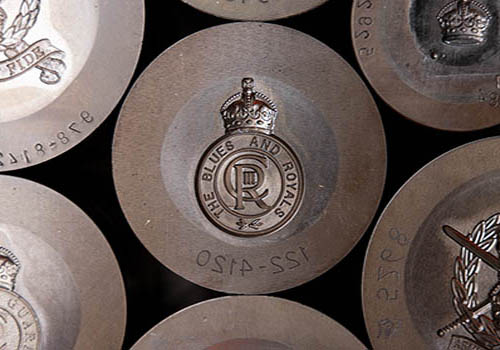
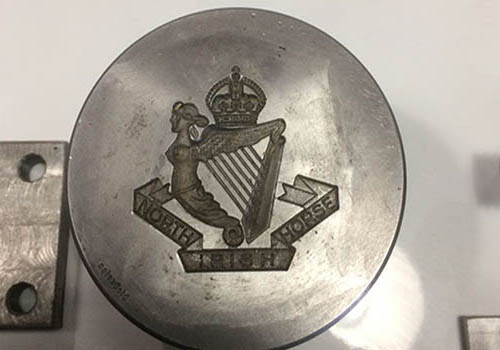
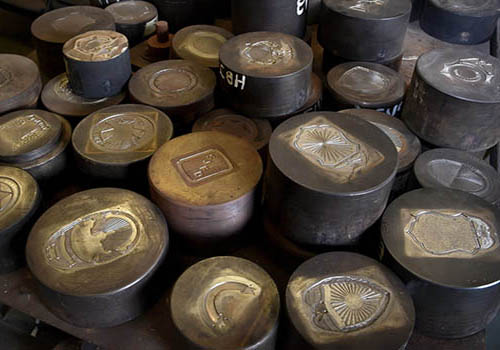
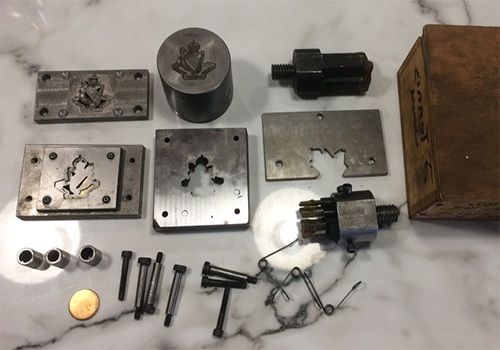
SuperbMelt badge stamping dies are precision CNC-machined from hardened tool steel (H13 / D2 / SKD11), designed for installation on hydraulic badge press machines to produce badges, medals, and commemorative coins in high-volume production runs.
Each die is manufactured to a dimensional tolerance of ±0.02mm, enabling sharp, consistent imprinting of fine text, intricate relief patterns, and logo details across production batches of hundreds of thousands of pieces. Die lifespan typically exceeds 500,000 stamping cycles under standard operating conditions.
Available in diameters from 15mm to 200mm, with custom shapes (round, oval, square, irregular) machined to customer specifications. Compatible design file formats: AI (Adobe Illustrator), CDR (CorelDraw), DXF (AutoCAD). SuperbMelt provides free die design review and technical consultation before production.
CE and ISO certified. 15+ years of precious metal and badge machinery manufacturing experience. Factory direct with 2-year tooling warranty.
| Parameter | Specification |
|---|---|
| Die Material | H13 / D2 / SKD11 hardened tool steel (HRC 58–62) |
| Surface Treatment | Chrome plating / Nitriding / Mirror polishing (specify at order) |
| Machining Precision | ±0.02mm dimensional tolerance |
| Available Diameters | 15mm – 200mm (custom shapes available) |
| Available Shapes | Round, oval, square, rectangular, custom irregular |
| Compatible Materials for Stamping | Copper, brass, zinc alloy, iron, stainless steel, aluminum |
| Die Lifespan | 500,000+ stamping cycles (standard steel); 1,000,000+ (carbide option) |
| Compatible Press Type | Hydraulic badge press (50T – 300T), automatic or manual feed |
| Design File Formats | AI (Adobe Illustrator), CDR (CorelDraw), DXF (AutoCAD), PDF |
| Minimum Order Quantity | 1 set (custom orders accepted) |
| Lead Time | 7–15 working days (standard); 3–5 days (rush available) |
| Certifications | CE, ISO 9001 |
Note: Carbide die inserts available for ultra-high-volume applications requiring extended lifespan. Contact SuperbMelt for carbide die quotation.
SuperbMelt’s Badge Dies have the following unique qualities and benefits:
- High Degree of Personalization: Badge In order to produce badges in a variety of sizes, shapes, and patterns, dies can be made to exact design requirements.
- Flexible Material Selection: Premium metals or hard alloys are used in the die-making process to provide robustness and durability to satisfy a variety of needs in the badge-making process.
- Enhanced Manufacturing Efficiency: Badge Dies, when installed on related machinery like hydraulic presses, optimize production processes and help to boost manufacturing efficiency.
- Versatile Design: These dies enable the creation of a wide range of badges that meet a variety of requirements for design and function, such as identity, commemorative, or ornamental badges.
- Accurate Imprinting of Text and Patterns: Throughout the badge manufacturing process, badge dies guarantee the precise imprinting of certain text, patterns, or other characteristics, guaranteeing the quality of the finished goods.
- Durability and Excellent Wear Resistance: Made from premium materials, Badge Dies have a long lifespan and outstanding wear resistance, which makes them ideal for heavy production and continuous usage.
- Strict Quality Control: Throughout the production process, stringent quality control procedures are put in place to ensure that every stamped badge complies with design specifications and quality standards.
In conclusion, SuperbMelt’s Badge Dies are an essential part of the badge production process because of their high degree of customization, versatile range of material choices, enhanced efficiency, and stringent quality control measures.
1. Identity & Staff Badges Corporate staff ID badges, membership cards, access badges, and organizational insignia. Badge dies for identity applications typically require sharp text reproduction at small sizes (3mm–6mm letter height) and precise edge definition. Common materials: zinc alloy, iron, brass. Common sizes: 35mm–80mm.
2. Commemorative Medals & Anniversary Coins Custom commemorative medals for corporate anniversaries, institutional milestones, and special events. Designs typically feature relief portraits, building illustrations, or event emblems. SuperbMelt badge dies produce consistent deep-relief stamping results suitable for presentation-quality medals with enamel-fill finishes.
Common materials: brass, copper, zinc alloy. Common sizes: 40mm–80mm.
3. Military & Government Insignia Military rank badges, service medals, unit insignia, police badges, and government award medals. Military badge dies require the highest dimensional precision and surface finish quality, as design details (stars, eagles, crests) must reproduce clearly at 25mm–50mm diameter. SuperbMelt dies meet military-specification dimensional tolerances.
Common materials: brass, stainless steel. Common sizes: 25mm–60mm.
4. Sports & Athletic Award Medals Competition medals for sporting events — marathon medals, tournament trophies, championship medals, school sports day awards. Sports event medals typically feature event logos, participant names (on edge or reverse), and year markings. SuperbMelt produces both standard medal dies and dies for edged text marking (for individualized awards).
Common materials: zinc alloy, iron, brass. Common sizes: 50mm–80mm.
5. Religious & Cultural Commemorative Badges Religious pilgrimage badges, cultural festival commemoratives, temple souvenir coins, and ceremonial insignia. These applications often require fine decorative pattern reproduction and may include intricate traditional motifs. SuperbMelt’s CNC-machined dies accurately reproduce complex decorative artwork from vector design files.
Common materials: brass, copper, zinc alloy. Common sizes: 30mm–70mm.
6. Promotional & Brand Marketing Badges Branded lapel pins, promotional campaign badges, product launch commemoratives, and trade show souvenirs. Promotional badge dies are often produced in small initial quantities with short lead times. SuperbMelt accepts minimum order of 1 die set and offers 7-day expedited production for promotional timeline requirements.
Common materials: zinc alloy, iron, brass. Common sizes: 20mm–50mm.
7. Collectible Coins & Limited-Edition Medals Custom minted collector coins, limited-edition art medals, numismatic commemoratives, and challenge coins. Collector coin dies require the highest relief depth and surface polish quality. SuperbMelt offers mirror-polished die surfaces and high-relief die carving for collector-grade coin production.
Common materials: silver-plated brass, gold-plated zinc alloy, pure copper. Common sizes: 35mm–50mm.
8. Award & Trophy Medallions Employee recognition awards, academic achievement medals, industry honors, and trade association awards. Award medallion dies typically feature organizational logos combined with text elements (year, recipient name space). SuperbMelt produces dies compatible with both flat-stamped and convex-dome medallion press formats.
Common materials: brass, zinc alloy. Common sizes: 50mm–100mm.
SuperbMelt badge stamping dies are manufactured to match the tooling specifications of hydraulic badge press machines used in badge and medal production. All SuperbMelt dies use standard upper/lower die holder mounting dimensions compatible with 50T–300T hydraulic presses.
Die Set Configurations Available:
- Single-cavity dies: One impression per press stroke — suitable for custom orders, small batches, and prototype runs
- Multi-cavity dies: Multiple impressions per stroke — for high-volume production (500+ pieces/day), reducing per-piece cost
- Progressive dies: Combined piercing, forming, and trimming in one press stroke — for automated production lines
Recommended Press Specifications:
- For zinc alloy badges (20mm–50mm): 50T–100T hydraulic press
- For brass/copper badges (50mm–80mm): 100T–200T hydraulic press
- For deep-relief medals (80mm+): 200T–300T hydraulic press
If you are sourcing both badge press machine and dies together, SuperbMelt can supply matched die + press packages with pre-tested fit confirmation. Contact our engineering team for die-to-press compatibility assessment.

2 years warranty
The warranty for our machine is one year longer than the warranty provided by other factories.

Strong service team
We will give response within 24 hours against your problem by our professional engineer.

Why SuperbMelt Badge Die
As a professional Jewelry solution supplier, it is our responsibility to provide you with the highest quality Badge Die
High Quality
Any Question About SuperbMelt Badge Die Solution
Superbmelt’s professional technical team and sales team are at your service
(7/24hours service)
Introduction: What is Badge Die and Why It Matters
Badge Die structure and materials
1. Positive and Negative Die Coordination
A badge die typically consists of two main parts — the positive die (also called the male die) and the negative die (female die).
The positive die shapes and raises the design, while the negative die forms the corresponding recessed pattern.
Perfect coordination between the two ensures precise alignment during stamping, resulting in sharp, detailed badge patterns with minimal defects.
High-quality manufacturing of both halves is essential for achieving accurate mold alignment and consistent product quality.
2. Mold Alignment and Fixing Methods
To maintain stamping accuracy, the dies must be perfectly aligned each time they are mounted on the press. Common fixing methods include:
Screw fixation: Simple and secure for small to medium-sized production runs.
Guide pin alignment: Uses precision-machined guide pins to guarantee exact positioning between the positive and negative dies, ensuring consistent stamping results.
Proper mold alignment prevents design distortion, uneven pressure distribution, and premature die wear.
3. Common Die Materials and Performance Comparison
The durability and precision of a badge die are largely determined by the material used. The most common materials include:
| Material | Properties | Suitable Applications |
|---|---|---|
| Cr12 Steel | High hardness, good wear resistance, cost-effective | General badge production, medium-volume runs |
| Tungsten Steel (Carbide) | Exceptional hardness, superior wear resistance, long lifespan | High-volume production, intricate designs |
| High-Speed Steel (HSS) | Excellent toughness, retains hardness at high temperatures | Stamping operations with higher friction or heat generation |
Selecting the right die material depends on factors such as production volume, badge material type, and complexity of the design.
1.1, Badge Die Manufacturing Process
1. CNC Die Engraving
Modern badge dies are often created using CNC die engraving technology.
Computer Numerical Control (CNC) ensures ultra-precise reproduction of intricate patterns, text, and fine details.
This method allows for consistent quality across multiple dies, especially important for high-volume badge production.
CNC engraving is ideal for complex logos, micro-text, and high-relief designs.
2. EDM Badge Die Manufacturing
EDM (Electrical Discharge Machining) is widely used in badge die production to achieve shapes and details that are difficult to produce with conventional cutting tools.
EDM badge die production works by eroding the metal surface with controlled electrical sparks, allowing for extreme accuracy and sharp internal corners.
This process is especially useful for hard die materials like tungsten steel and high-speed steel.
3. Laser Engraved Mold Technology
Laser engraved molds are created by directing a high-energy laser beam onto the die surface.
This process allows for deep engraving without physical contact, reducing tool wear.
Laser engraving excels in producing fine textures, security marks, and variable data (e.g., serial numbers, QR codes) on the die surface.
Ideal for short-run customization or intricate decorative elements.
4. Surface Polishing and Wear-Resistance Treatments
After machining, the die surface undergoes finishing processes to enhance performance and durability:
Polishing removes microscopic imperfections, ensuring a smooth stamping surface for flawless badge finishes.
Nitriding increases surface hardness, reducing wear and extending die life.
Electroplating can further improve corrosion resistance and provide a mirror-like finish for premium badge designs.
This manufacturing process combines CNC die engraving, EDM badge die, and laser engraved mold techniques with advanced surface treatments to create badge dies that deliver high precision, long service life, and excellent stamping performance.
Application scenarios and user types
Badge dies are essential tools across various manufacturing contexts, serving large-scale badge manufacturers who demand durable, high-precision dies for mass production of corporate badges and employee IDs. These dies are built to withstand continuous use while ensuring consistent quality. In contrast, custom gift studios rely on flexible and easily modifiable dies to produce small batches of personalized badges and event souvenirs, blending traditional craftsmanship with modern engraving technologies to achieve unique designs. Meanwhile, souvenir manufacturers specializing in commemorative medals, coins, and event badges require highly detailed, wear-resistant dies capable of reproducing intricate patterns and text with fine relief and textured finishes. Understanding these diverse application scenarios—from corporate badge dies to custom badge making and commemorative medal dies—enables manufacturers and designers to choose and customize the right badge dies tailored to their specific production needs and artistic goals.
2.1, Badge Die application cases in various industries
Badge dies find wide applications across numerous industries. In the corporate sector, they are used to produce employee ID badges and security access tags, ensuring brand consistency and security. The event and entertainment industries rely on badge dies for manufacturing commemorative badges, festival passes, and promotional items that serve as memorable keepsakes. In the souvenir and gift industry, badge dies help create custom-designed medals, award badges, and personalized gifts with intricate detailing. Educational institutions use badge dies for student and staff identification, while government agencies employ them for official badges and service medals. These diverse application cases highlight the versatility and importance of badge dies in producing high-quality, durable, and visually appealing badges tailored to specific industry requirements.
2.2, Badge Die Advantages
Badge dies offer several key advantages. They ensure high-precision pattern reproduction, capturing intricate details with accuracy. Their design supports high consistency and stability in mass production, making them ideal for large-scale badge manufacturing. Additionally, badge dies are highly customizable, allowing tailored patterns, text, and sizes to meet specific branding or design needs. These benefits make precision badge stamping with custom badge dies a reliable and efficient choice for producing quality badges at scale.
2.3, Badge Die Customization Process
The badge die customization process consists of several critical stages to ensure precision and quality. It begins with design, where customer artwork and specifications are finalized, focusing on pattern details, size, and text clarity. Next is prototype sampling, which produces initial samples for customer approval, allowing for adjustments in pattern depth and sharpness. After approval, the die manufacturing phase uses advanced techniques such as CNC precision engraving, EDM (electrical discharge machining), and laser engraving to create durable and high-precision dies.
Once the dies are fabricated, they undergo surface polishing and wear-resistant treatments like nitriding or electroplating to enhance lifespan and stamping quality. The dies are then installed on hydraulic or automatic stamping presses, ensuring proper alignment with guide pins or screws for consistent production. Finally, a thorough finished product inspection checks for pattern accuracy, depth uniformity, and overall quality before delivery.
Throughout the process, collaboration with customers is vital to maintain clear communication regarding pattern fidelity, depth control, and customization needs. This stepwise, quality-driven workflow ensures the production of high-precision, custom badge dies that meet both aesthetic and functional requirements.
Keywords covered: custom die process, badge die production steps, prototype sampling, CNC engraving, EDM, laser engraving, polishing, die installation, quality inspection.
SuperbMelt’s Advantages in Badge Die Manufacturing
SuperbMelt stands out in badge die manufacturing by combining advanced precision technologies with customizable solutions tailored to diverse customer needs. Utilizing state-of-the-art CNC engraving, EDM, and laser engraving, SuperbMelt ensures high-accuracy pattern replication and consistent quality across large production runs. Their dies are crafted from premium materials such as Cr12 steel, tungsten carbide, and high-speed steel, offering superior wear resistance and long service life. SuperbMelt also provides expert surface treatments like nitriding and electroplating to enhance durability. With a streamlined process from design to final inspection, plus strong customer collaboration, SuperbMelt delivers reliable, high-quality badge dies ideal for everything from corporate badges to commemorative medals. Their commitment to precision, customization, and efficiency makes them a trusted partner in the badge manufacturing industry.
Conclusion: Badge Die’s significance to modern badge production
Badge dies are fundamental to modern badge production, enabling the precise and efficient stamping of intricate designs and text onto metal materials. They ensure high consistency and quality across large production volumes while allowing customization to meet diverse aesthetic and functional requirements. By combining durable materials, advanced manufacturing techniques, and meticulous quality control, badge dies play a crucial role in delivering badges that meet both industrial standards and customer expectations, making them indispensable tools in today’s badge manufacturing industry.
FAQ Guide of Badge Die
- 1. How do you use a badge making machine?
- 2. What is a badge die?
- 3. How does a badge die work?
- 4. What materials are badge dies made from?
- 5. What types of badges can be made with badge dies?
- 6. Can badge dies be customized for specific designs?
- 7. What role do badge dies play in the badge production process?
- 8. Do badge dies only work with metal materials?
- 9. Are badge dies reusable?
- 10. Can badge dies be used for mass production of badges?
- 11. What is the difference between badge dies and other types of dies?
- 12. How are badge dies installed in the badge-making process?
- 13. What are the advantages of using badge dies in badge production?
- 14. Can badge dies be used for different badge sizes?
- 15. Are there specific safety measures when using badge dies?
- 16. What maintenance is required for badge dies?
- 17. Can badge dies be used for non-traditional badge shapes?
- 18. Are there limitations to the complexity of designs with badge dies?
- 19. Can badge dies be used for promotional products other than badges?
- 20. How is the quality of badges ensured with badge dies?
- 21. What is the average lifespan of a badge die?
- 22. Can badge dies be repaired or modified?
- 23. Are there environmental considerations in badge die manufacturing?
- 24. What industries commonly use badge dies?
- 25. What material is a badge stamping die made from?
- 26. How long does a badge die last?
- 27. Can you make custom badge dies to my design?
- 28. What sizes of badge dies are available?
- 29. What is the minimum order quantity for badge dies?
- 30. What metals can be stamped with a badge die?
1. How do you use a badge making machine?
Getting supplies, such as badge designs and components, is the first step in using a badge producing machine. Assemble the front, artwork, and back of the badge after printing and cutting the necessary designs. Make sure the badge-making machine is calibrated correctly before setting it up. Accurately align the badge components as you place them in the machine. To fuse the parts together, press the machine. After the procedure is finished, check the badge’s quality and affix it to the back. Proceed with this procedure for every badge, guaranteeing accuracy and excellence in the finished item.
2. What is a badge die?
A badge die is a specialized tool used in the badge-making process to imprint specific patterns or text onto badge materials.
3. How does a badge die work?
A badge die works by being pressed onto metal materials during the badge-making process, shaping and imprinting the desired design.
4. What materials are badge dies made from?
Badge dies are commonly made from materials such as tool steel, high-speed steel (HSS), tungsten carbide, stainless steel, alloys, and beryllium copper.
5. What types of badges can be made with badge dies?
Badge dies can be used to produce a variety of badges, including identification badges, commemorative badges, or decorative badges.
6. Can badge dies be customized for specific designs?
Yes, badge dies can be customized to create unique and specific designs based on customer requirements.
7. What role do badge dies play in the badge production process?
Badge dies are crucial in ensuring precision and consistency in the badge-making process, contributing to the aesthetic and functional features of the final product.
8. Do badge dies only work with metal materials?
While badge dies are commonly used with metal materials, they can also be adapted for use with other materials depending on the badge-making requirements.
9. Are badge dies reusable?
Yes, badge dies are typically reusable, allowing for multiple impressions and the production of numerous badges.
10. Can badge dies be used for mass production of badges?
Yes, badge dies are well-suited for mass production, offering efficiency and consistency in creating large quantities of badges.
11. What is the difference between badge dies and other types of dies?
Badge dies are specifically designed for creating badges, while other dies may have different functions such as cutting, embossing, or engraving.
12. How are badge dies installed in the badge-making process?
Badge dies are installed on badge-making machines, such as hydraulic presses, for the stamping and shaping of badge materials.
13. What are the advantages of using badge dies in badge production?
The advantages include precision, repeatability, efficiency, and the ability to create intricate designs on badge materials.
14. Can badge dies be used for different badge sizes?
Yes, badge dies can be tailored for different badge sizes, accommodating various design specifications.
15. Are there specific safety measures when using badge dies?
Safety measures may include proper machine operation, maintenance, and adherence to guidelines to ensure a safe working environment.
16. What maintenance is required for badge dies?
Regular cleaning and inspection for wear are common maintenance practices to ensure the longevity and quality of badge dies.
17.Can badge dies be used for non-traditional badge shapes?
Yes, badge dies can be customized for non-traditional shapes, allowing for creative and unique badge designs.
18. Are there limitations to the complexity of designs with badge dies?
While badge dies can handle intricate designs, extremely complex designs may have limitations depending on the material and manufacturing process.
19. Can badge dies be used for promotional products other than badges?
Yes, badge dies can be adapted for creating promotional products such as keychains, tokens, or small metal items.
20. How is the quality of badges ensured with badge dies?
Quality control measures, including inspections and testing, are implemented to ensure badges meet design specifications and standards.
21. What is the average lifespan of a badge die?
The lifespan of a badge die depends on factors such as material, usage, and maintenance, but they are designed for durability and repeated use.
22. Can badge dies be repaired or modified?
Depending on the extent of damage or changes needed, badge dies can sometimes be repaired or modified to suit specific requirements.
23. Are there environmental considerations in badge die manufacturing?
Some badge die manufacturers may implement environmentally friendly practices, such as recycling materials and minimizing waste.
24. What industries commonly use badge dies?
Industries such as law enforcement, corporate identification, awards and recognition, and promotional products commonly use badge dies.
25. What material is a badge stamping die made from?
SuperbMelt badge stamping dies are made from hardened tool steel — primarily H13, D2, or SKD11 grades, heat-treated to HRC 58–62 hardness. This hardness level provides the wear resistance needed for high-volume production runs while remaining machinable to fine detail tolerances (±0.02mm).
For ultra-high-volume applications or abrasive stamping materials, we offer carbide-tipped die inserts with a lifespan exceeding 1,000,000 stamping cycles. For decorative applications requiring a premium surface finish, dies can be chrome-plated or mirror-polished. Contact SuperbMelt to specify the right material and surface treatment for your production volume and badge material.
26. How long does a badge die last?
A standard hardened tool steel badge die from SuperbMelt lasts 500,000+ stamping cycles under normal operating conditions — stamping copper, brass, or zinc alloy at recommended press tonnage. For softer materials (aluminum, thin zinc alloy), lifespan can reach 1,000,000+ cycles. For harder materials (stainless steel), lifespan is typically 200,000–500,000 cycles depending on design complexity and press settings.
The main factors affecting die lifespan are: stamping material hardness, press tonnage alignment, lubrication consistency, and die storage conditions. SuperbMelt provides die maintenance guidelines and offers die re-sharpening services to extend usable life.
27.Can you make custom badge dies to my design?
Yes. SuperbMelt manufactures fully custom badge stamping dies from customer-supplied artwork. We accept design files in AI (Adobe Illustrator), CDR (CorelDraw), DXF (AutoCAD), and PDF formats.
The customization process: (1) Submit your design file with size specifications and material requirements; (2) SuperbMelt engineering reviews the design for die-cuttability and provides recommendations if needed; (3) CNC machining begins after approval; (4) Die sample stamping and quality inspection; (5) Dispatch. Minimum order is 1 die set. Typical lead time is 7–15 working days. Rush production (3–5 days) is available for urgent requirements.
28. What sizes of badge dies are available?
SuperbMelt manufactures badge dies in diameters from 15mm to 200mm. Standard shapes include round, oval, square, and rectangular. Custom irregular shapes (shield, star, crest, custom outline) are machined from your provided design file at no additional tooling charge.
For badge designs requiring very fine text (under 1mm character height), please consult with SuperbMelt engineering before ordering — extremely fine features require specific die steel grades and reduced stamping speed to achieve acceptable reproduction quality.
29. What is the minimum order quantity for badge dies?
There is no minimum order quantity. SuperbMelt accepts orders for a single die set, which is common for custom badge designs, prototype testing, or initial small-batch production.
Multi-cavity dies (which produce multiple badge impressions per press stroke) are available for customers requiring higher production throughput. For repeat badge designs where high volume is expected, SuperbMelt can manufacture backup dies simultaneously to avoid production downtime if a die needs replacement.
30. What metals can be stamped with a badge die?
SuperbMelt badge dies are compatible with stamping: copper, brass, zinc alloy (zamak), iron, mild steel, stainless steel, and aluminum. The most common badge materials are zinc alloy (for economy badges), brass (for premium badges), and copper (for commemorative medals with plating finish).
For stainless steel stamping, higher-hardness die steel (carbide option) is recommended due to the harder workpiece material. For silver or gold-clad commemorative coins, a mirror-polished die surface is recommended to achieve the collector-grade surface finish. Specify your stamping material when requesting a die quotation so SuperbMelt can recommend the appropriate die steel and surface treatment.
 © Copyright 2008-2026 Superb Electromachinery Co., Limited